


Install Steam
sign in
|
language
简体中文 (Simplified Chinese)
繁體中文 (Traditional Chinese)
日本語 (Japanese)
한국어 (Korean)
ไทย (Thai)
Bahasa Indonesia (Indonesian)
Bahasa Melayu (Malay) BETA
Български (Bulgarian)
Čeština (Czech)
Dansk (Danish)
Deutsch (German)
Español - España (Spanish - Spain)
Español - Latinoamérica (Spanish - Latin America)
Ελληνικά (Greek)
Français (French)
Italiano (Italian)
Magyar (Hungarian)
Nederlands (Dutch)
Norsk (Norwegian)
Polski (Polish)
Português (Portuguese - Portugal)
Português - Brasil (Portuguese - Brazil)
Română (Romanian)
Русский (Russian)
Suomi (Finnish)
Svenska (Swedish)
Türkçe (Turkish)
Tiếng Việt (Vietnamese)
Українська (Ukrainian)
Report a translation problem




 Here you can see all the countries that are available in the mechanic, Romanian relations with Hungary and Bulgaria were not the best so interacting with them is blocked until you either do certain focuses or end up in a faction with them.
 Interacting with countries is done in two ways, the tier can be invested in with political power to grant predetermined bonuses - each country is like an industrial concern that is cheap but requires some initial political power investment and then a smaller amount to maintain its benefits. The tier also affects some decisions attached to the mechanic.
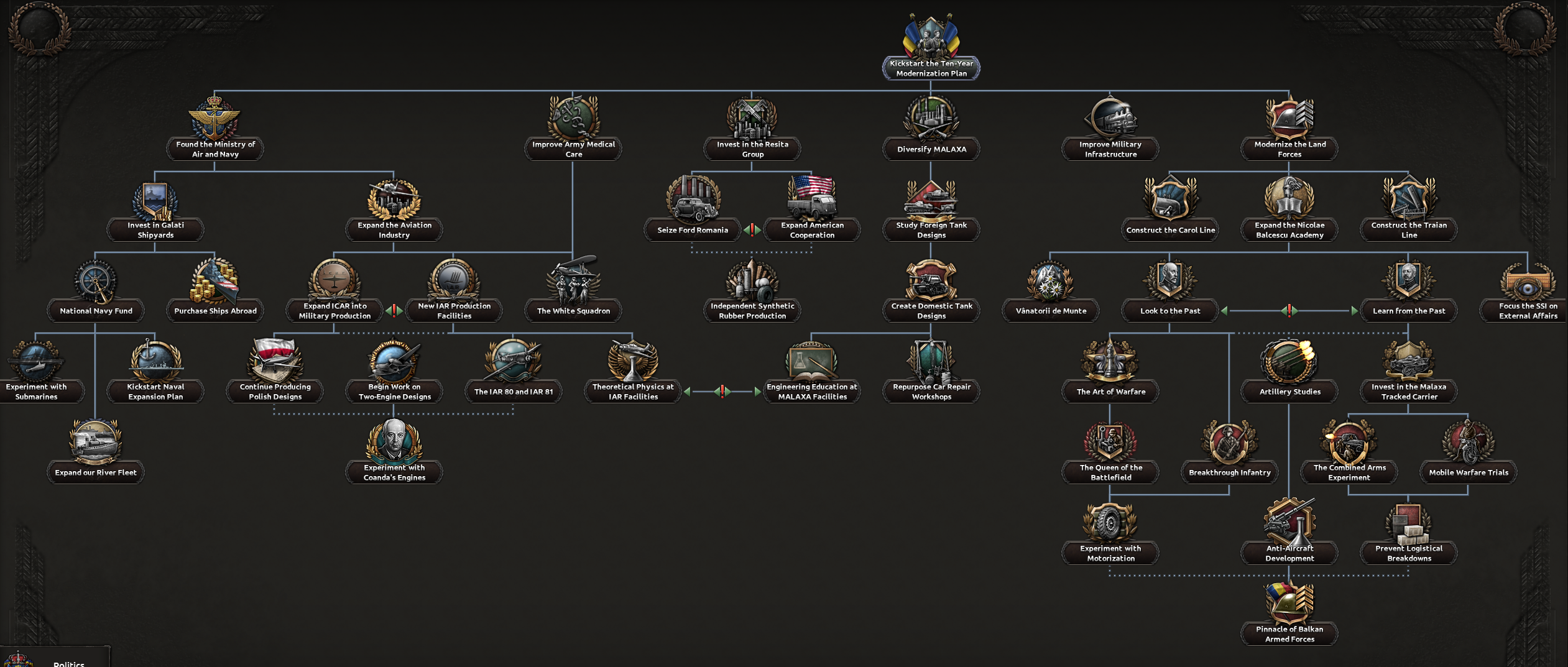 In the dev corner’s, I added a little sneak peak of the core of the military branch, let’s go through that, and the other parts, in a little more detail.
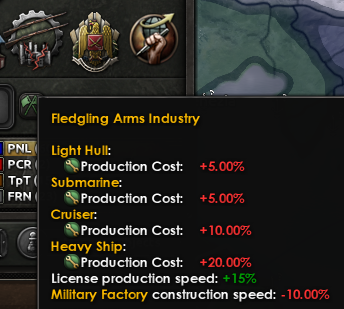 One of the spirits Romania starts with represents this issue, but the idea will upgrade as you do military focuses, until it grants exclusively positive modifiers.
 The transition to communism includes the only civil war in the tree, it’s three-sided and intentionally challenging, but also entirely optional, and the people can be won over democratically.
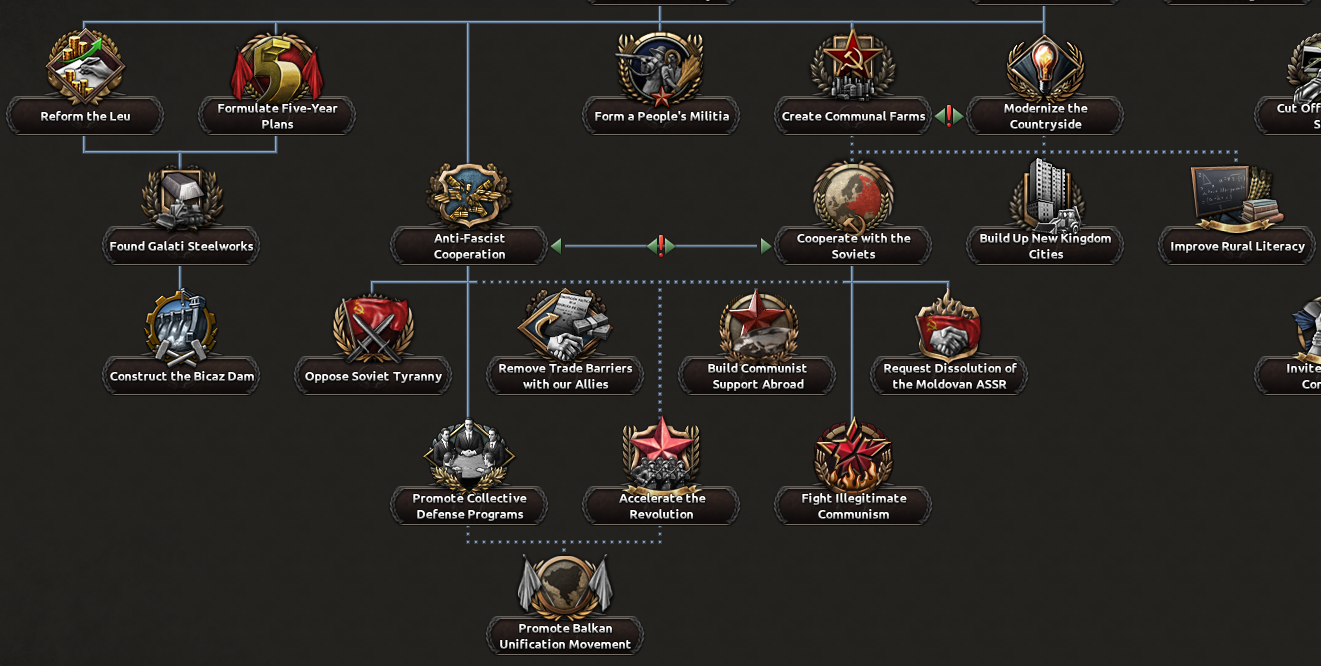 The communists in Romania historically undertook some very large industrial projects, although some were a complete waste of money, some useful ones like massively increasing steel production can be replicated. Diplomatically, you can side with the Soviets or be more pragmatic with your alliances to defend the Balkans. Both paths will be able to gain new cores by promoting sentiment for Balkan unification.
 While doing research for this path, I read about support of a socialist party for a people’s militia, this is represented in the path by a unique sort of mobilization mechanic. In this mechanic, you can spend weapons to prepare a militia, but you won’t need to raise your conscription law to give these manpower. Instead, you only get a debuff while your reserves of up to around 40 divisions are active.
 After sidelining Carol, you will be able to create a new constitution that reduces the monarch’s powers, but maintains the popular monarchy by allowing Carol’s son Michael to take the throne, who himself was not very close to Carol. You can also turn your attention to the corruption plaguing Romania that Carol had spearheaded, exemplified by the Škoda Affair where the Romanian state was found to be paying suspiciously high prices for Škoda equipment, some of it disappearing into the pockets of corrupt politicians.
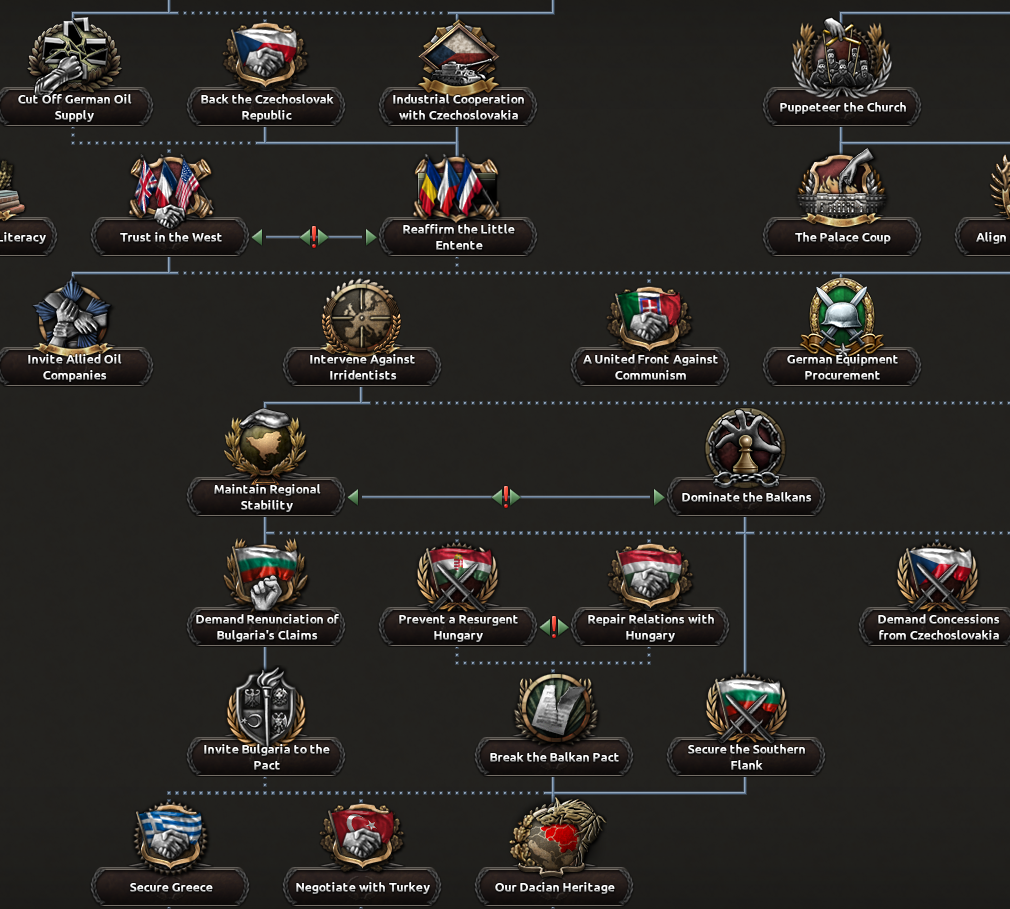
 Diplomatically, you can either turn to the Allies, or focus on strengthening the Little Entente, either way, you get options to play an interventionist role. This I’ve tried to make extra unique by giving bonuses for defeating countries without causing too many casualties, rewarding you for not taking the easiest option of a frontal assault.



 Expansion Pass 2 Last Chance Bundle is still available, click HERE or the image above to check it out!


 1


 Award


 Выполняем достижения за Швейцарию в By Blood Alone








 Гайд на шаблоны



 Hearts of Iron IV Console



 шаблоны за германию. актуально ноябрь 2026

 Division Templates, Tank, Aircraft Designs & More | Patch 1.19.4.2







 Loading

