

STEAM GROUP
Ernst Jünger Fanclub WALDGANG
STEAM GROUP
Ernst Jünger Fanclub WALDGANG
1
IN-GAME
7
ONLINE
Founded
May 21
Language
German
Location
Germany 
ABOUT Ernst Jünger Fanclub

He lived until 102. Make of that what you will.

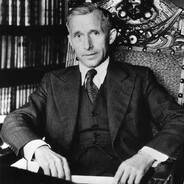
Ernst Jünger (1895–1998) was a soldier, entomologist, philosopher. He fought in both world wars, took LSD with Albert Hofmann, and collected beetles.

Key Works
Storm of Steel (1920):
The most singular war memoir documenting his account as a German officer on the Western Front. His voice here is cool, perhaps clinical, and he refrains from making any sort of judgment in his descriptions of violence. He presents war as transcendent experience shown in honest, stark detail.

The War as an Inner Experience (1922):
The philosophical companion to Storm of Steel; what the war meant. His core argument being that Man is not destroyed, rather he is created by war. It gives rise to a new soldier-archetype who, through existential transformation, derives his identity from the experience itself.

Copse 125 (1924):
A tactical account of the fighting over a single stretch of French woodland. Where Storm of Steel moves across the whole front, this narrows to a single tactical object contested over months. This is also a book where Jünger expresses himself, rather than the war that he had survived.

Fire and Blood (1925):
A distillation of Storm of Steel, one assault compressed into prose poetry. Same clinical eye, narrower frame, higher intensity. One hour of the Western Front under a microscope. The entomologist is already present in the soldier.

On Pain (1934):
His most direct philosophical statement. Pain dissolves the structures of metaphysics - freedom, justice, progress. Pain is the ultimate reality; the others are illusions. The modern obsession with comfort is spiritual diminishment. The anaesthetised man is the incomplete man.

On the Marble Cliffs (1939):
A novel written under the Third Reich about the destruction of a beautiful, ordered world by a creeping brutalist power. Never confirmed as allegory; never punished for it. The argument was that beauty is not escapism, it is the only resistance that cannot be co-opted, requiring no ideology.

A German Officer in Occupied Paris (1941–1945):
He attended collaborator dinners, corresponded with artists, observed executions in passing with the same attention he gave his beetle collection. Picasso was there. So were the deportations. He recorded both with equal precision. Possibly, this was the richest period of his intellectual life.

The Forest Passage (1951):
His most immediately useful book, written after everything had collapsed and was being rebuilt into something equally suspicious. The individual against the total state. The forest is not merely physical, it is a metaphysical territory that no state can fully colonise.

Eumeswil (1977):
A synthesis of his mature thought. The Anarch is the inwardly liberated and outwardly pragmatic individual, living peacefully in the heart of Leviathan while preserving his freedom. The argument is not withdrawal and not resistance. It is harder than both.
POPULAR DISCUSSIONS
VIEW ALL (1)
RECENT ANNOUNCEMENTS
Ernst
VIEW ALL (20)
GROUP MEMBERS
1
IN-GAME
7
ONLINE
5 IN CHAT
Enter chat room
Founded
May 21
Language
German
Location
Germany