



Install Steam
sign in
|
language
简体中文 (Simplified Chinese)
繁體中文 (Traditional Chinese)
日本語 (Japanese)
한국어 (Korean)
ไทย (Thai)
Bahasa Indonesia (Indonesian)
Bahasa Melayu (Malay) BETA
Български (Bulgarian)
Čeština (Czech)
Dansk (Danish)
Deutsch (German)
Español - España (Spanish - Spain)
Español - Latinoamérica (Spanish - Latin America)
Ελληνικά (Greek)
Français (French)
Italiano (Italian)
Magyar (Hungarian)
Nederlands (Dutch)
Norsk (Norwegian)
Polski (Polish)
Português (Portuguese - Portugal)
Português - Brasil (Portuguese - Brazil)
Română (Romanian)
Русский (Russian)
Suomi (Finnish)
Svenska (Swedish)
Türkçe (Turkish)
Tiếng Việt (Vietnamese)
Українська (Ukrainian)
Report a translation problem


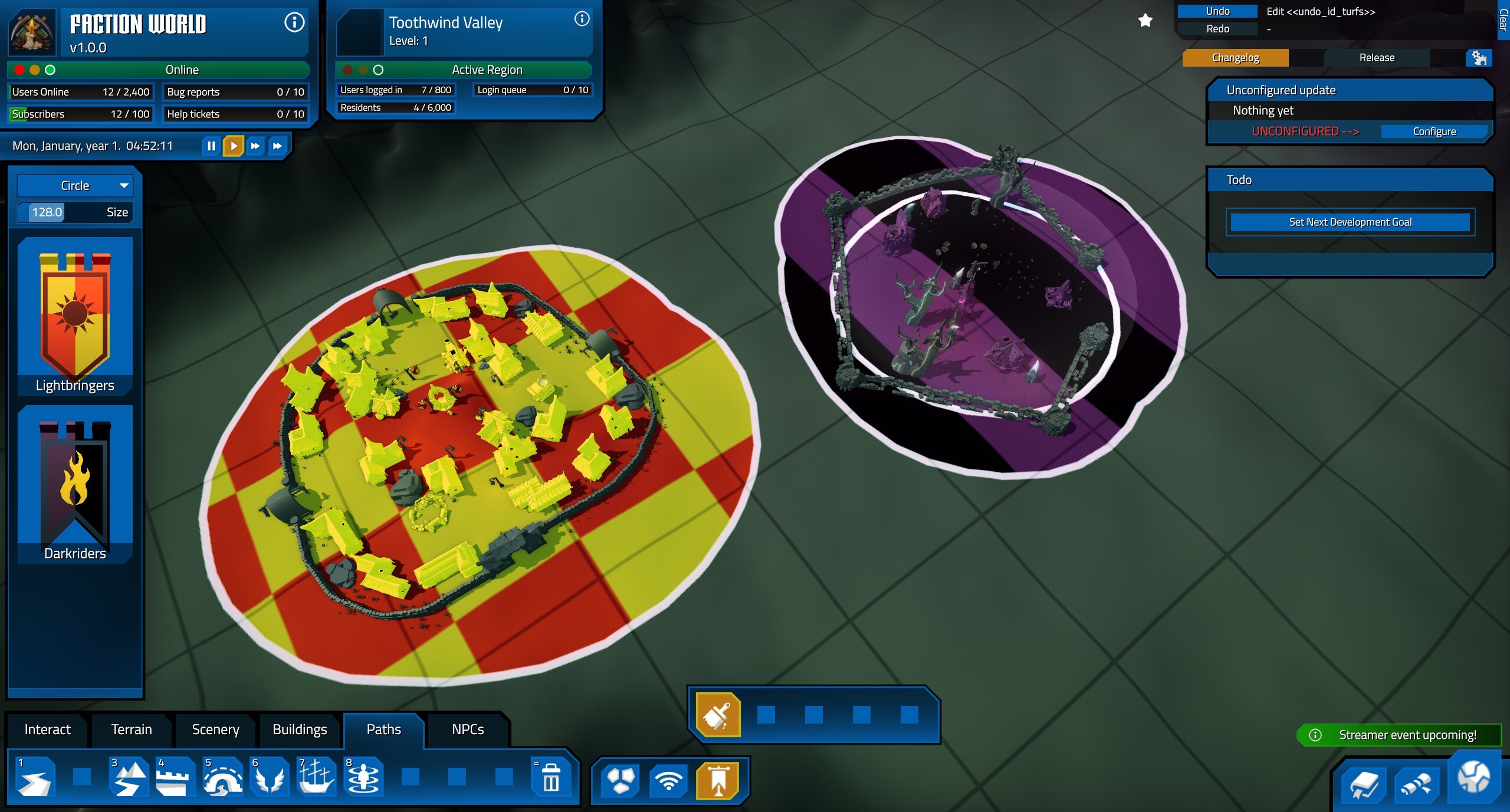
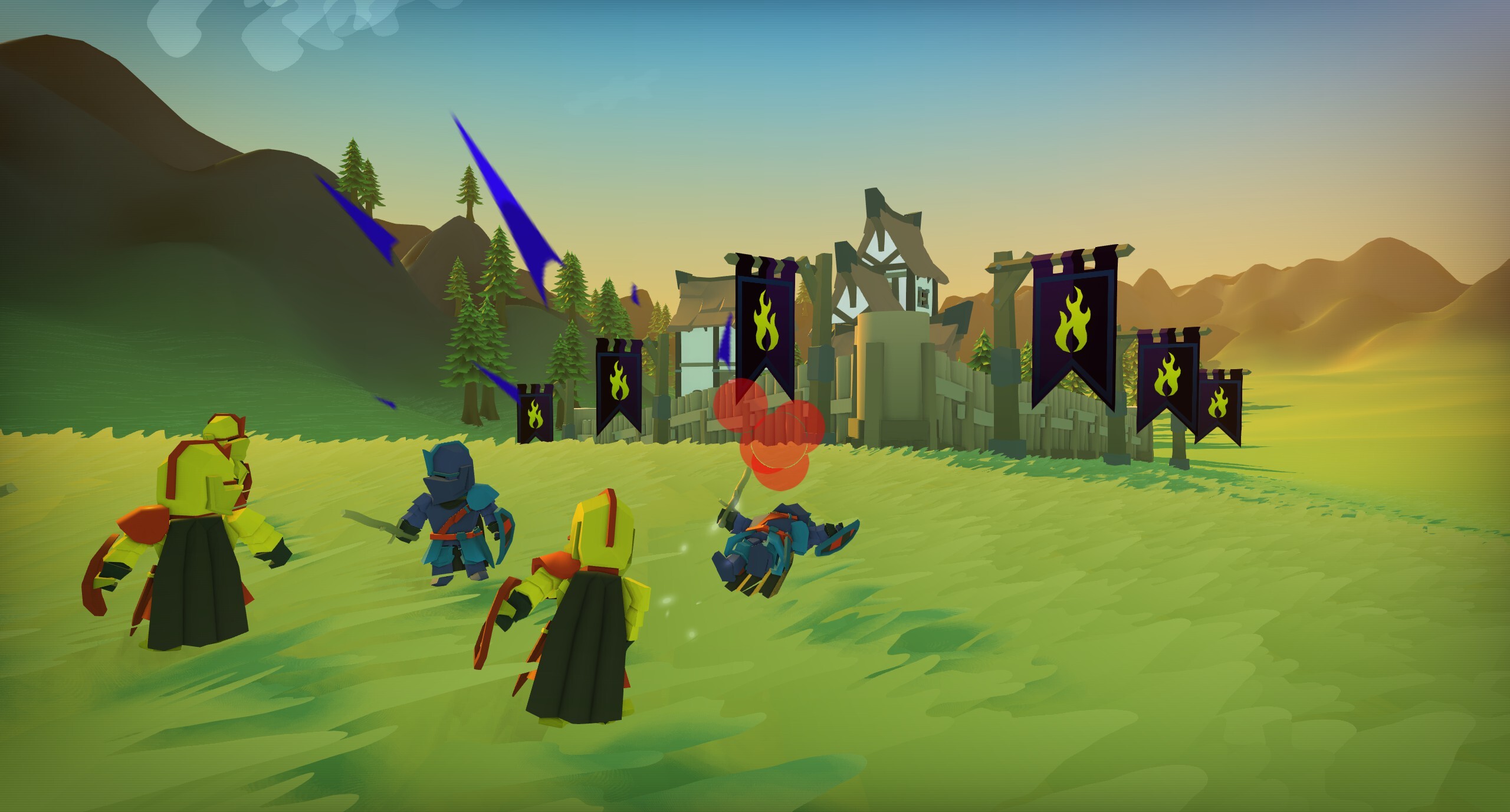
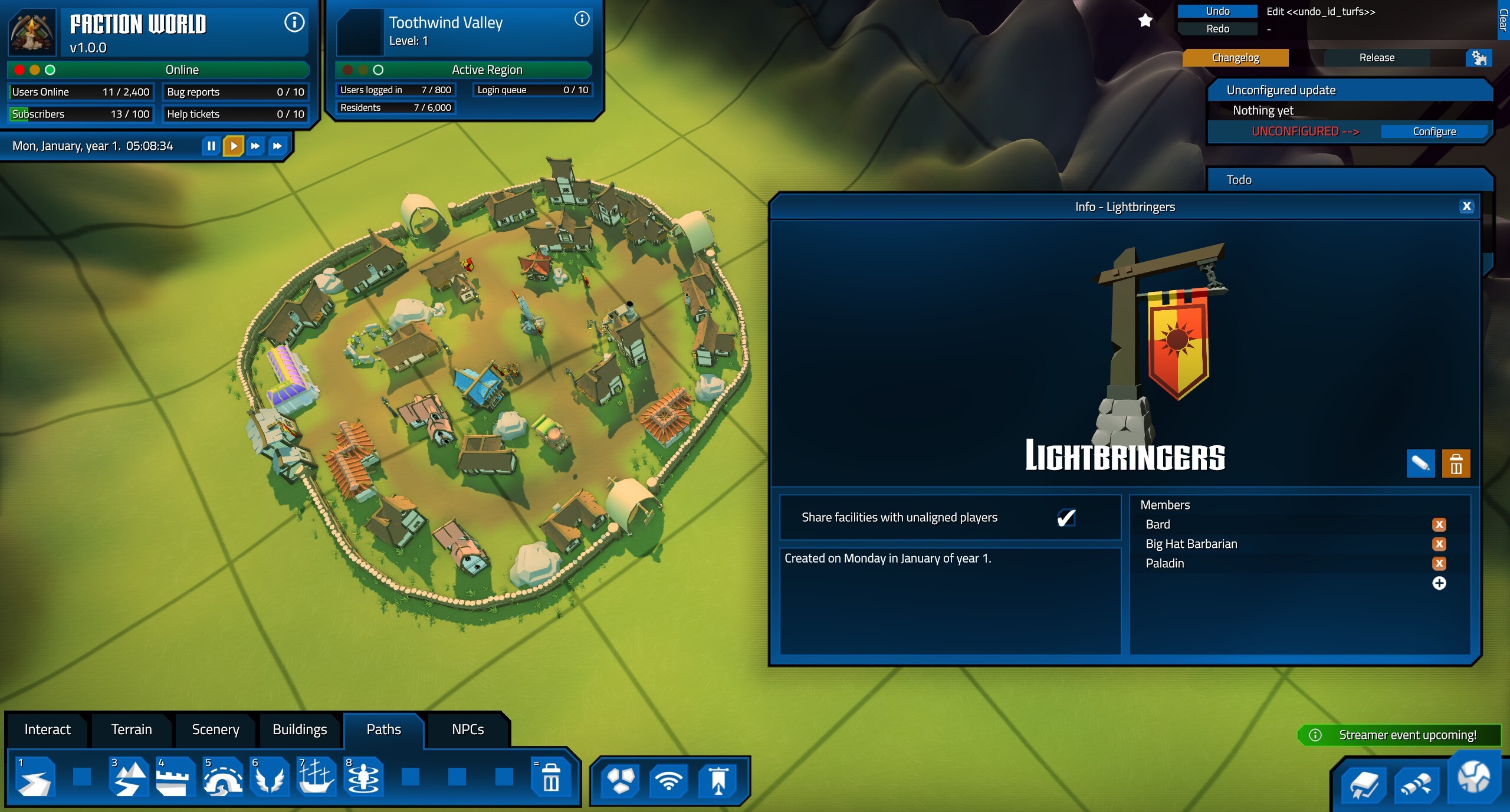 Once you have factions, you can assign player classes to the different factions. So for example, you might choose that your Paladins belong to a faction named "Lightbringers", whereas your Mages belong to one called "Darkriders". You can assign as many classes as you like to each. You may also leave some player classes "unaligned"; players using those classes won't take part in the faction conflict.
 Inside of the Lightbringer faction's home turf, the buildings and NPCs will only provide services to players in the "Lightbringer" faction; Darkrider faction members won't be able to make use of them. Similarly, quest-giver NPCs placed inside Lightbringer turf will only give their quests to Lightbringer faction members, and class trainers inside Lightbringer turf will only train Lightbringer faction members. You get the idea. Buildings and NPCs placed in neutral territory will serve the members of any faction (or unaligned players!)
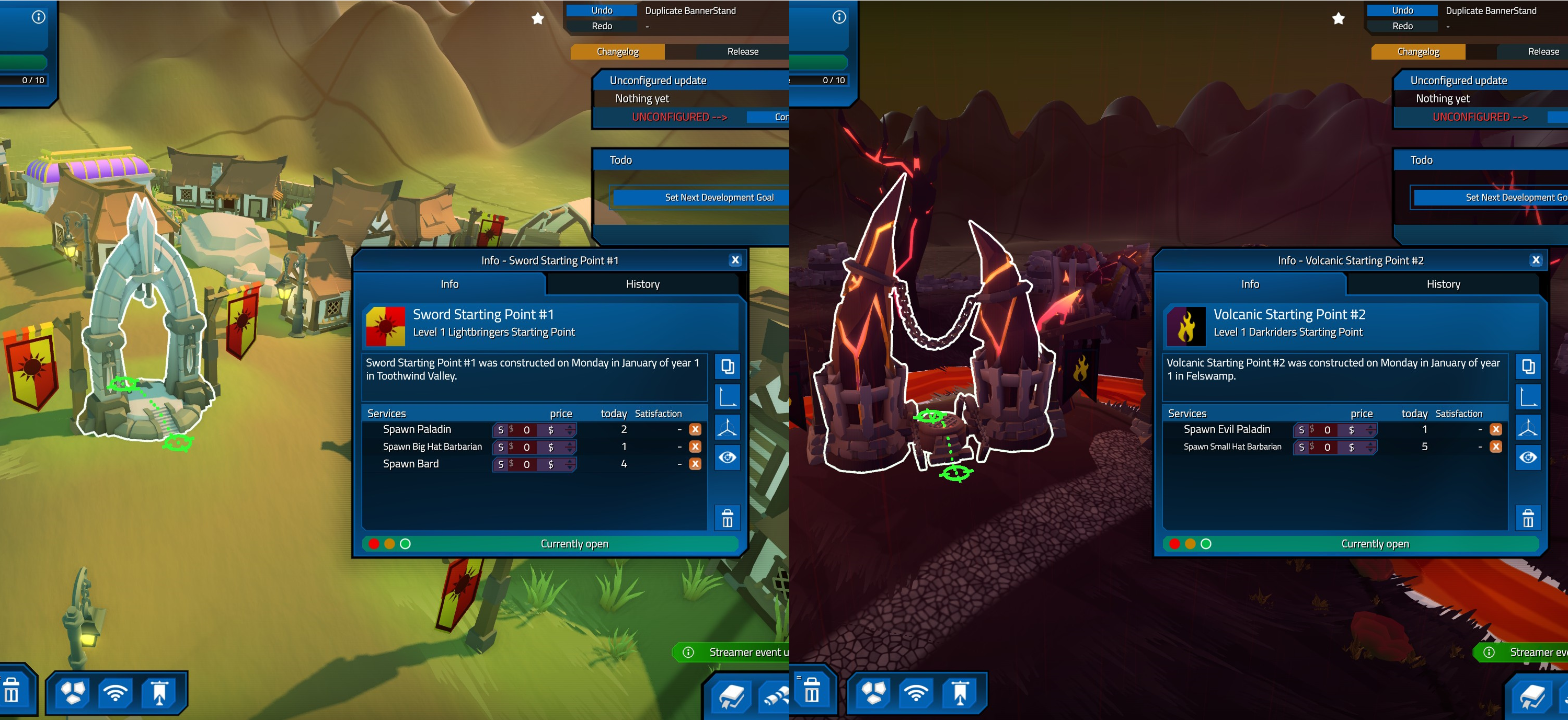
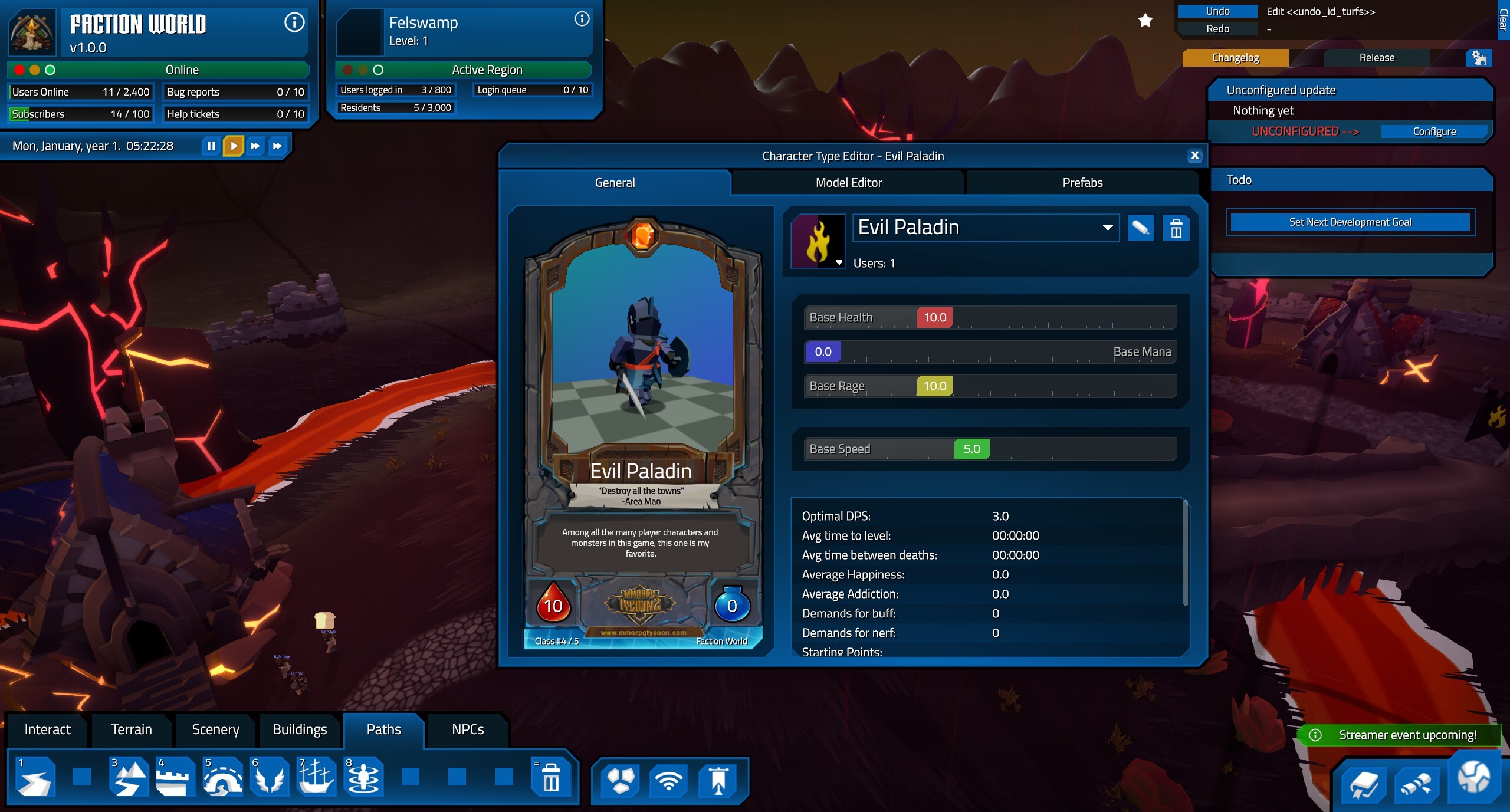 You can assign different class variants to different factions as if they were completely separate player classes, making it easy to fill out your factions.
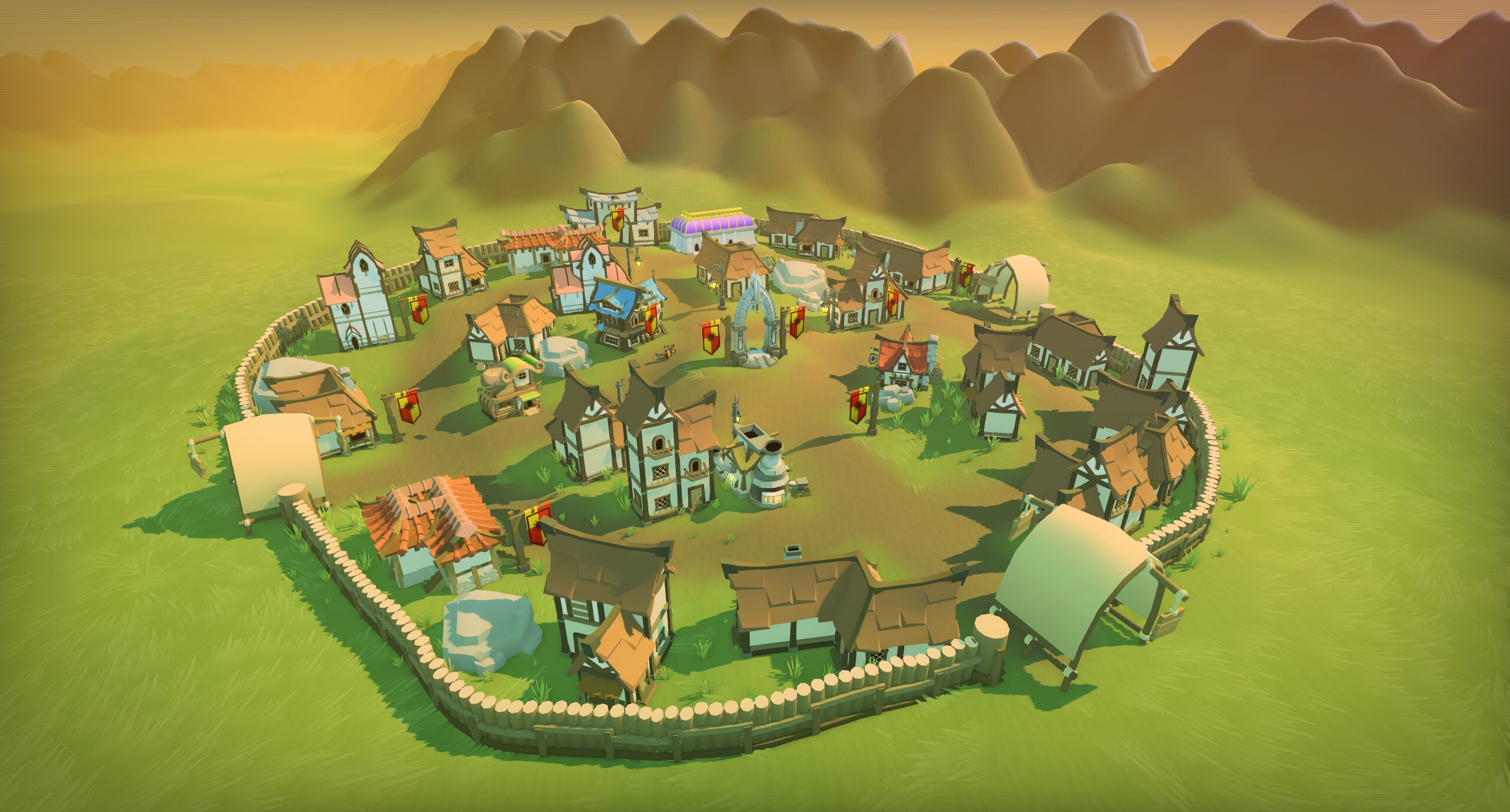 New banner stand scenery items will automatically show the banner of whatever faction controls the position where they're placed, and will automatically update if they are moved into a different faction's turf!



 Award
 15

 How TO: MMORPG Tycoon 2 (v0.19.106; Dungeons Update)


 Pathing using Quests - Reducing Region Crowding/Overloading

 Guide du Débutant




 Roman Inspired Prefabs (Class, Mobs, NPC)

 Overview of Attributes and Abilities








 Loading

