



Install Steam
sign in
|
language
简体中文 (Simplified Chinese)
繁體中文 (Traditional Chinese)
日本語 (Japanese)
한국어 (Korean)
ไทย (Thai)
Български (Bulgarian)
Čeština (Czech)
Dansk (Danish)
Deutsch (German)
Español - España (Spanish - Spain)
Español - Latinoamérica (Spanish - Latin America)
Ελληνικά (Greek)
Français (French)
Italiano (Italian)
Bahasa Indonesia (Indonesian)
Magyar (Hungarian)
Nederlands (Dutch)
Norsk (Norwegian)
Polski (Polish)
Português (Portuguese - Portugal)
Português - Brasil (Portuguese - Brazil)
Română (Romanian)
Русский (Russian)
Suomi (Finnish)
Svenska (Swedish)
Türkçe (Turkish)
Tiếng Việt (Vietnamese)
Українська (Ukrainian)
Report a translation problem

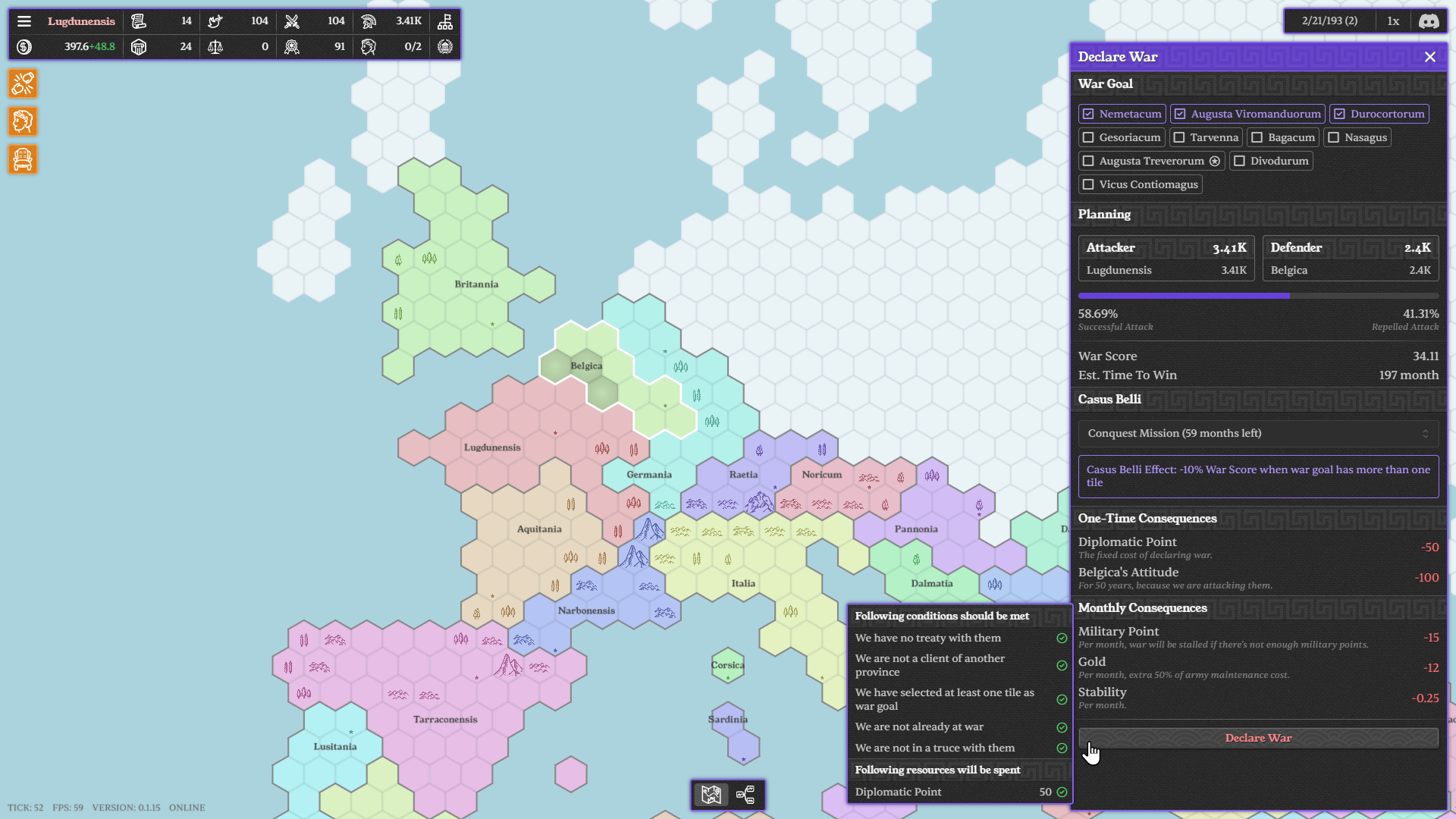 The core systems are inspired by classic grand strategy games like Europa Universalis IV: diplomacy, conquest, and long-term statecraft. But it’s streamlined and abstracted. There’s no micromanaging army movement or individual battles - war is resolved through stats-driven systems and calculated risk. The focus is on strategic decisions, not mechanical execution.
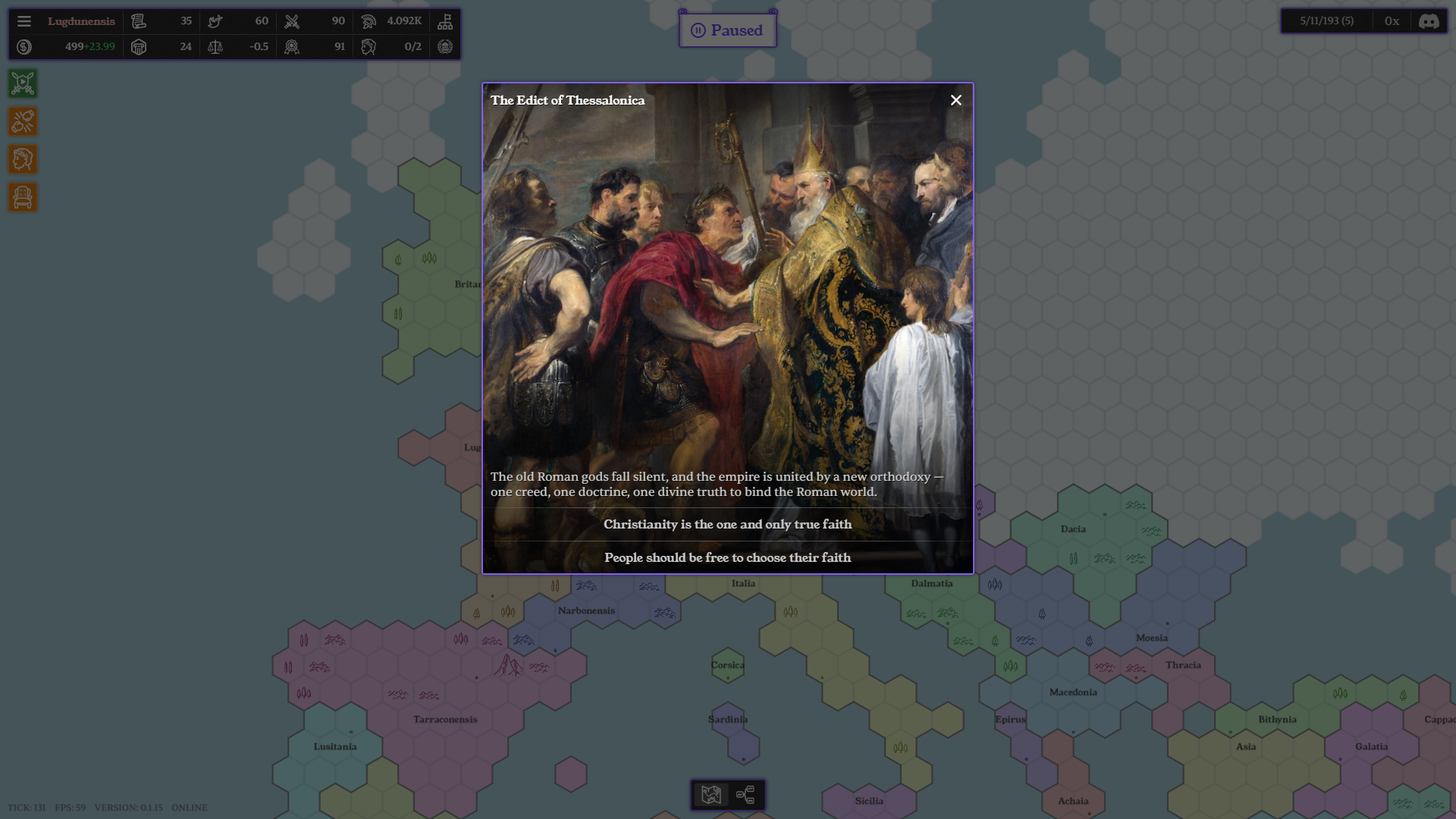 Each run earns “legacy points” based on your accomplishments, making the next run stronger and faster - bringing that incremental progression into a format where it truly belongs.
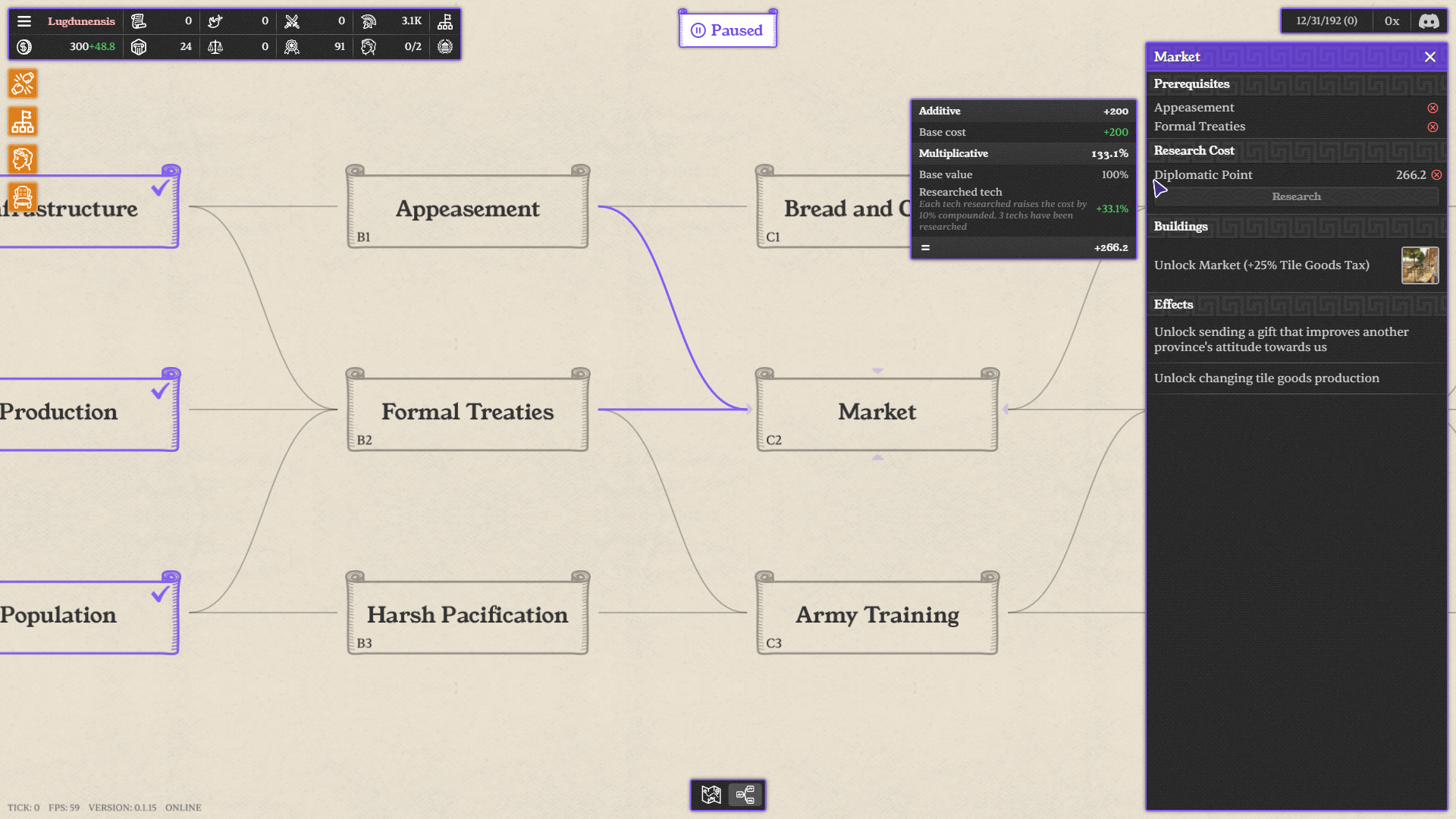 This is a project that fits both my strengths and my constraints. It lets me go deep on systems design without tying the game’s future to constant server costs. It’s ambitious but achievable.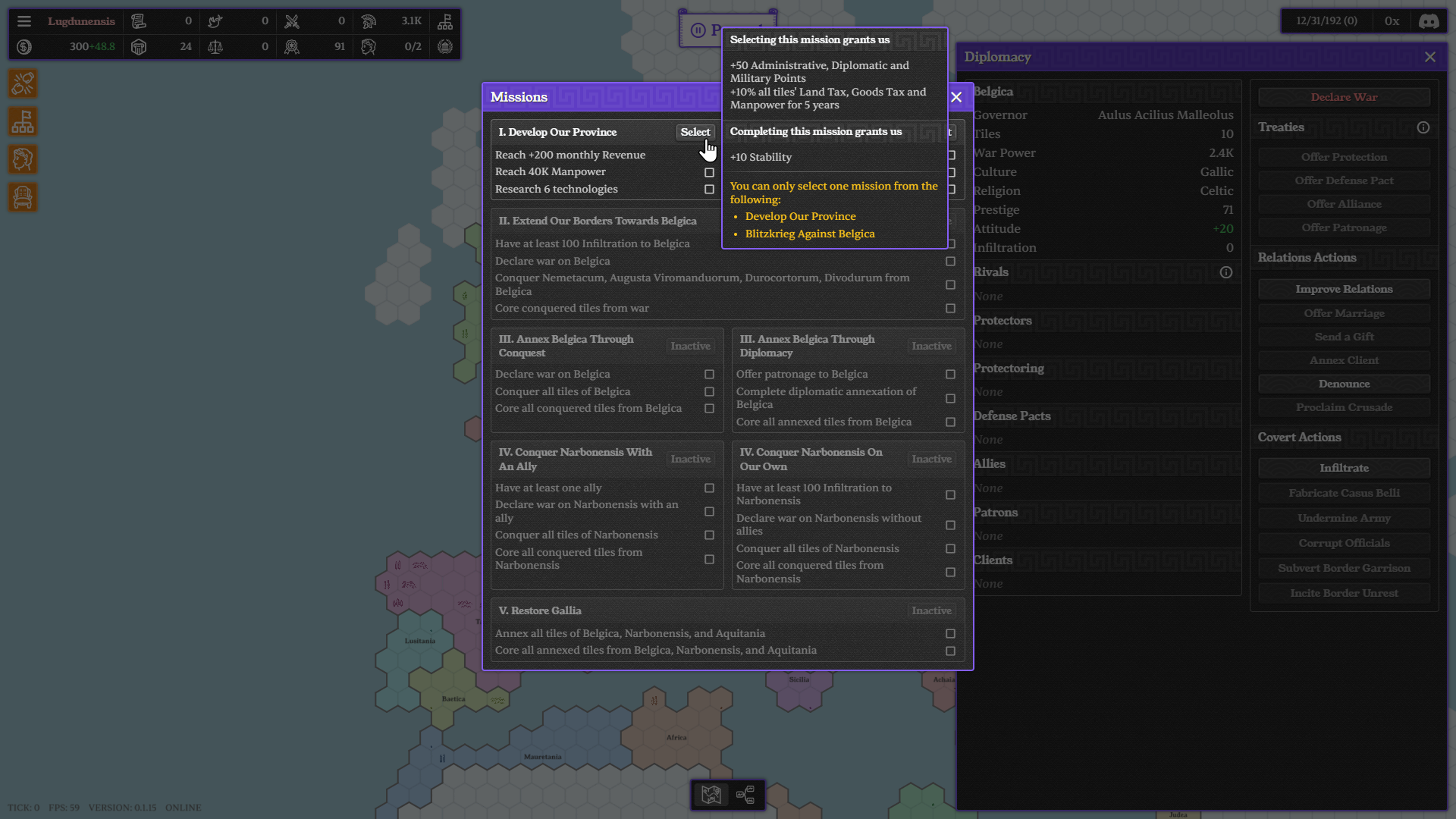


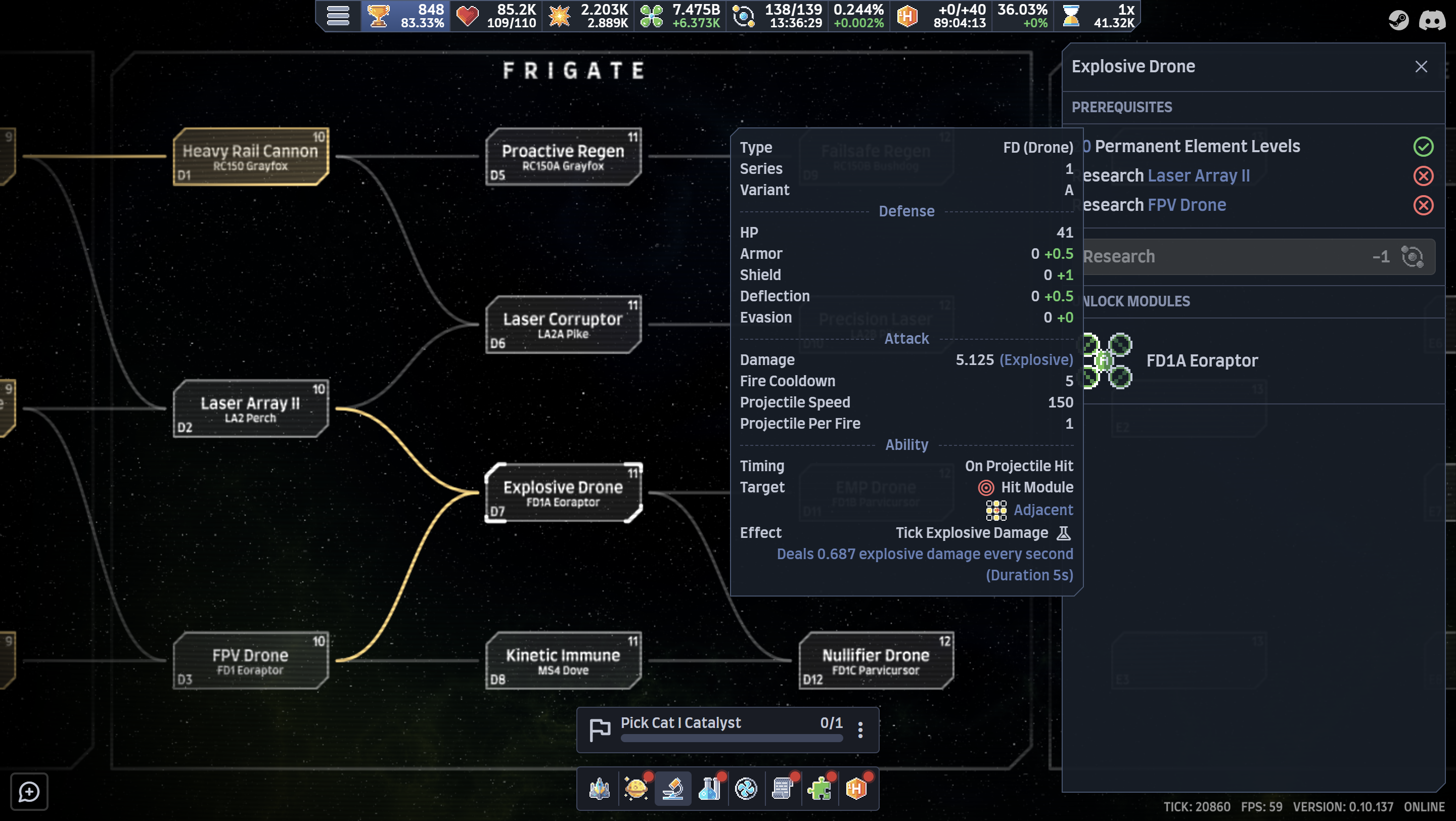
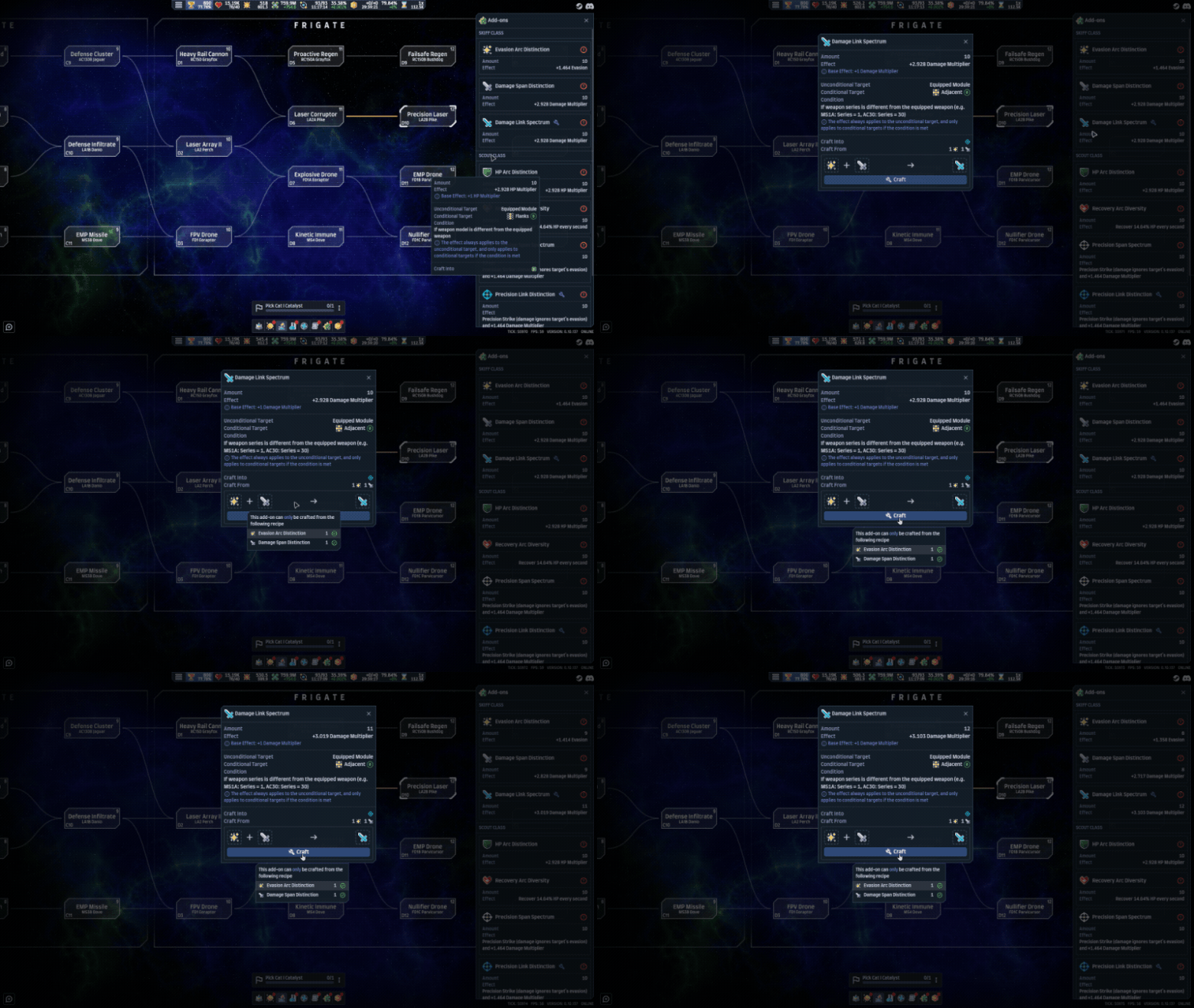 With this crafting system, the add-on value in the peace treaty has been adjusted as well. Previously, an add-on of the current ship class was worth 50 peace treaty score (PTS), the previous class was worth 25 PTS, N-2 class was worth 12.5 PTS, and so on. Now, an add-on of the current ship class is still worth 50 PTS, and add-ons from all previous ship classes are worth 40 PTS.
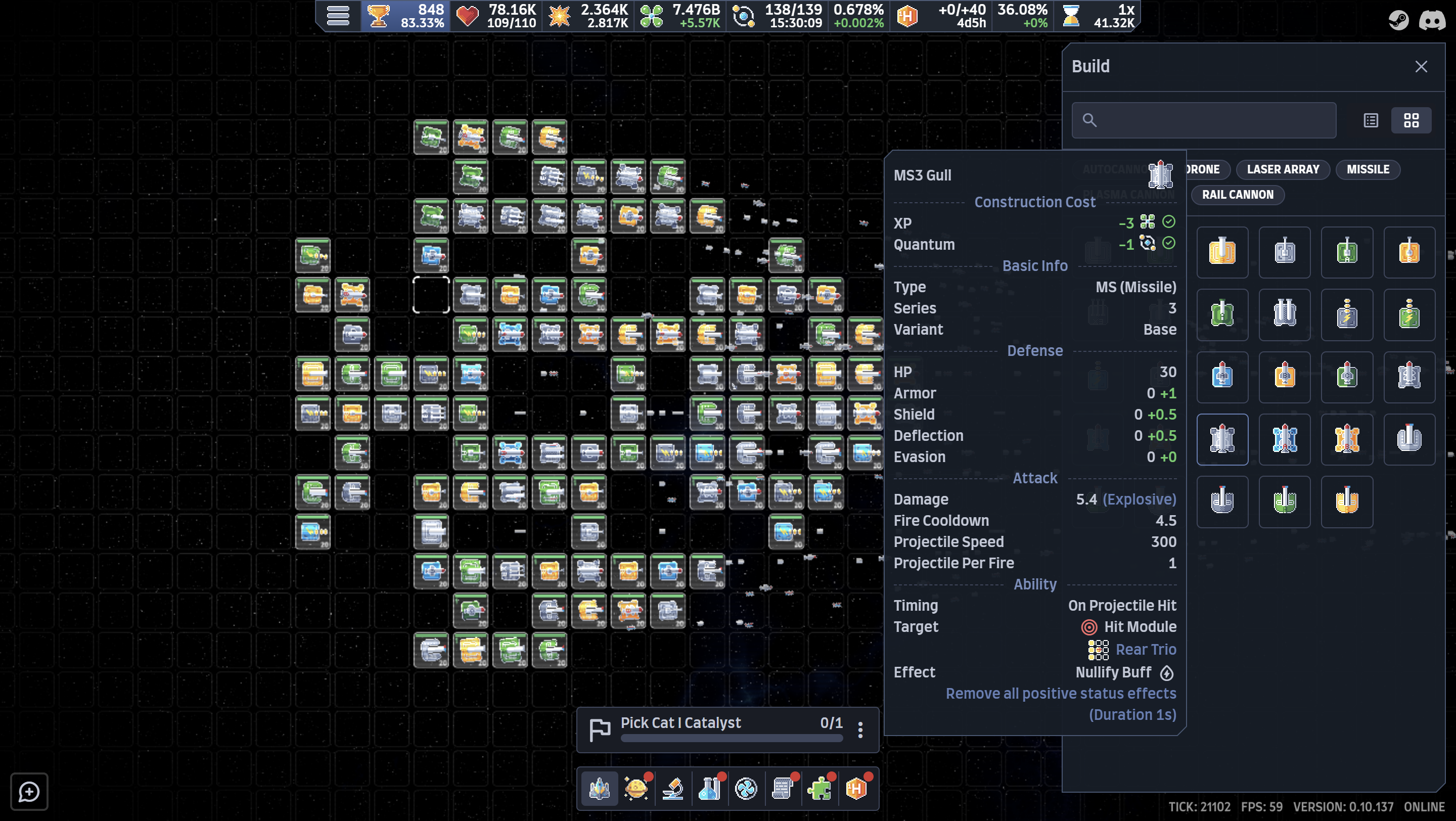 Add-on mechanisms have been standardized: they now have unconditional targets (which is always effective) and conditional targets (usually within a range, and is effective when the condition is met). This is basically how most add-ons works already. Now this information is presented in a tabular format, which should make it easier to read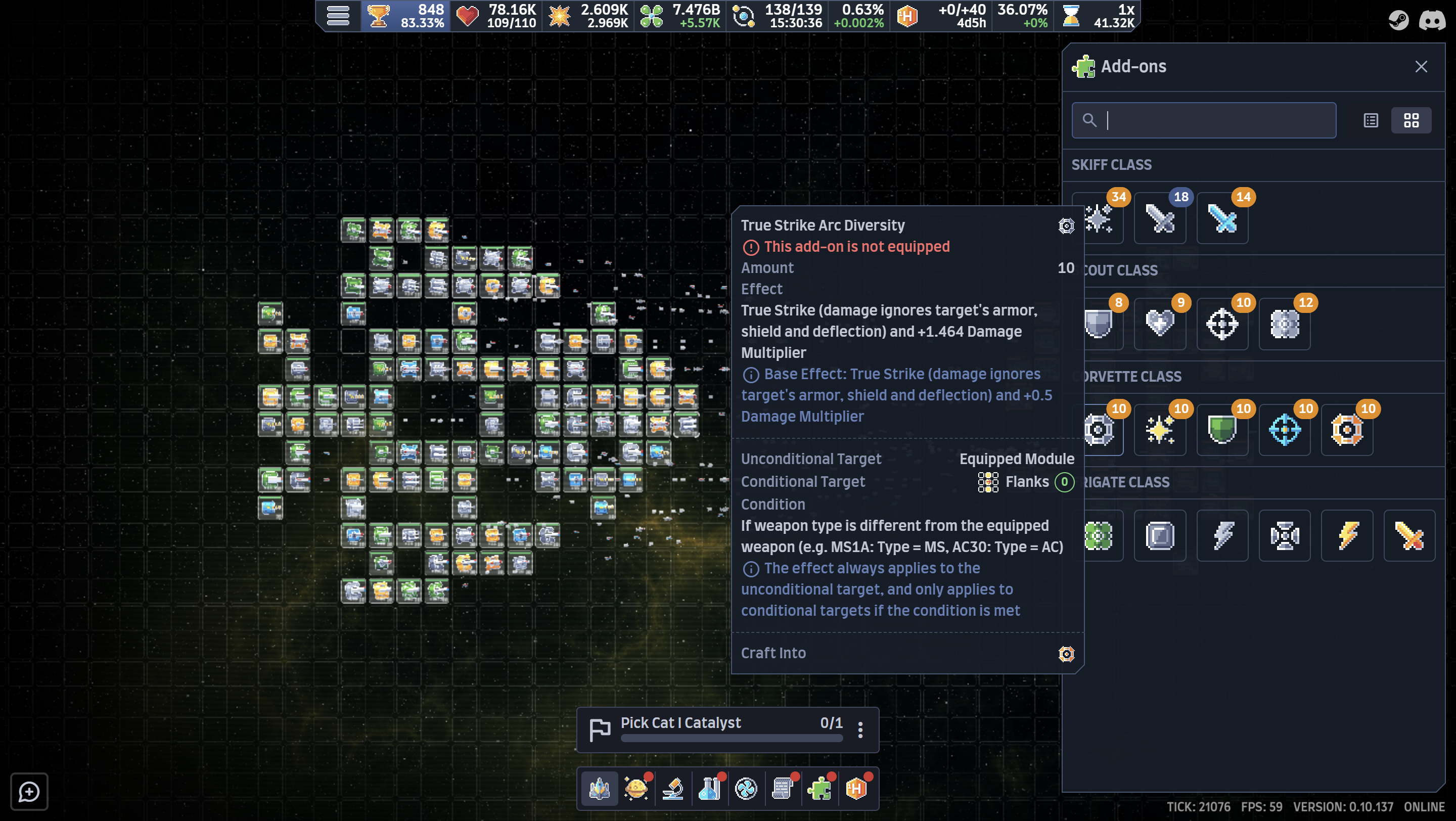


 ...
... 
 Loading

