



Install Steam
sign in
|
language
简体中文 (Simplified Chinese)
繁體中文 (Traditional Chinese)
日本語 (Japanese)
한국어 (Korean)
ไทย (Thai)
Български (Bulgarian)
Čeština (Czech)
Dansk (Danish)
Deutsch (German)
Español - España (Spanish - Spain)
Español - Latinoamérica (Spanish - Latin America)
Ελληνικά (Greek)
Français (French)
Italiano (Italian)
Bahasa Indonesia (Indonesian)
Magyar (Hungarian)
Nederlands (Dutch)
Norsk (Norwegian)
Polski (Polish)
Português (Portuguese - Portugal)
Português - Brasil (Portuguese - Brazil)
Română (Romanian)
Русский (Russian)
Suomi (Finnish)
Svenska (Swedish)
Türkçe (Turkish)
Tiếng Việt (Vietnamese)
Українська (Ukrainian)
Report a translation problem


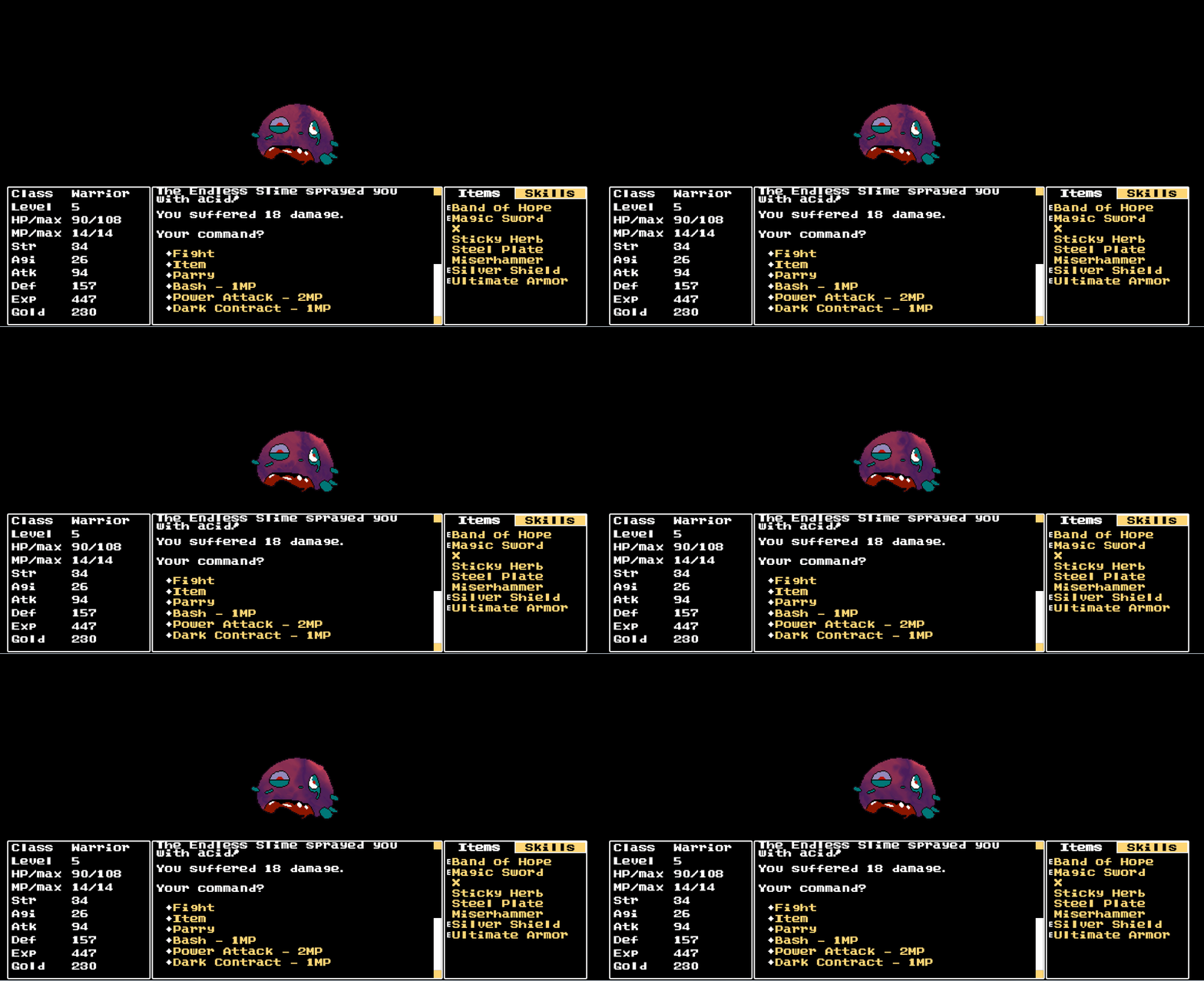 New enemy types appear in this mode. At first, they're not much different than normal enemies, but as you clear them they get progressively stronger. There are even endless bosses which drop a new set of top-tier equipment. Can you complete the set before the endless get too strong?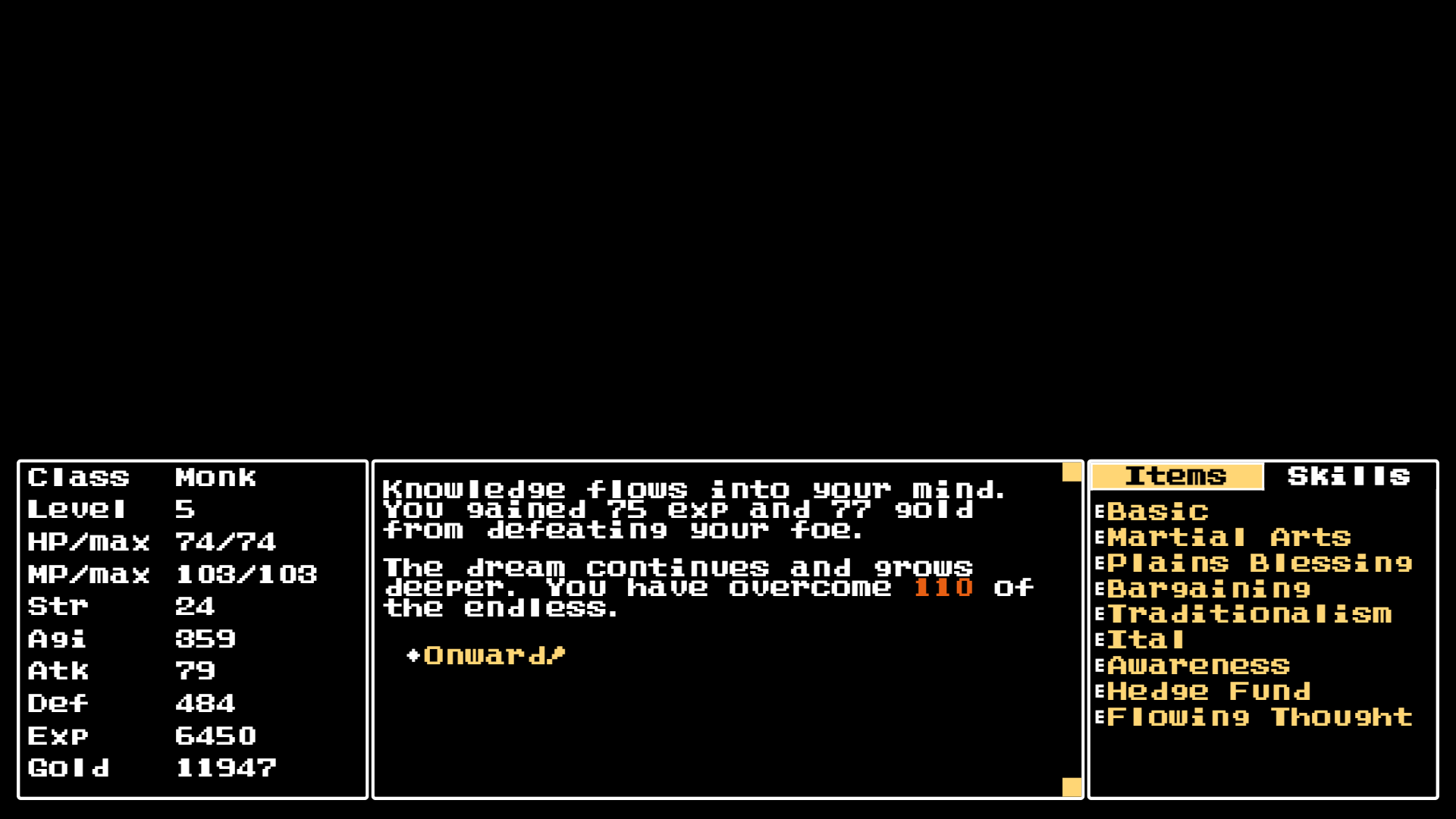

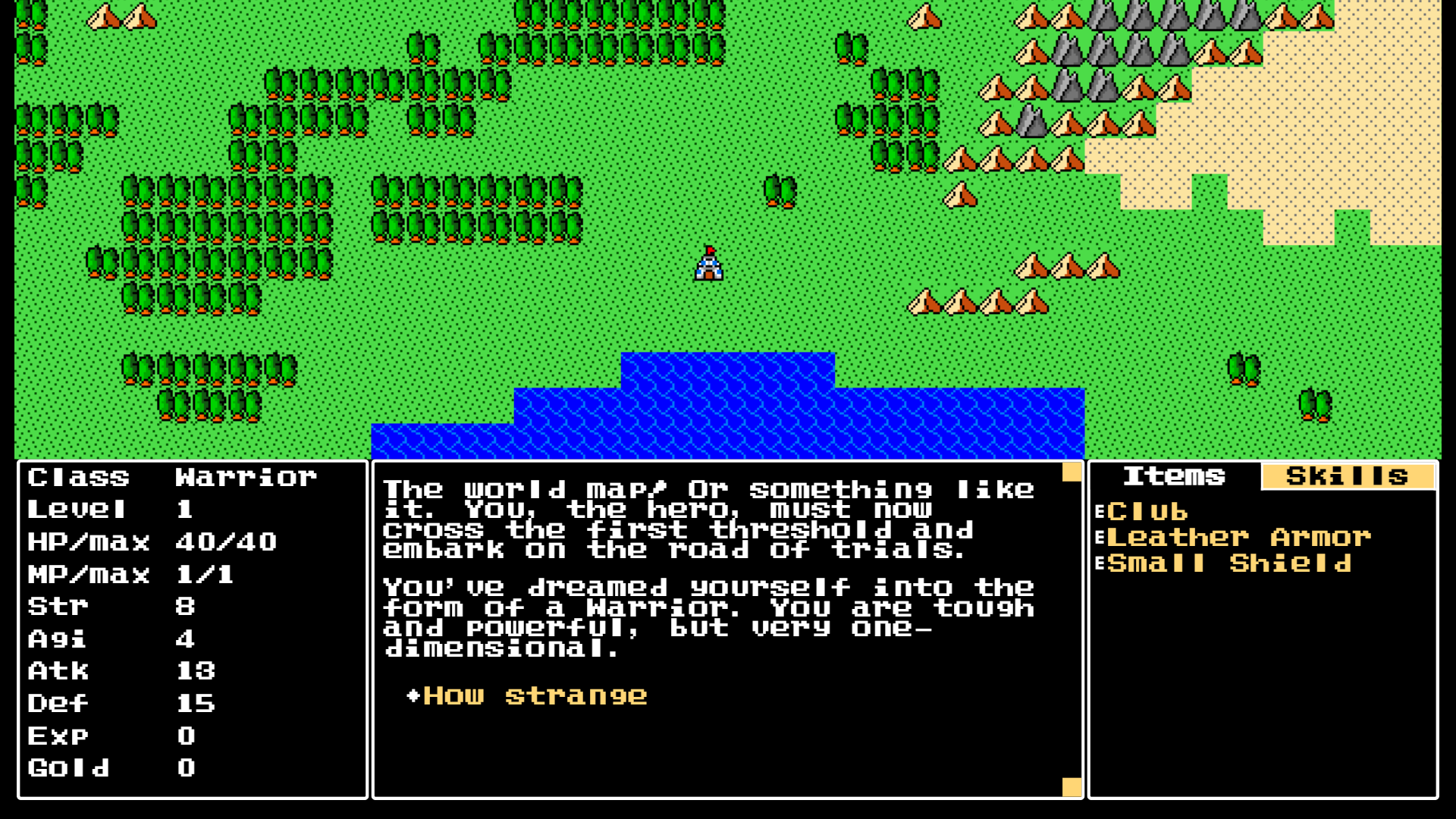 The Warrior is a strong fighter, boasting excellent stats, stat growth, and equipment selection. As you might imagine it is a simple class, focused on dealing and absorbing damage. This is a good class to start with, especially for those unaccustomed to classic turn-based RPG combat.
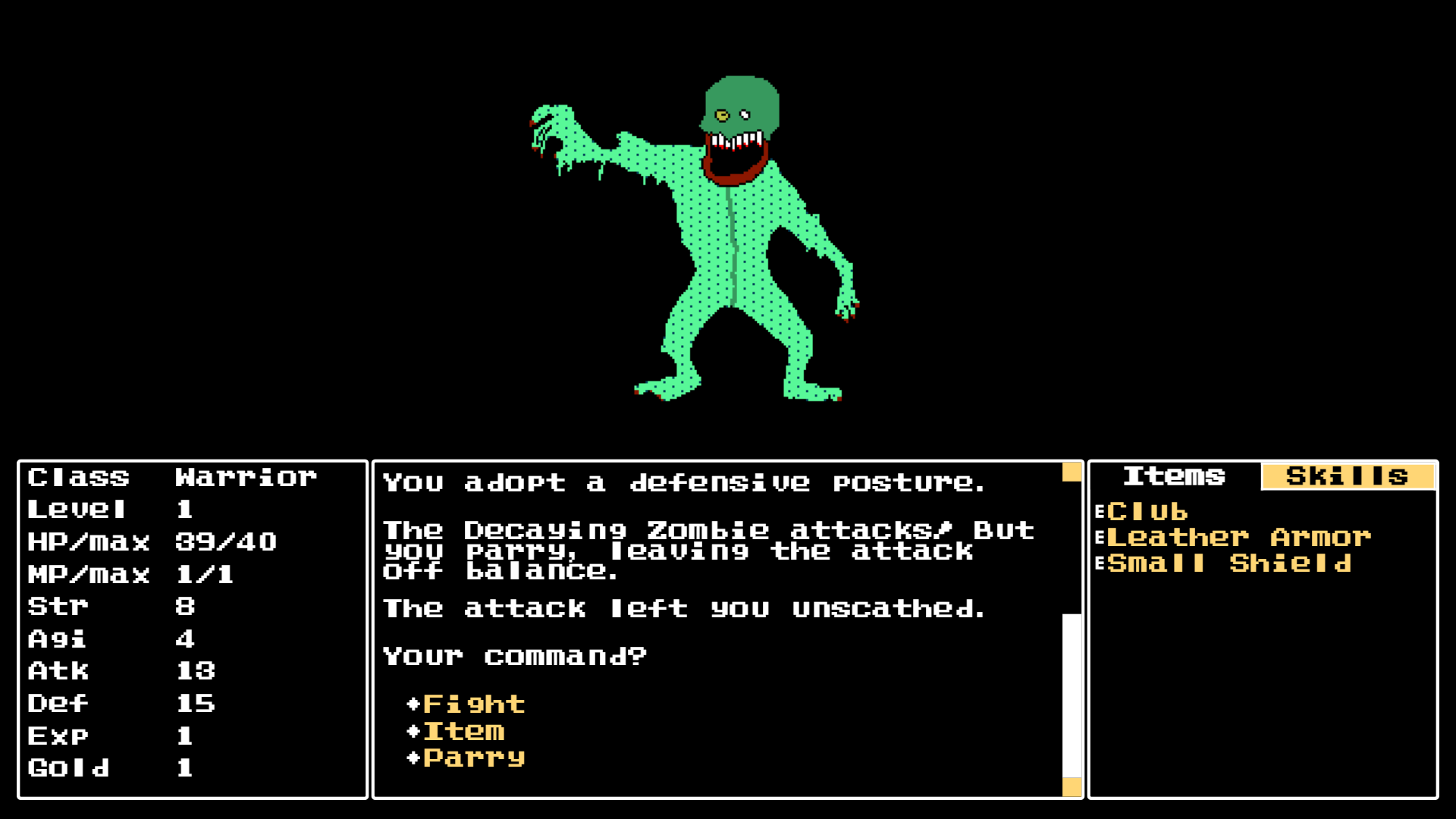 From the beginning, the Warrior can parry attacks, reducing their damage and stunning the attacker.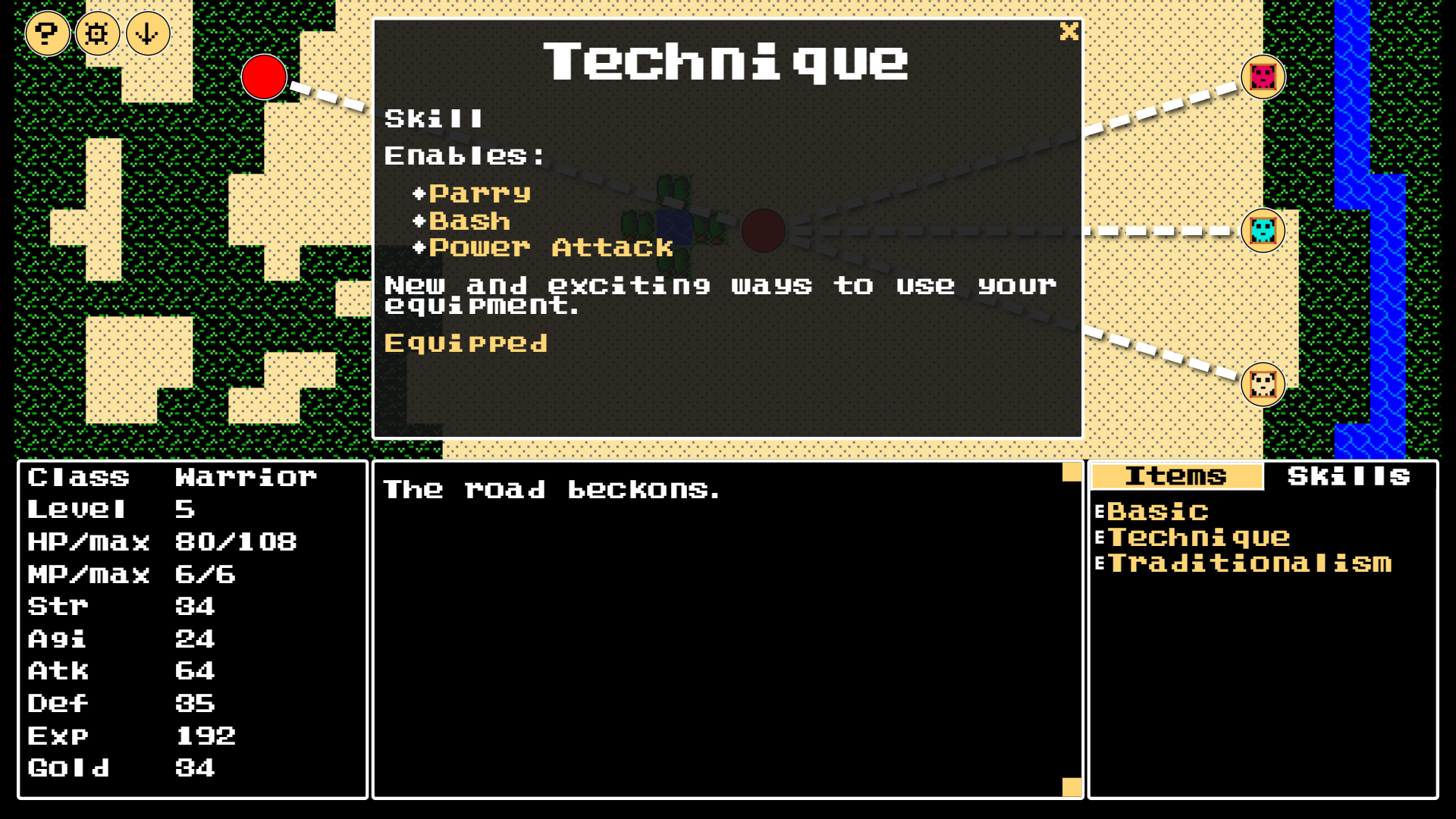
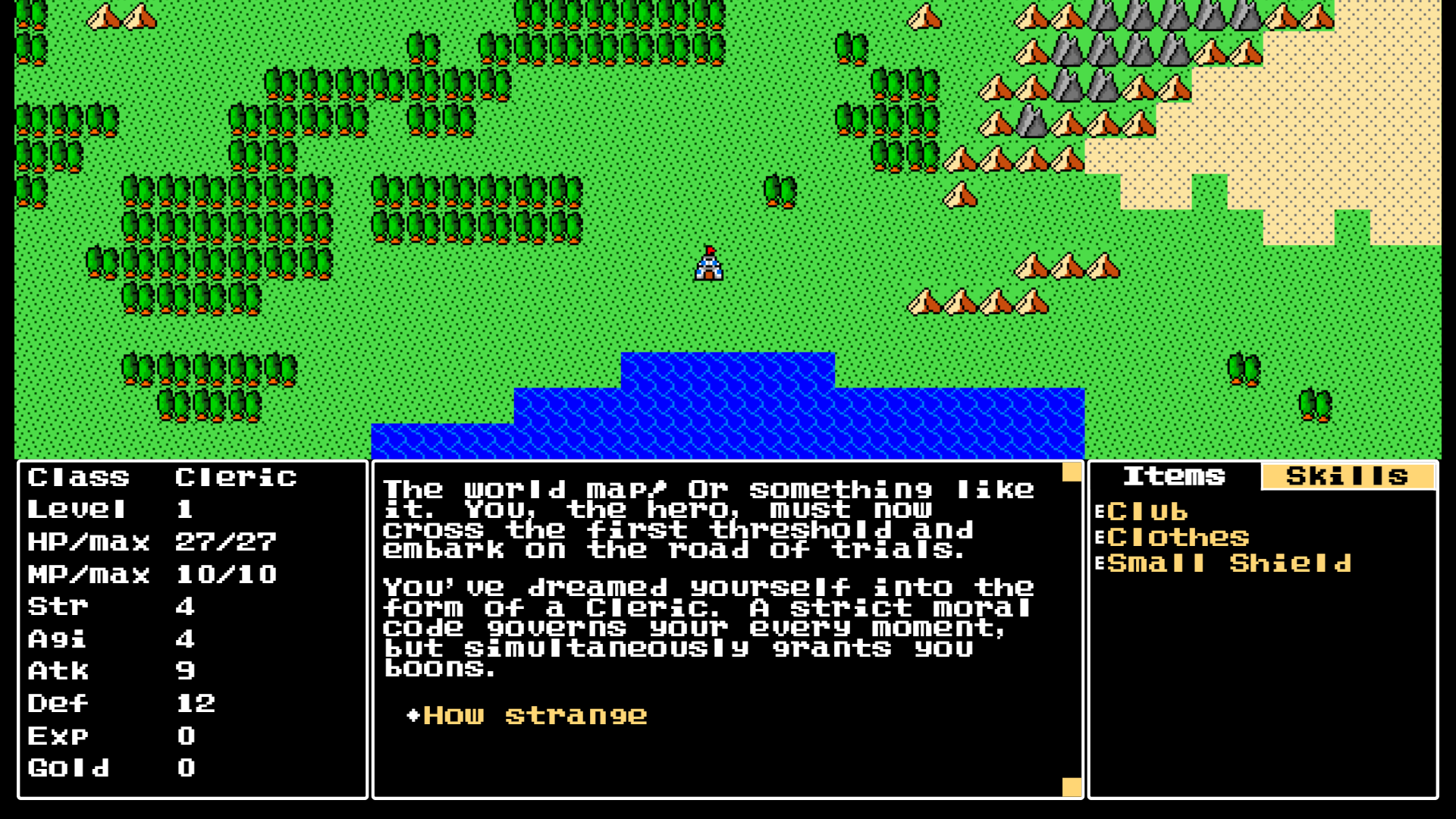 The Cleric is much weaker than the Warrior, and has a more limited weapon selection. However, perhaps unsurprisingly for those familiar with this sort of game, the Cleric compensates by having access to healing powers right from the start.
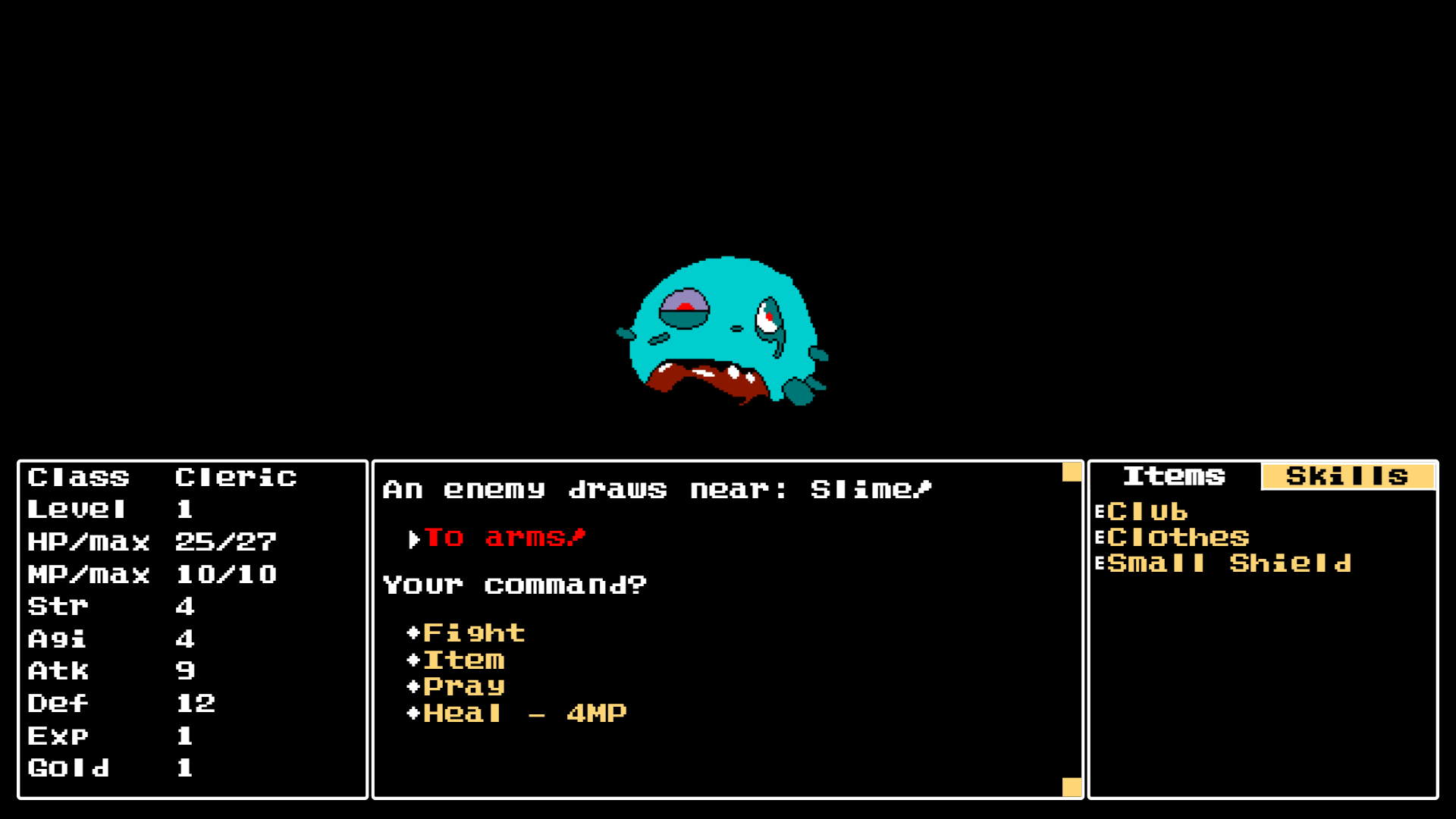 Additionally, the Cleric can entreat The Almighty for assistance at any time. This frequently restores MP, and sometimes HP as well. However, when seeking divine assistance, one must be prepared for silence, sometimes.
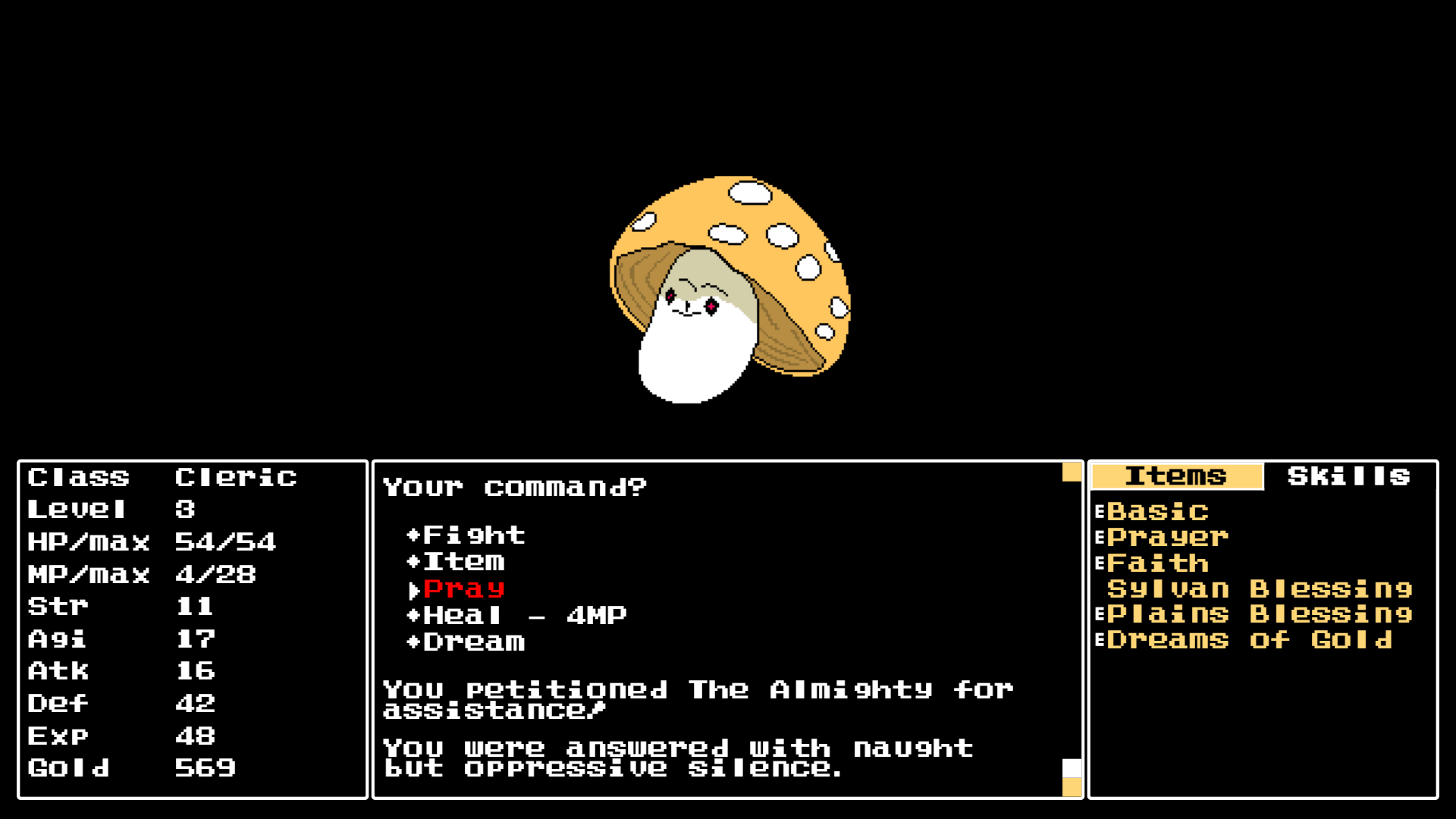 Later, the Cleric gets access to acts of faith that damage enemies (and are especially effective against the undead), prevent enemies from using magic, and heal even better.
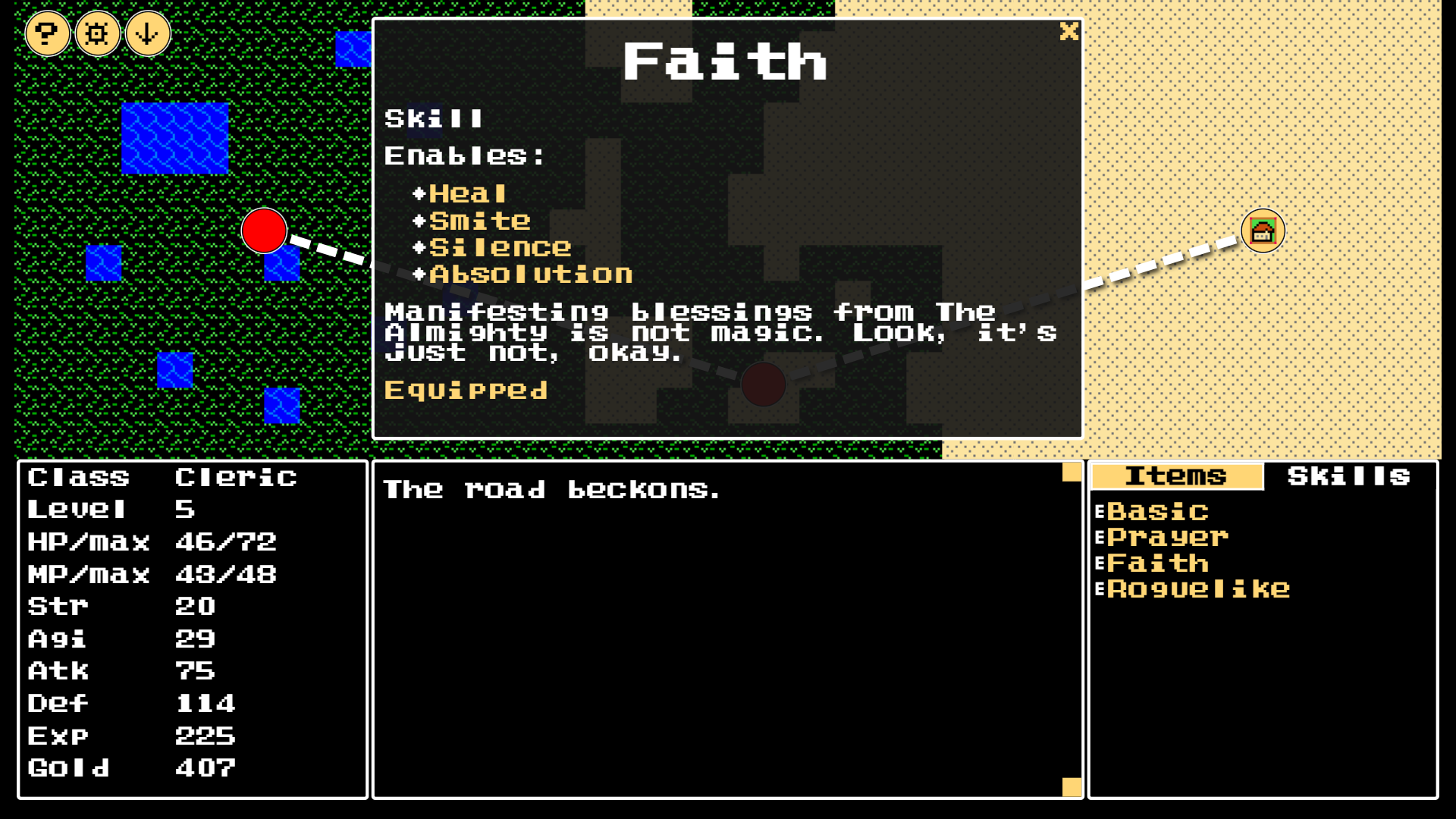 The Cleric is also a very survivable class. Unlike the Warrior this is not achieved via brute force, but with an enormous capacity to heal damage.
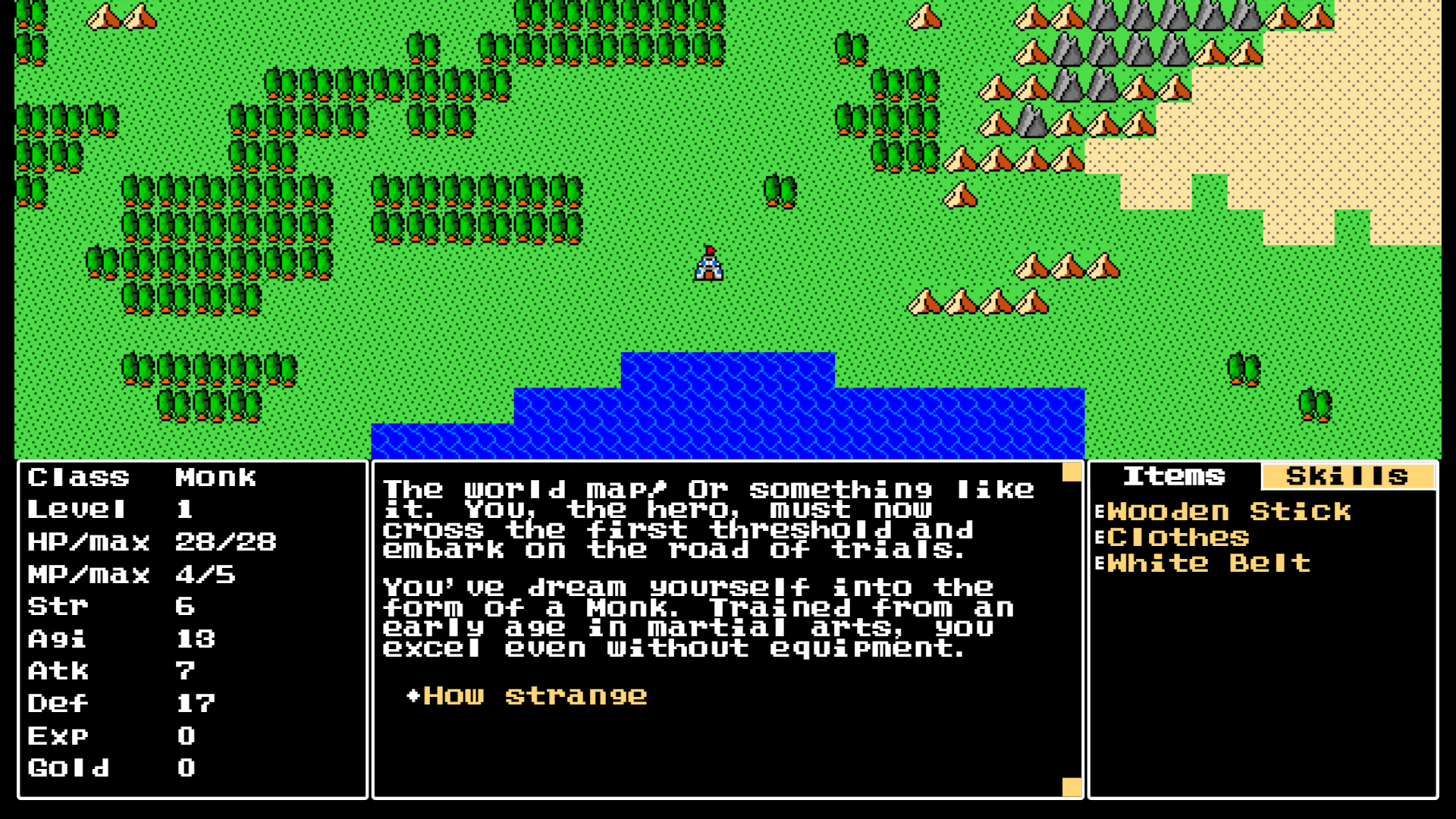 The Monk is a physical attacker like the Warrior, but one that eschews heavy armor and weapons. Indeed, one of the most striking features, pun intended, of the Monk is the ability to perform an unarmed strike from level 1. This attack circumvents the standard formulas and deals damage that scales with the Agi stat rather than Atk. A consequence of this is that the Monk can largely, if not totally, ignore weapons.
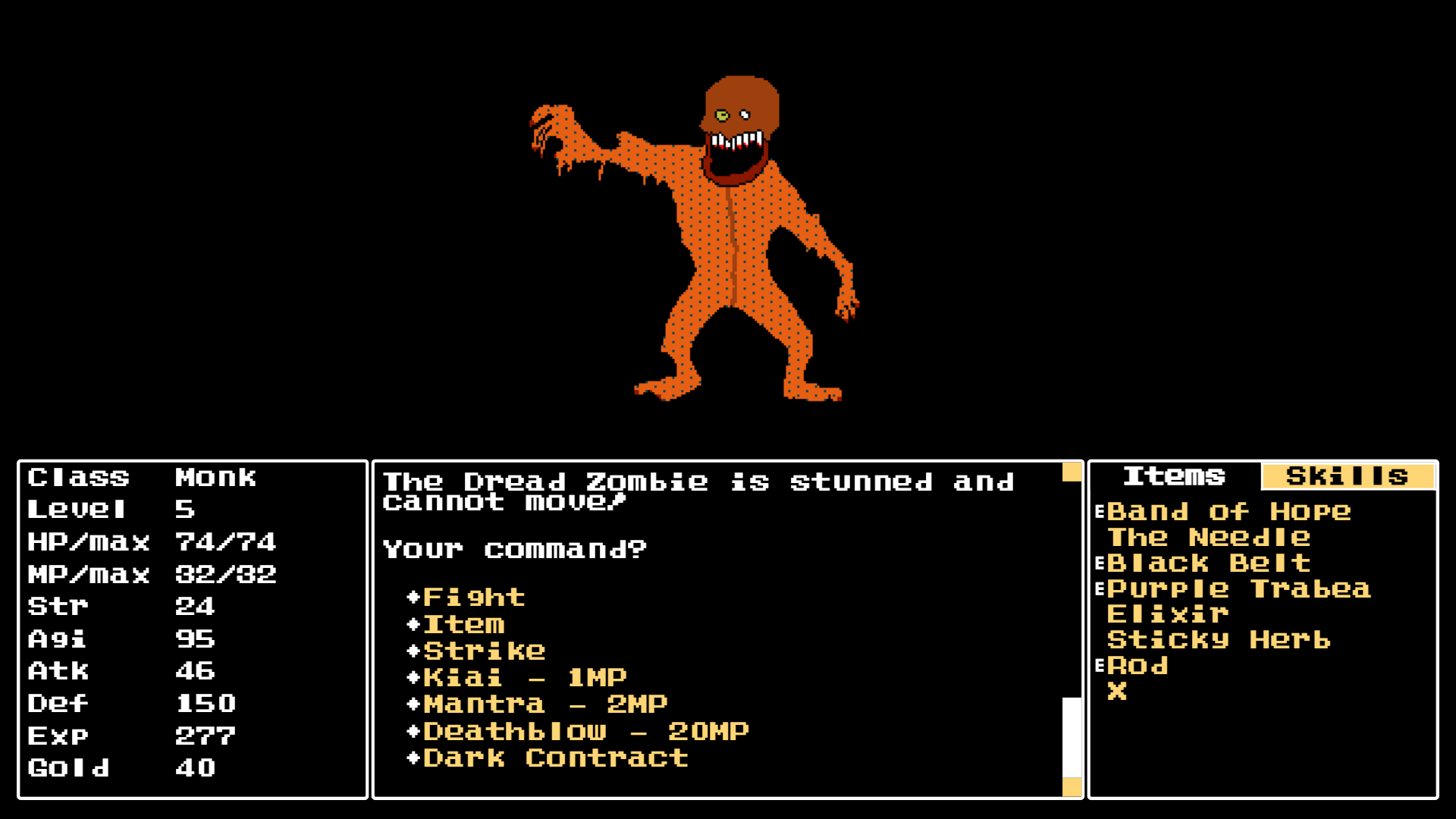
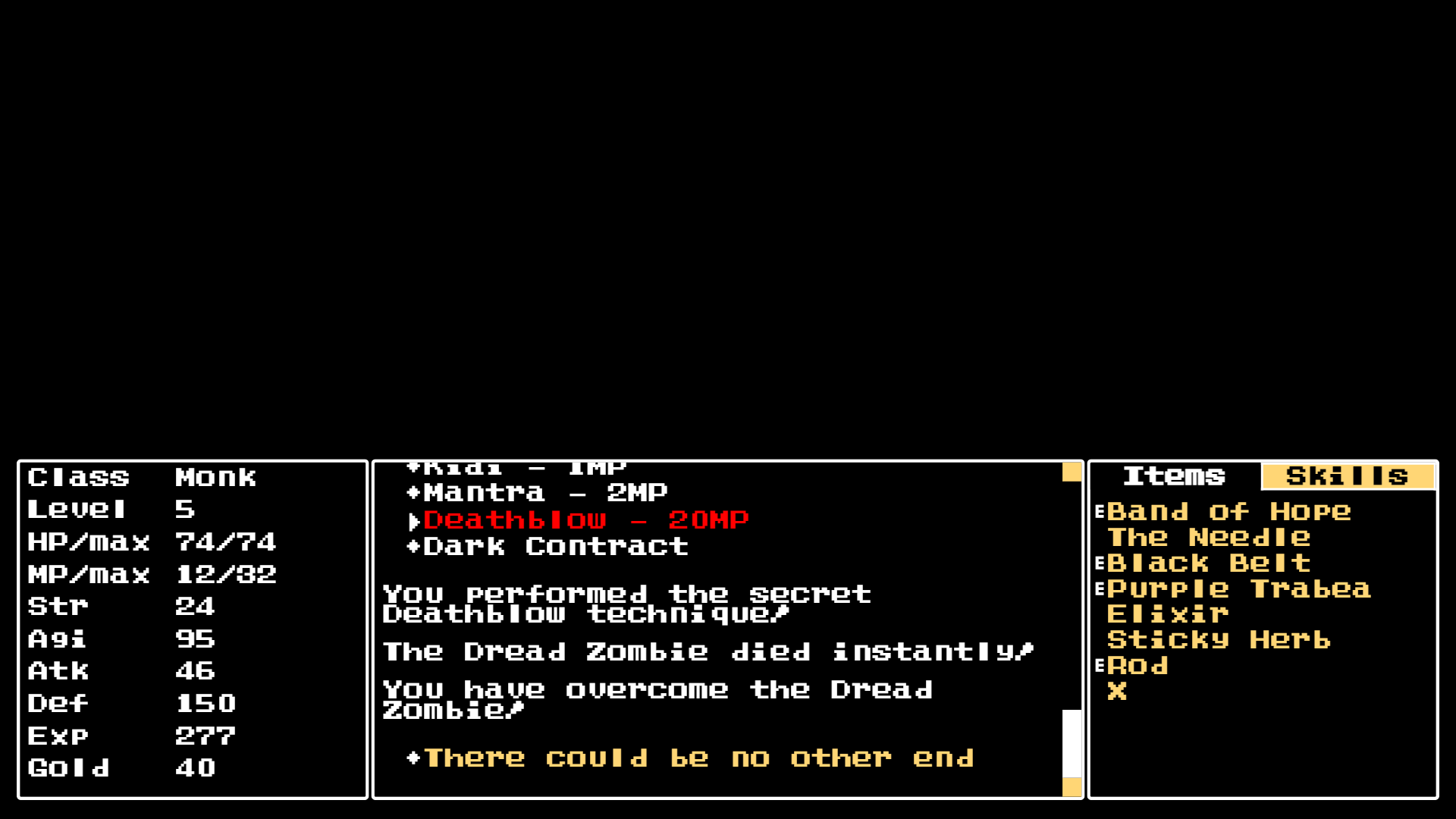
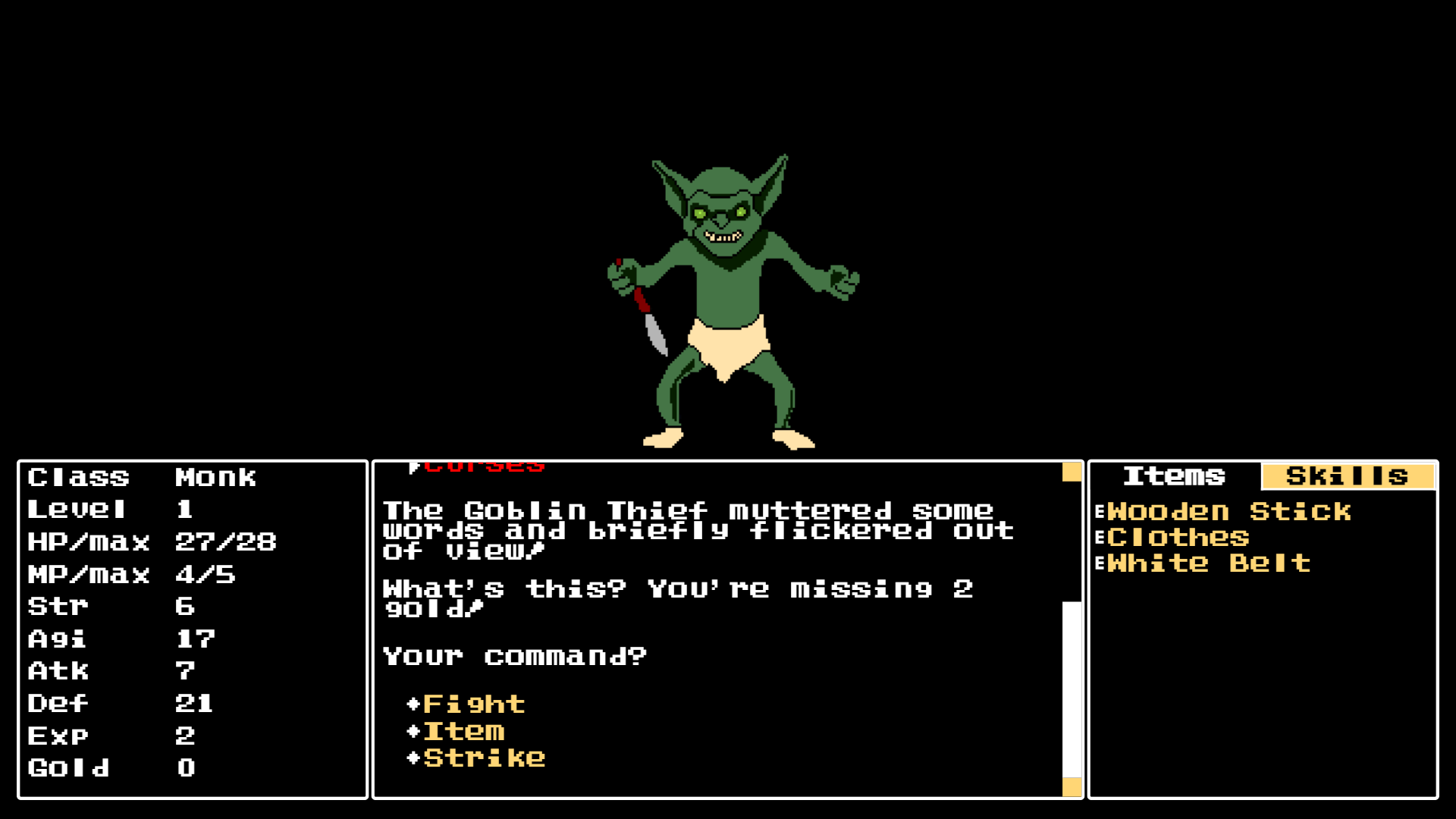 Later, the Monk gains additional abilities: stuns, modest healing... and the dread, secret attack: Deathblow. The latter does just what it says on the tin, but affording the MP cost is another matter. It is a bit dramatic, but not quite as overpowered as it might appear at fist glance.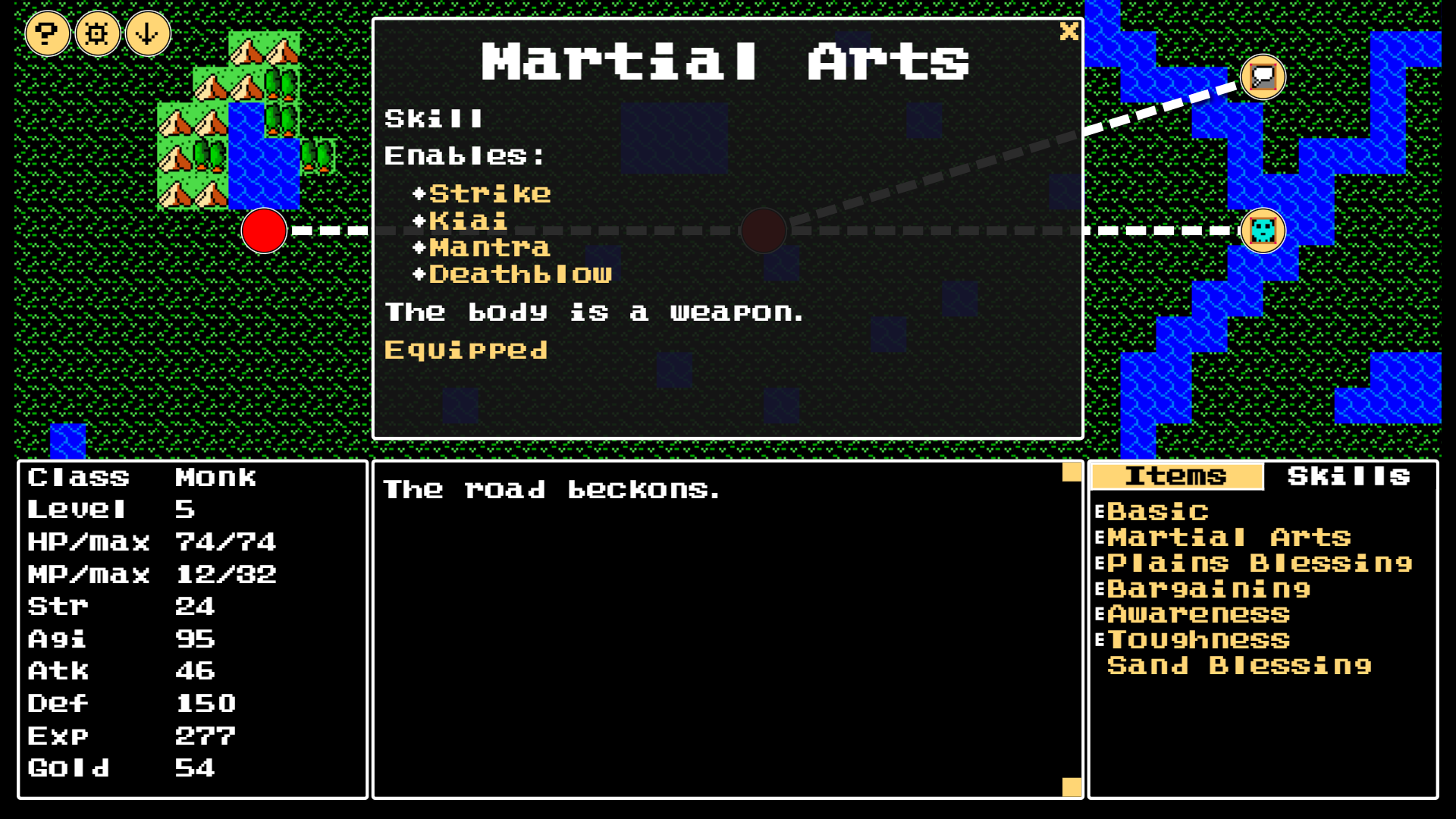
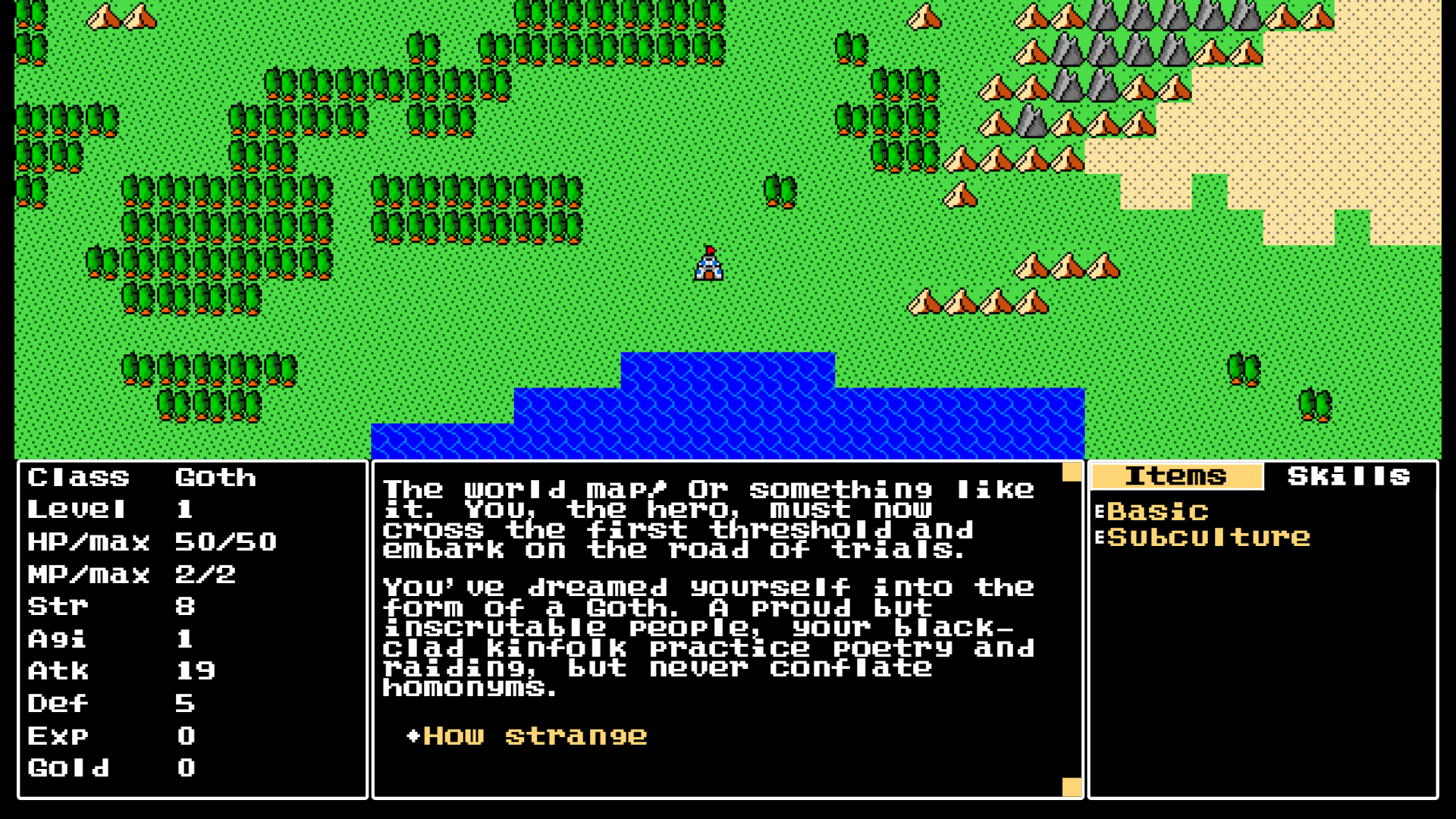 An interesting feature of the Goth is that it forgoes wielding anything in the off hand. Instead, it carries the mightiest possible two-handed sword.
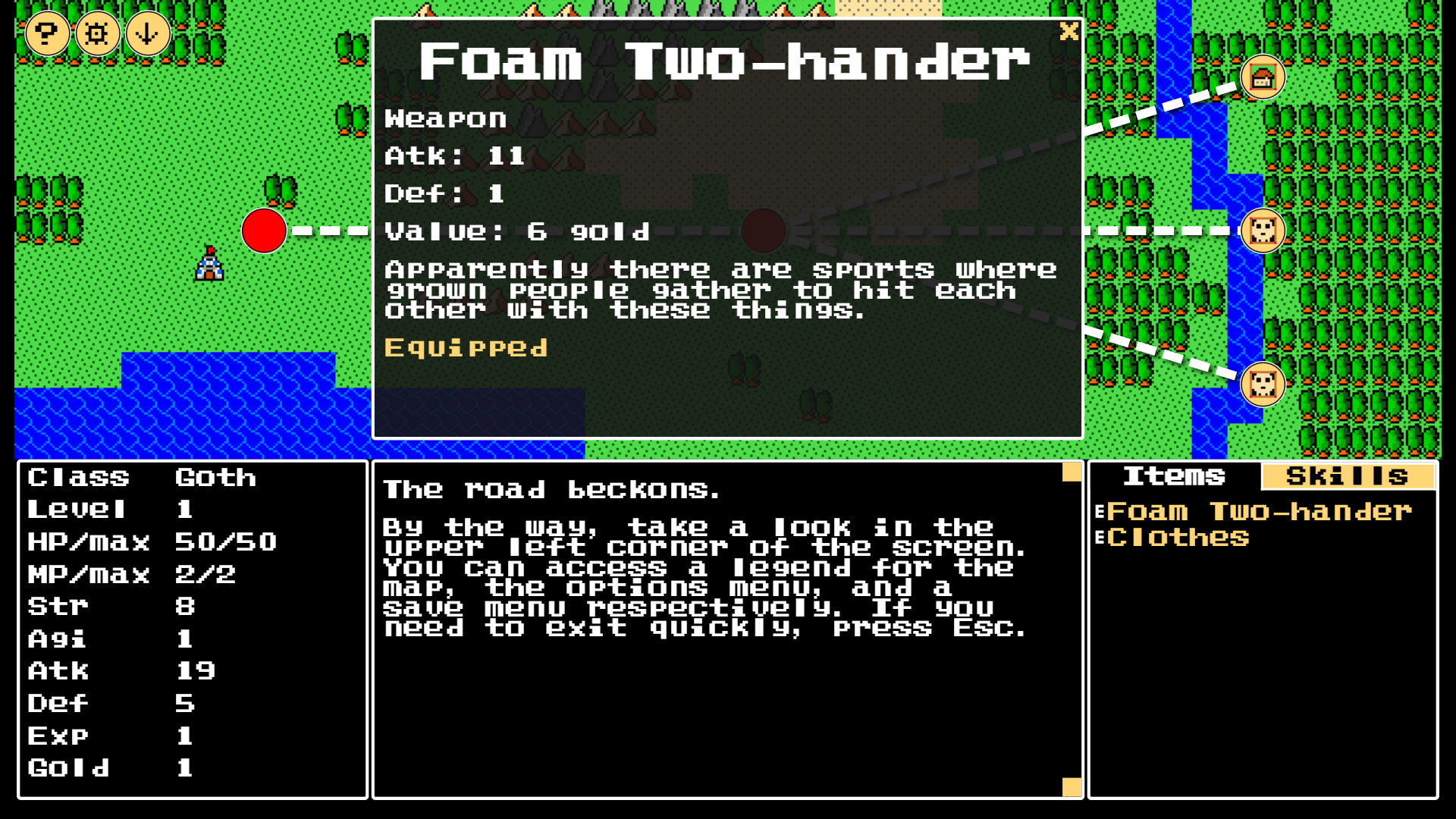 Later, the Goth is about managing HP. Some attacks damage the player and enemy alike; others scale in power with lower HP. The Goth can also self-heal, but it's quite a sad thing.
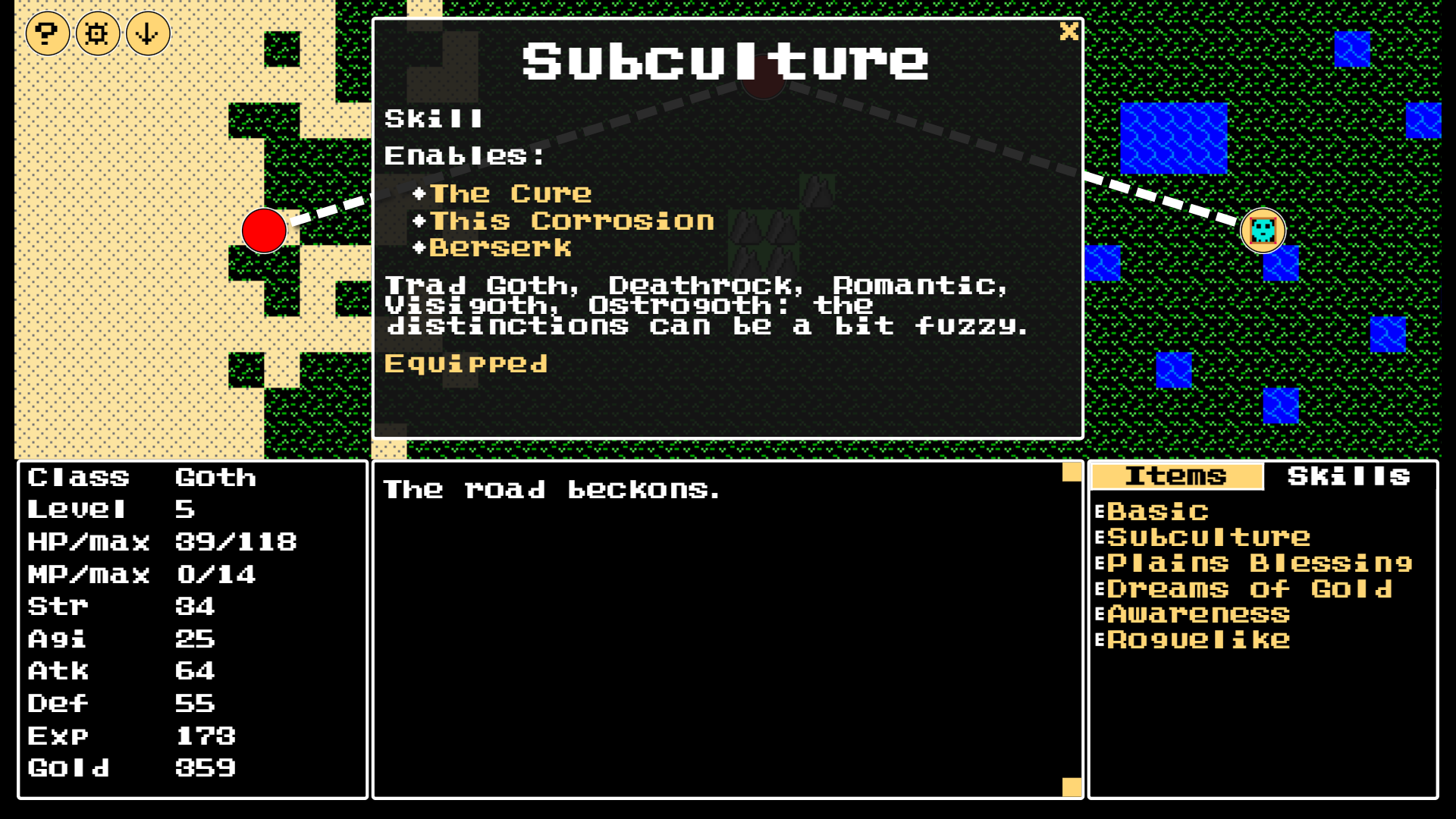 The Goth was quite fun to write. Perhaps I got a bit carried away, but possibly I didn't go far enough. If you've read this far and know where This Corrosion came from, please let me know in the comments.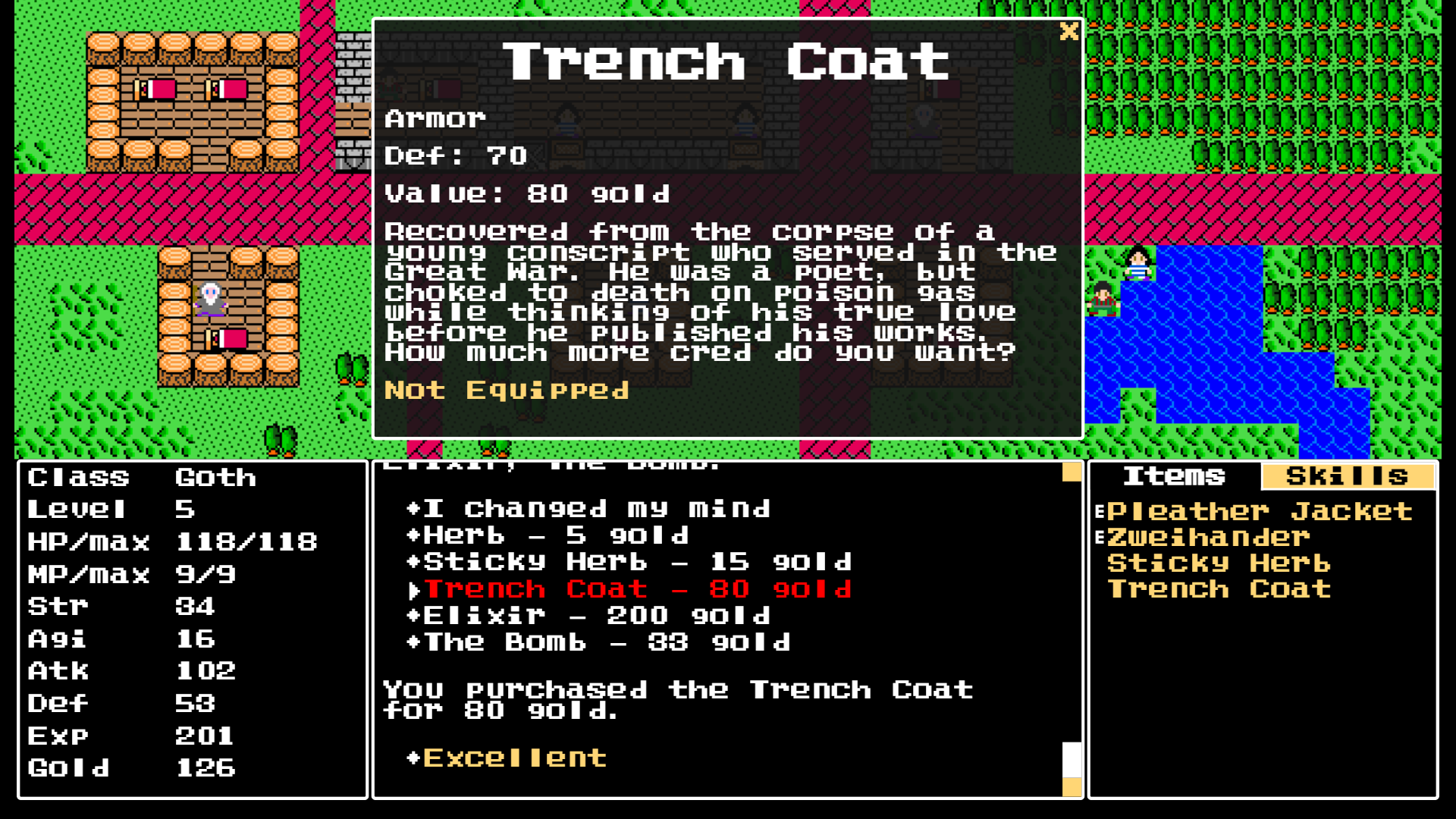
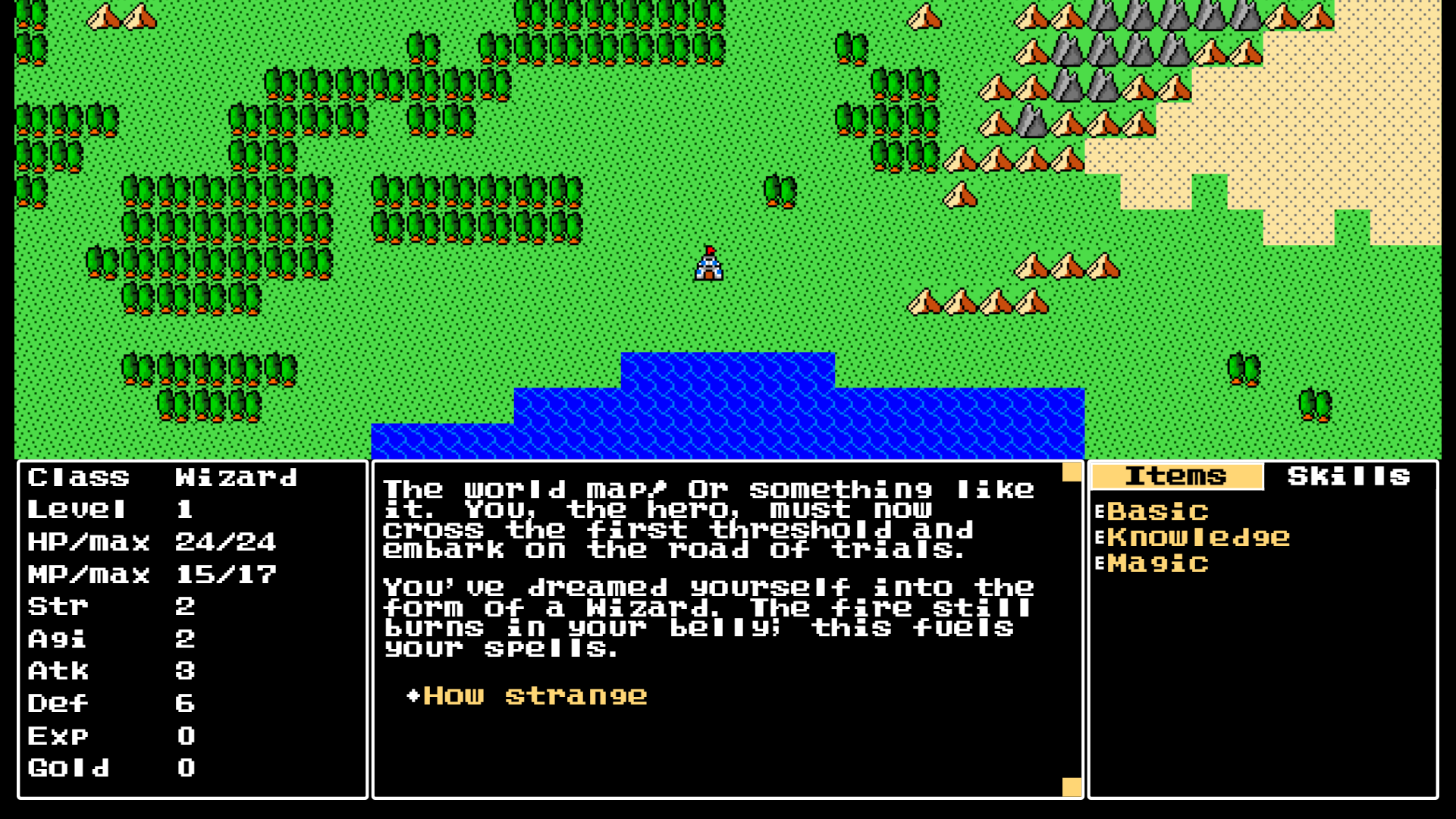 The Wizard is an MP-based glass cannon. Right from the start it can burn away most enemies quickly. Like the Cleric, it can also recover MP. Unlike the Cleric, this recovery requires also spending MP. Woe unto the Wizard who runs out!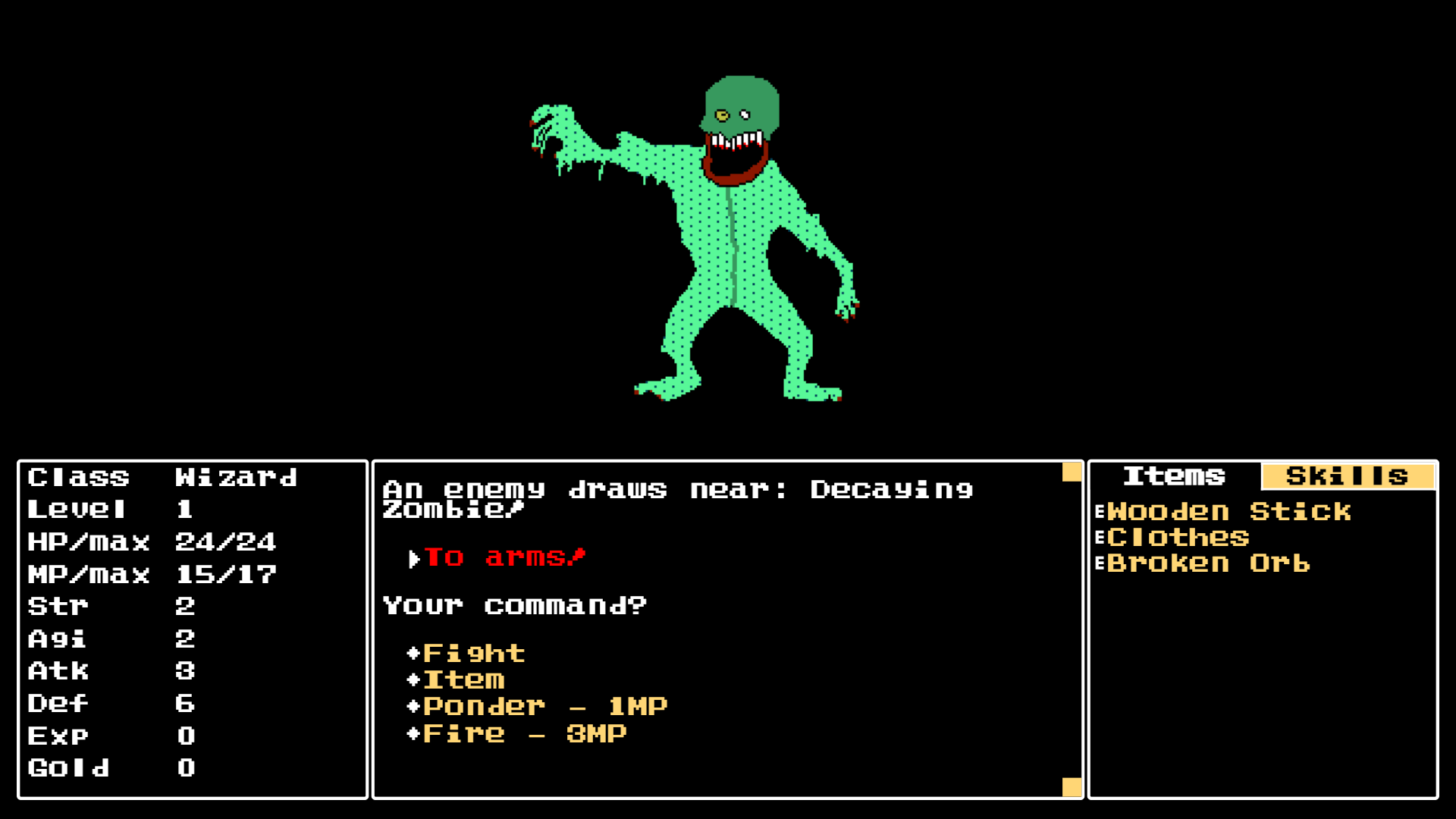
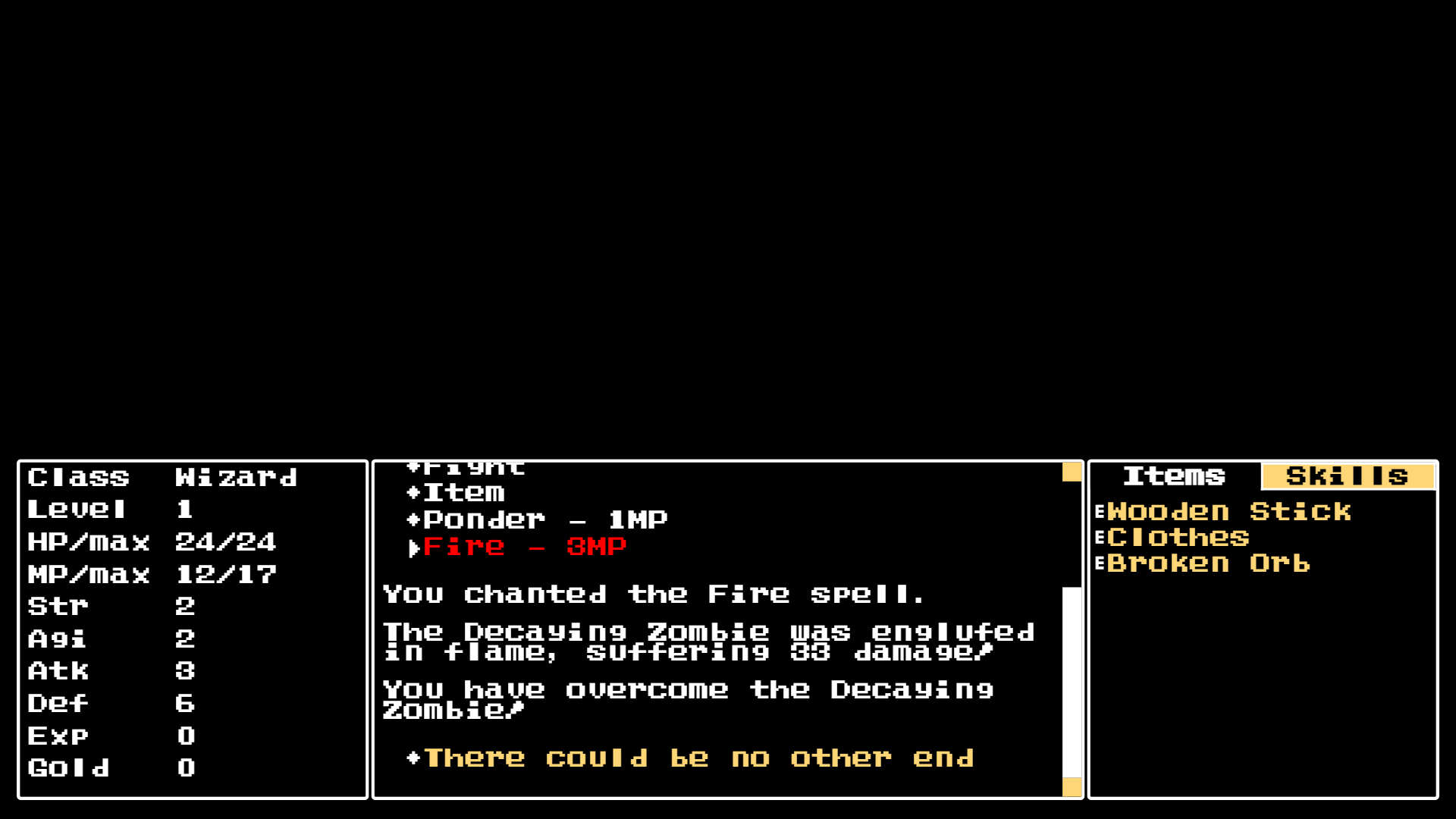 Later the Wizard gains even MORE attack magic. It's kind of their thing.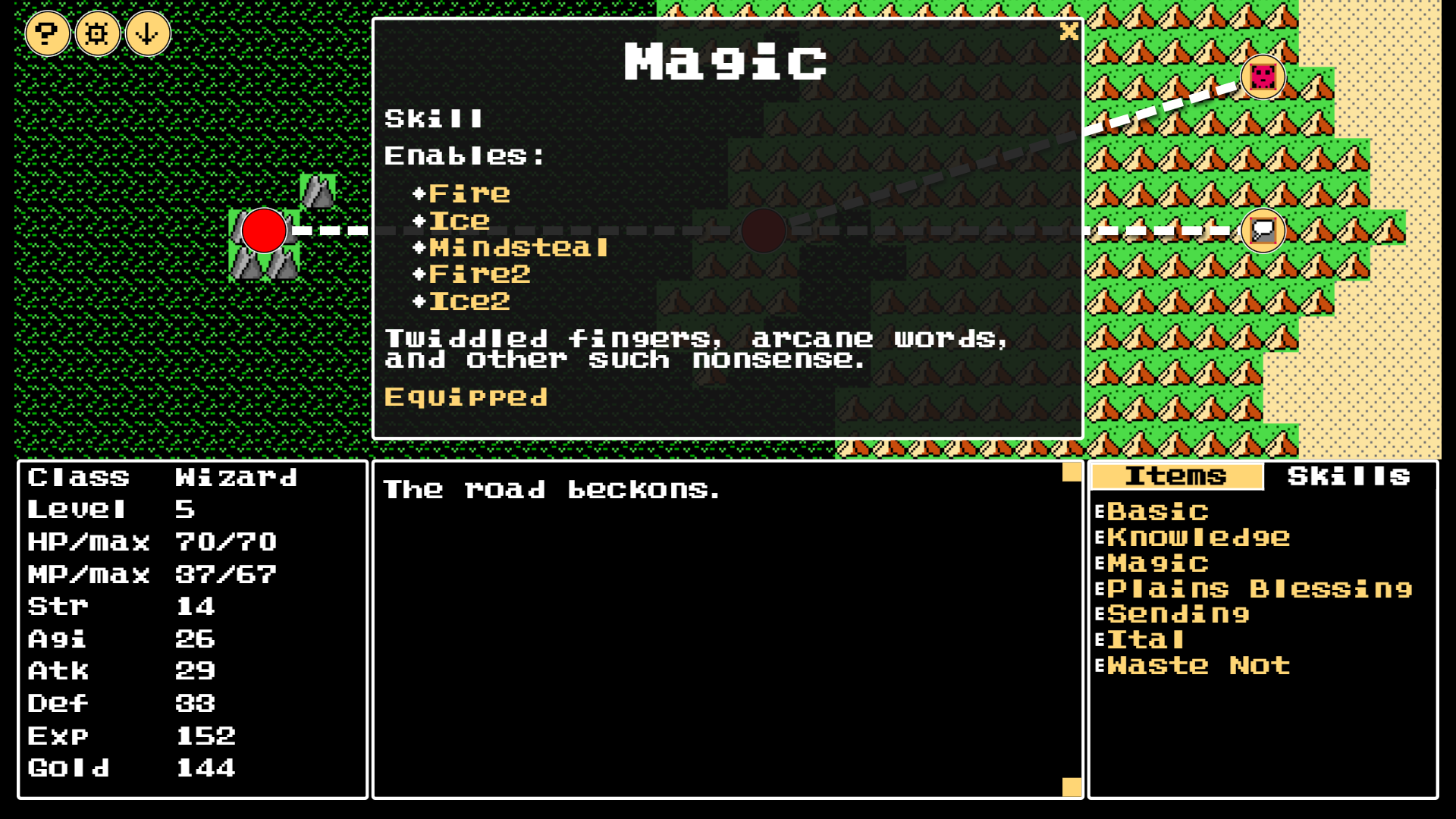
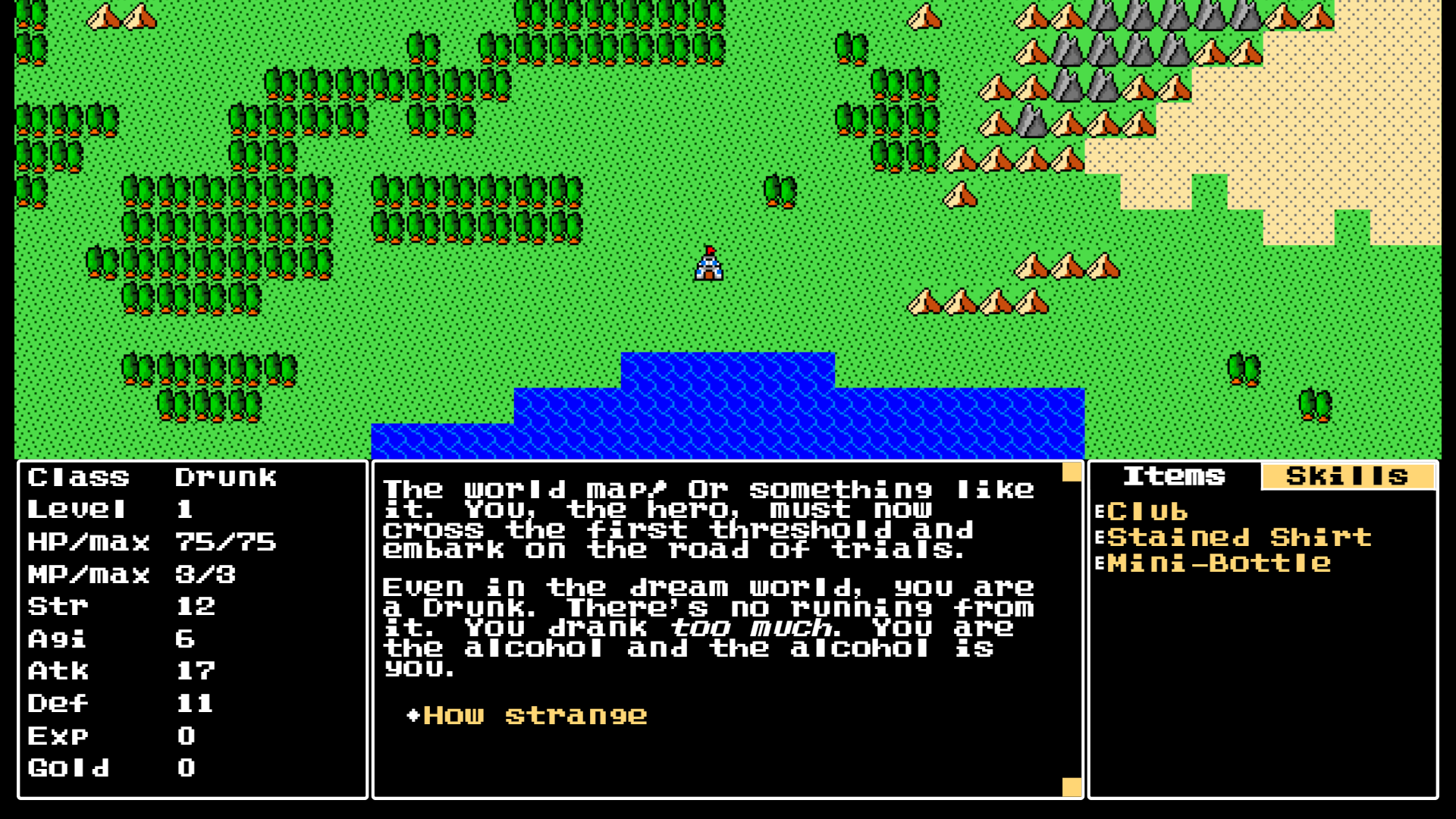 As you might have noticed, the Drunk starts with quite impressive stats. That raw power is counterbalanced by poor stat growth and unpredictable abilities which, indeed, may do more harm than good until you find larger bottles.
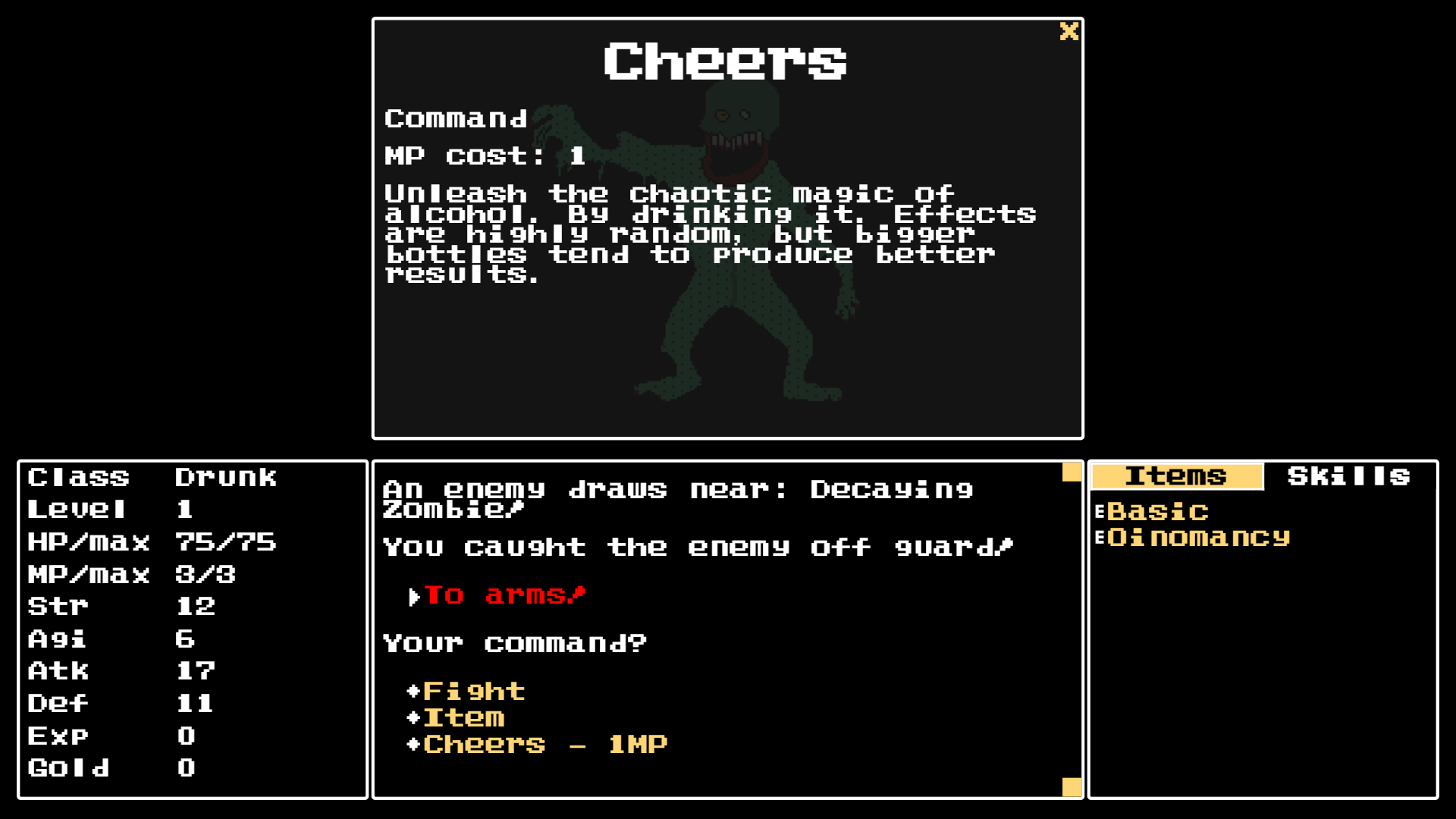 Much later, the Drunk does get a powerful way to remove certain enemies quickly. (Aside: Oinomancy, which provides the skillset of the Drunk, is a real thing. It may or may not work differently in real life, reports are mixed.)
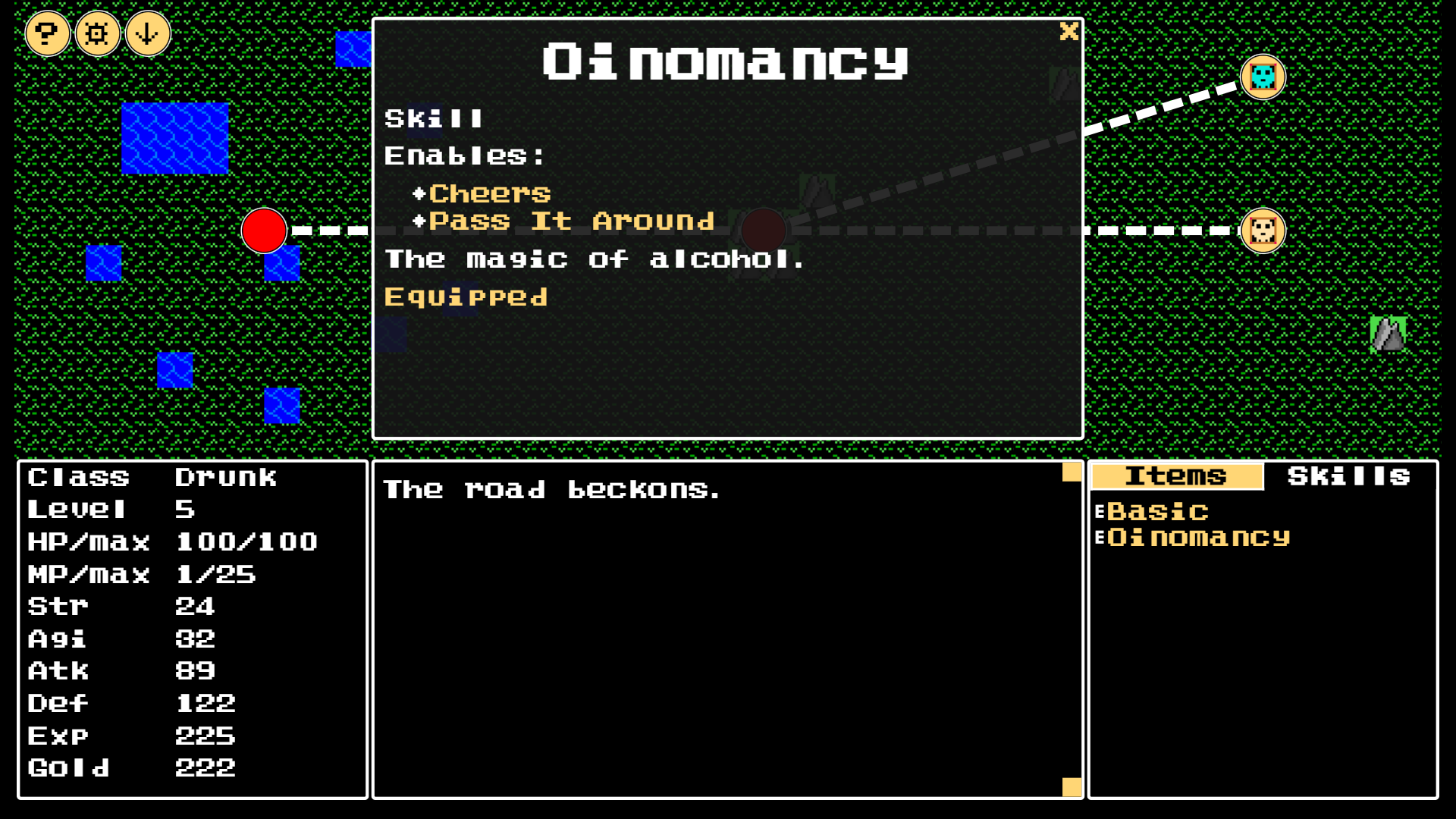 The Drunk is a challenging class, by design. It is powerful at the start and potentially the end, but getting through the middle part of the game requires no small amount of skill.
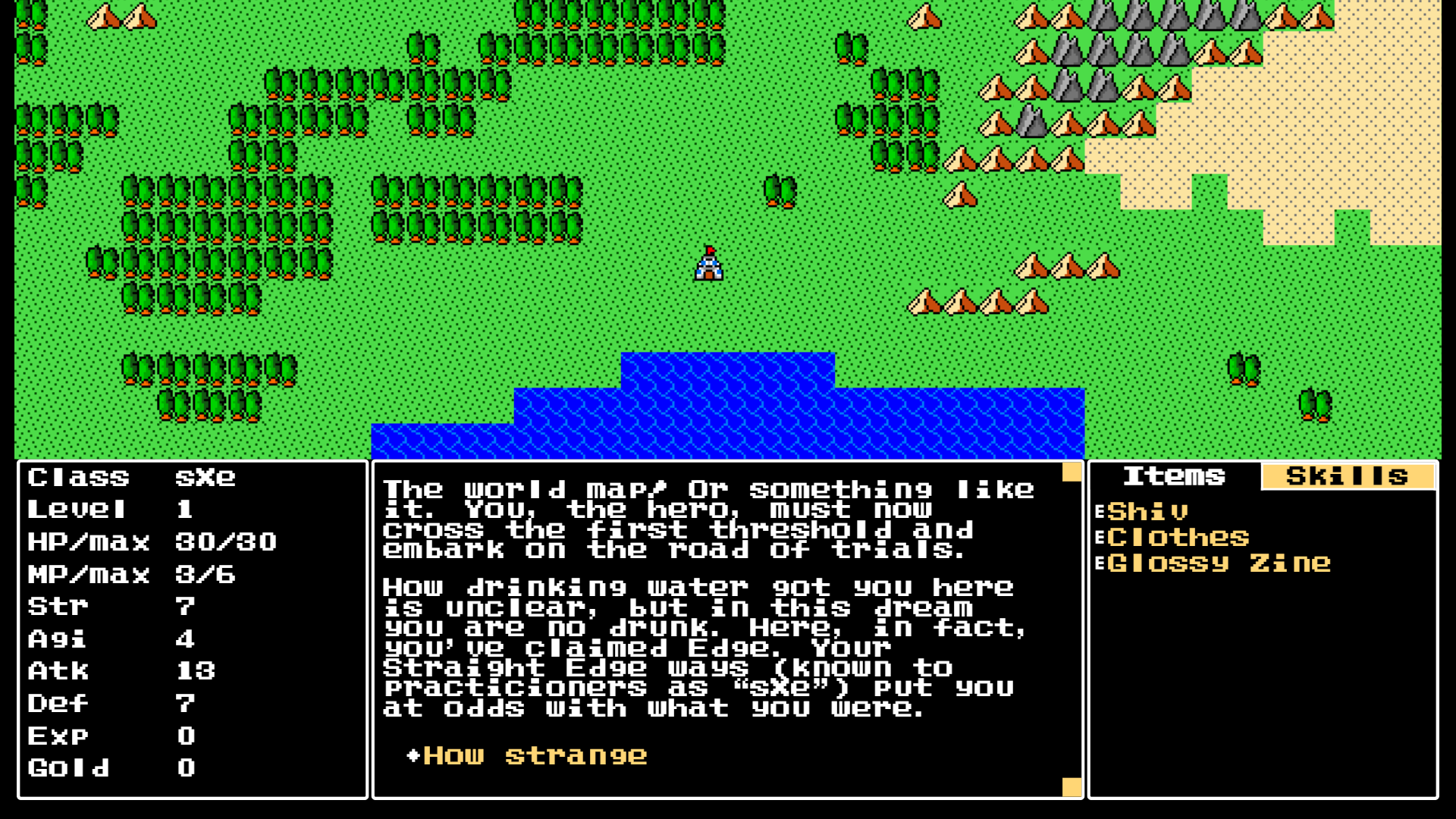 The Straight Edge deals in item creation, buffs, and debuffs. Right from the beginning, it can summon a selection of vegetarian food.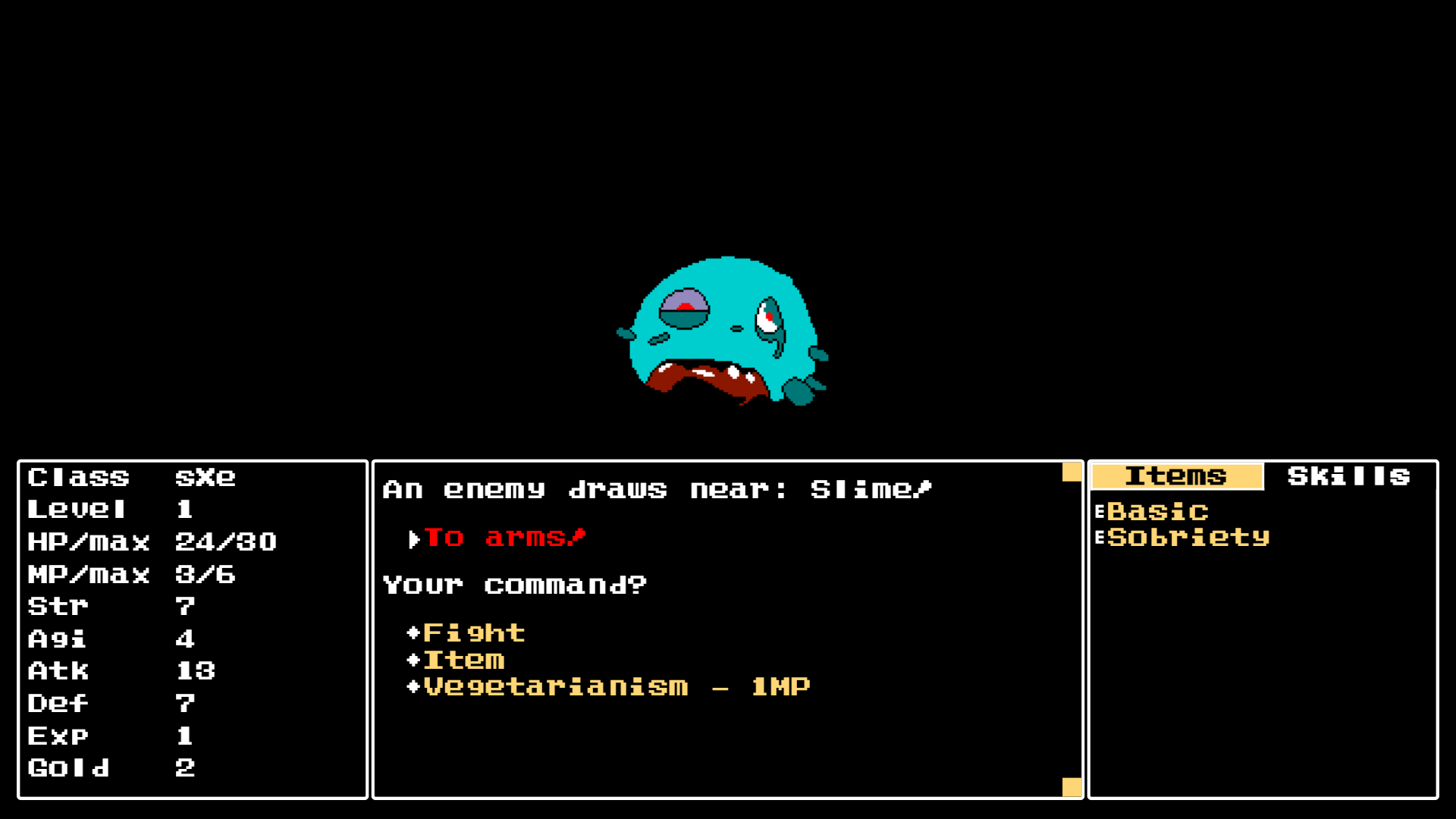
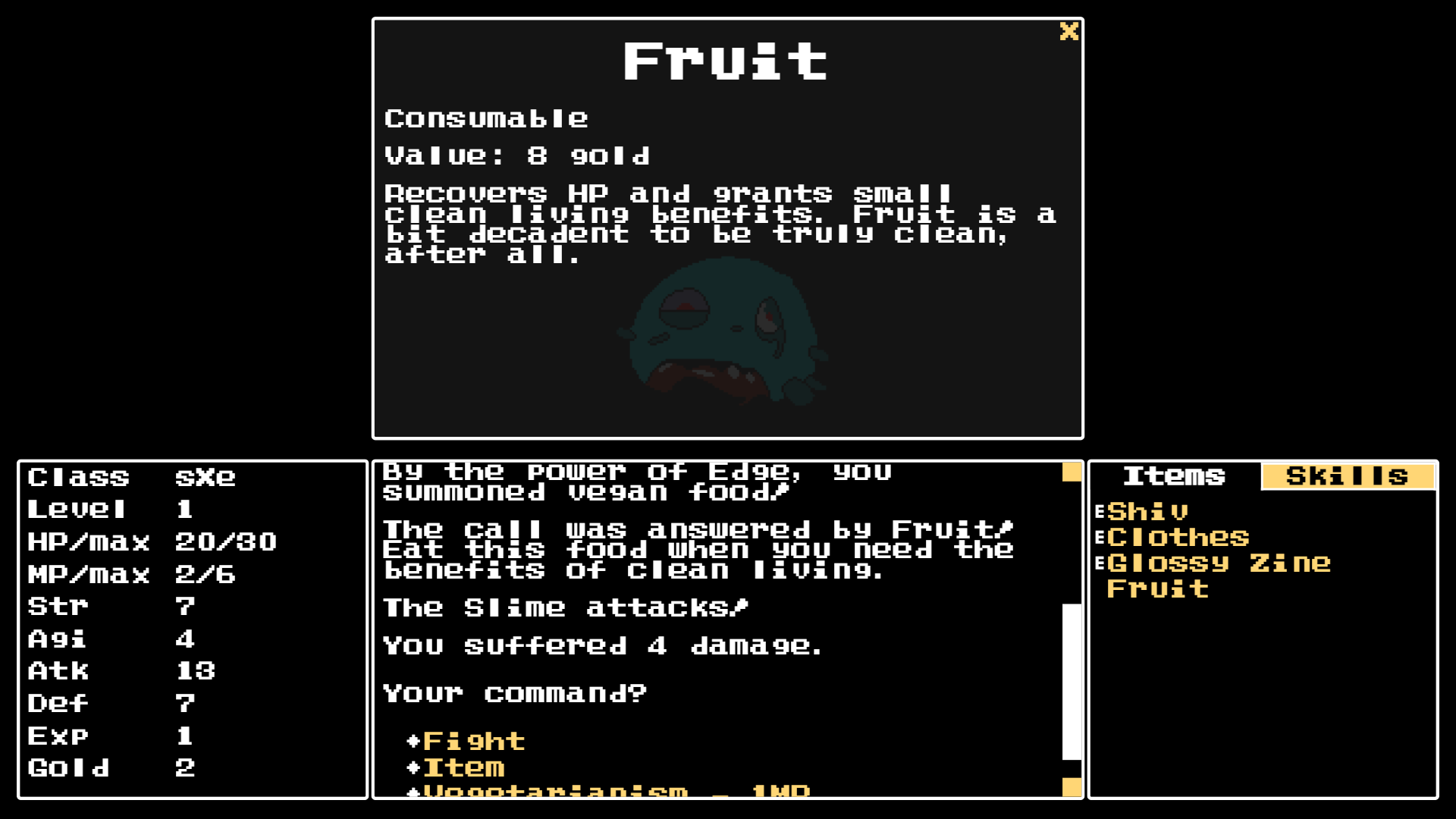 This is important because the Straight Edge is bound by its philosophy to avoid things like Herb. There are honestly a lot of consequences to this philosophy, but you can at least always have healing (and buffing!) items. Just make sure you've planned well in advance of your need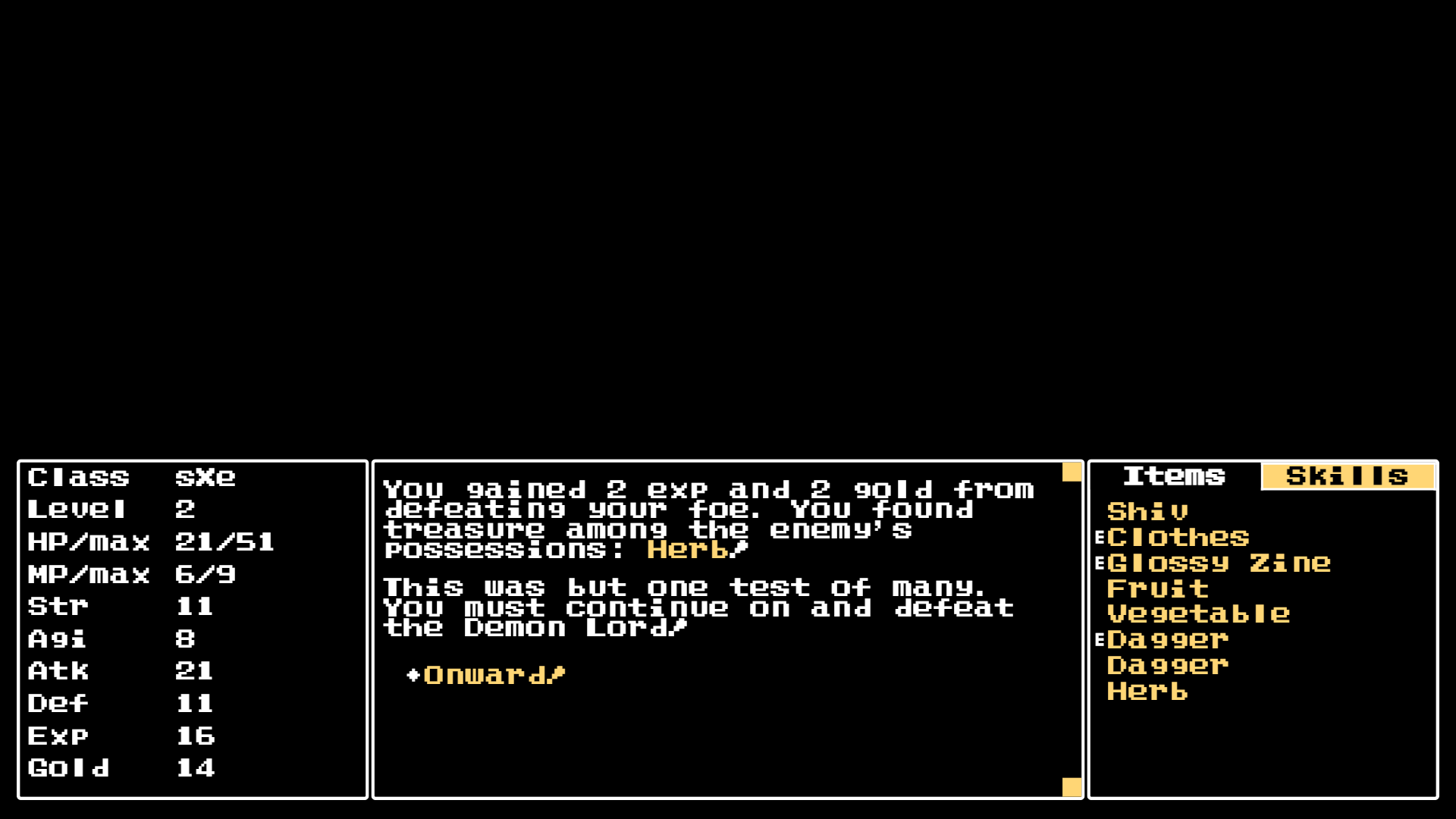
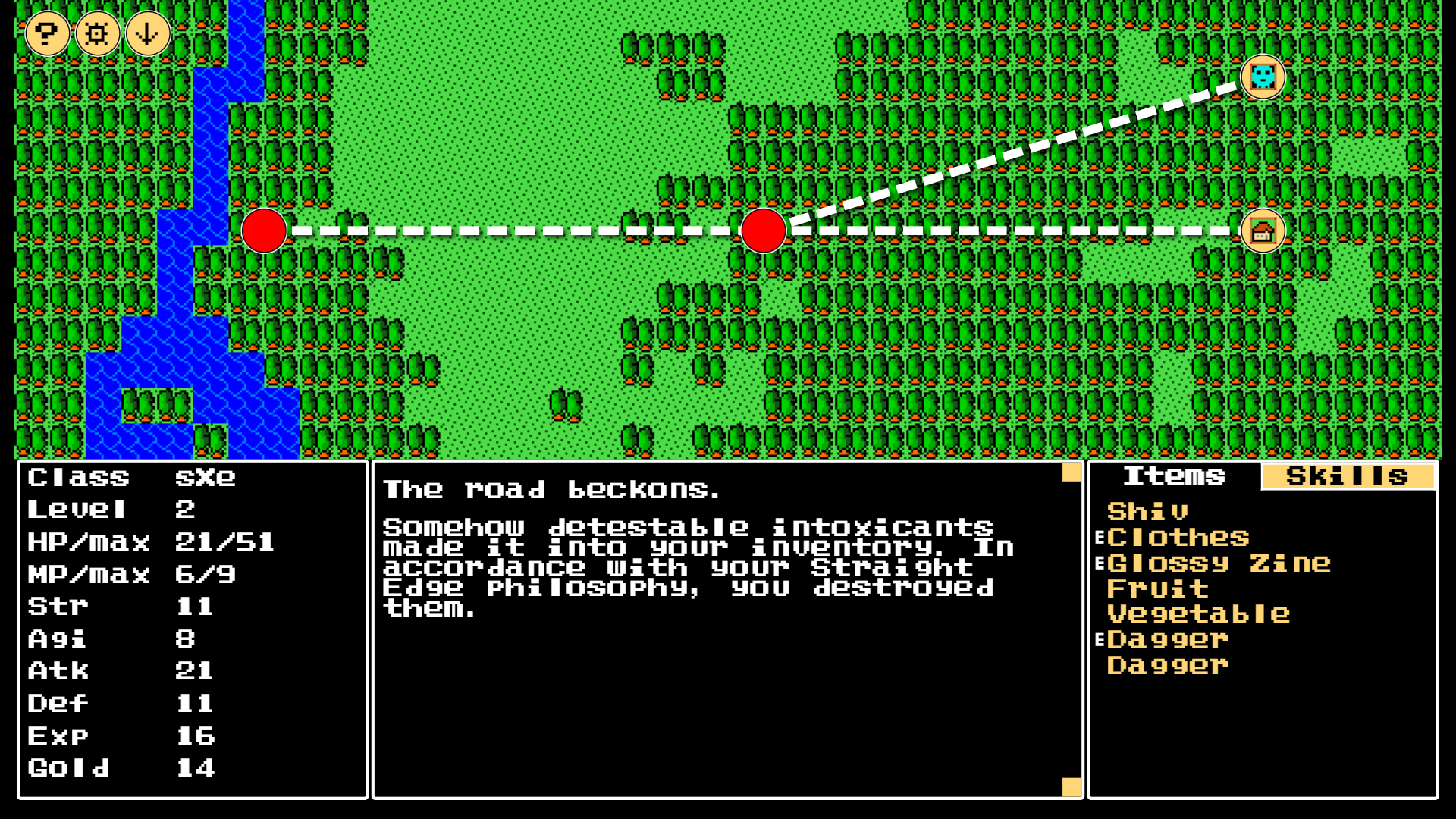 Later, the Straight Edge gets more skills to summon items, as well as to debuff enemies. The final skill can be used to debuff oneself in exchange for a powerful attack against the enemy.
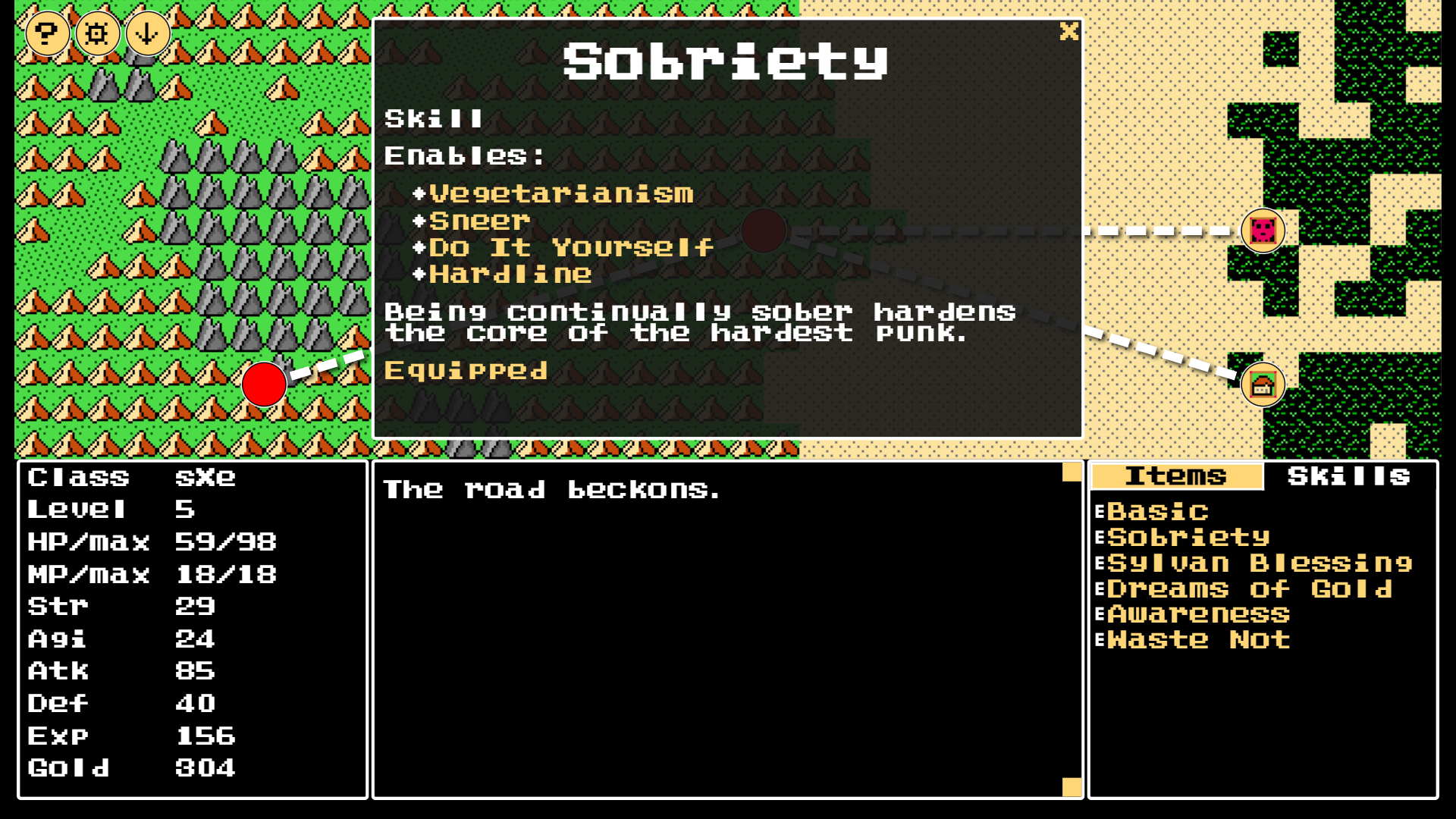 Writing the content for the Straight Edge was right up there with the Goth in terms of enjoyment. Also, in my humble opinion, it is quite a different experience than the other classes.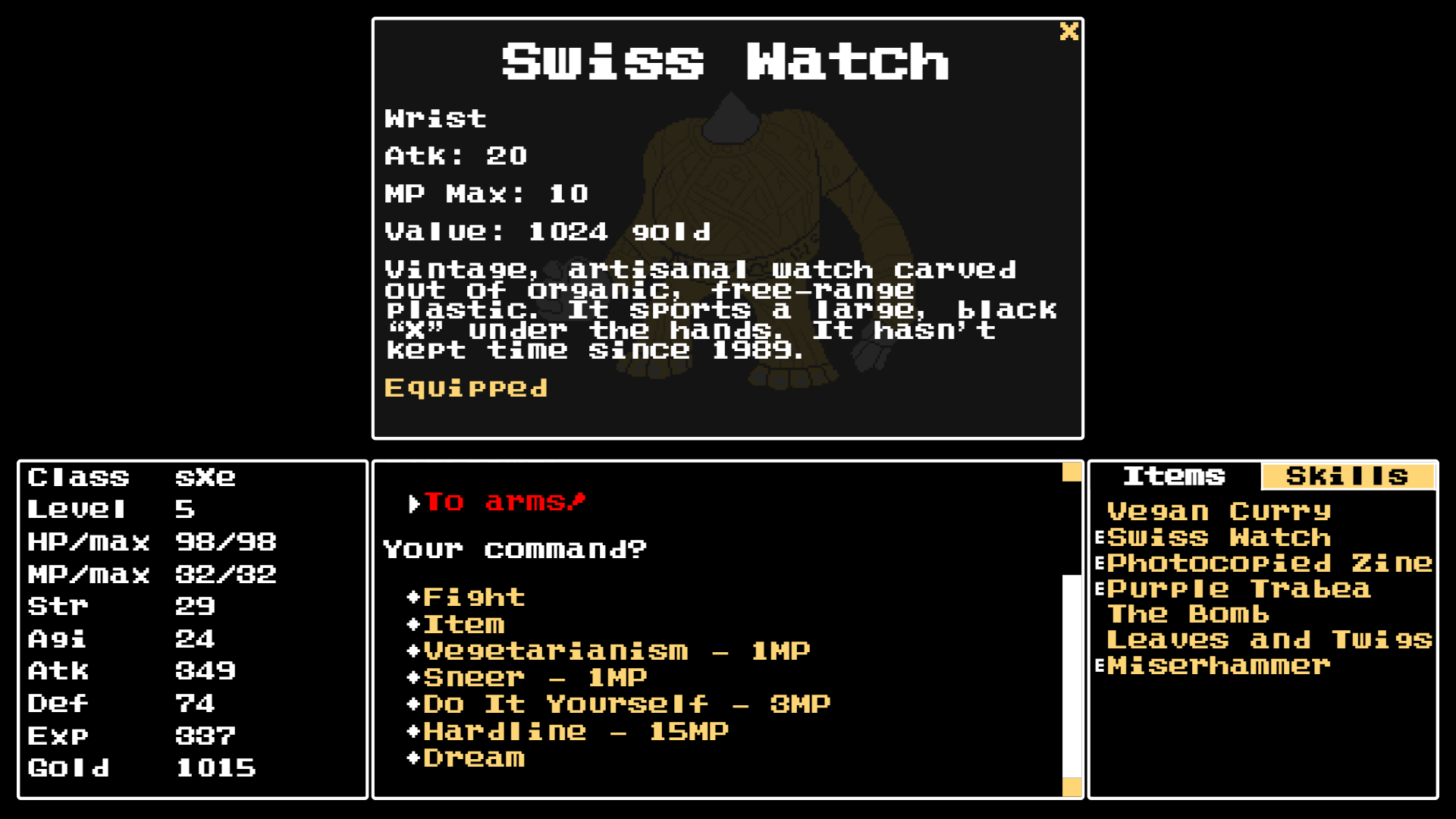


 Loading

