



Install Steam
sign in
|
language
简体中文 (Simplified Chinese)
繁體中文 (Traditional Chinese)
日本語 (Japanese)
한국어 (Korean)
ไทย (Thai)
Български (Bulgarian)
Čeština (Czech)
Dansk (Danish)
Deutsch (German)
Español - España (Spanish - Spain)
Español - Latinoamérica (Spanish - Latin America)
Ελληνικά (Greek)
Français (French)
Italiano (Italian)
Bahasa Indonesia (Indonesian)
Magyar (Hungarian)
Nederlands (Dutch)
Norsk (Norwegian)
Polski (Polish)
Português (Portuguese - Portugal)
Português - Brasil (Portuguese - Brazil)
Română (Romanian)
Русский (Russian)
Suomi (Finnish)
Svenska (Swedish)
Türkçe (Turkish)
Tiếng Việt (Vietnamese)
Українська (Ukrainian)
Report a translation problem




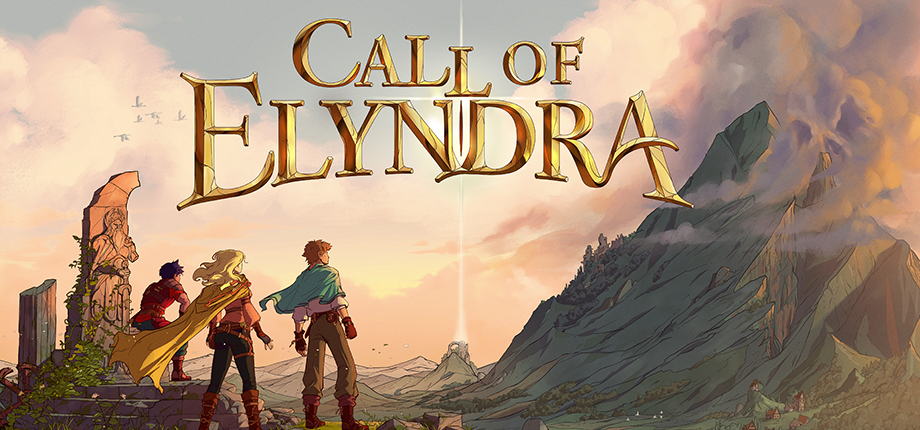 We’ve decided to change the engine and the art style of Call of Elyndra. We will use Godot and combine pixel art sprites with 3D environments. This marks a huge shift for the game. We have more planned. Read on to find out.
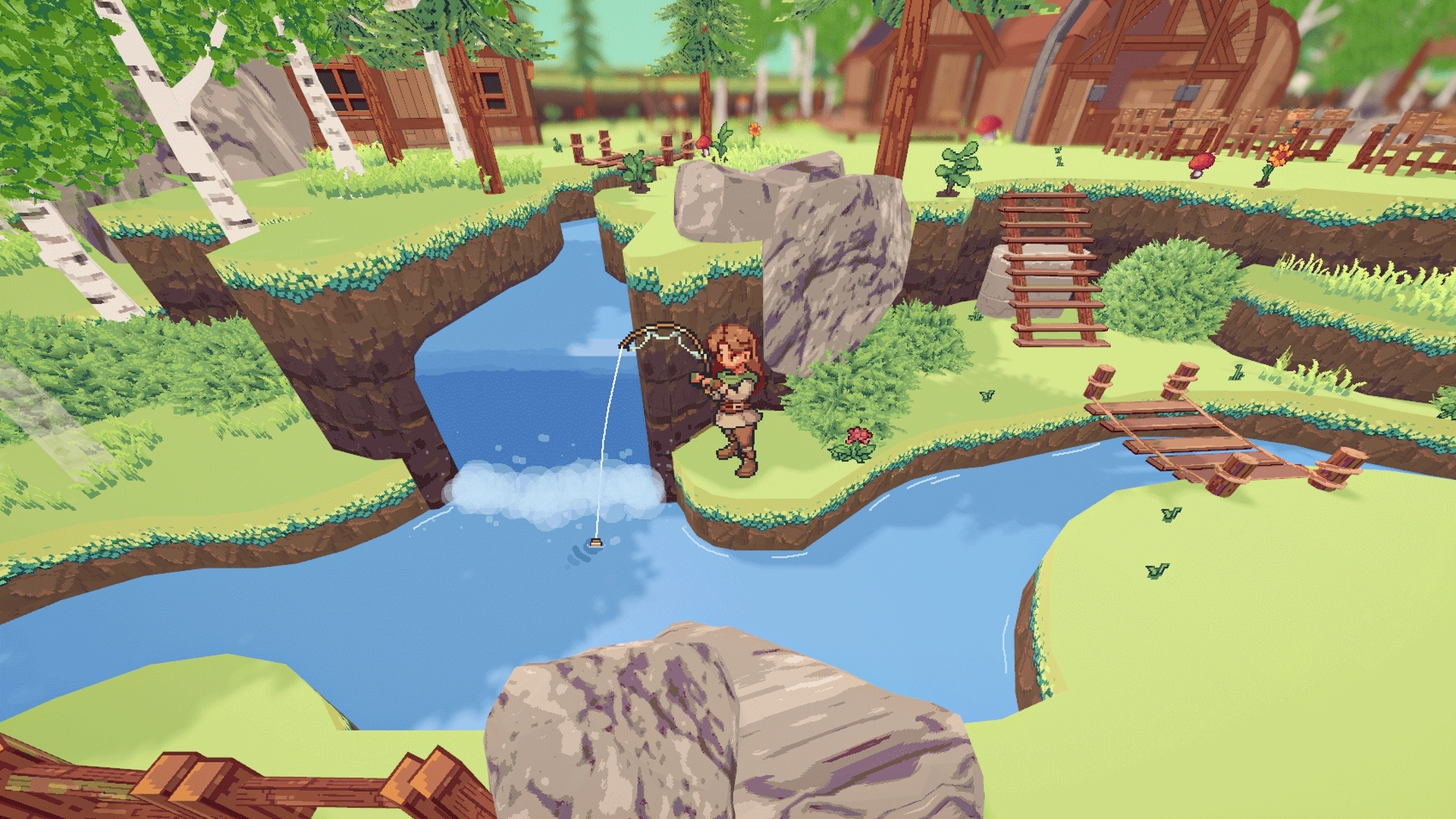 Our huge strength and also the biggest hindrance was the engine. RPG Maker is a phenomenal bit of software, and there are some masterpieces of gaming made with it. Some of our team members are also known in the RPG Maker community. At first, we wanted to make the most technically advanced game in the engine, which we may have achieved as RPG Maker makes up only about 30% of our code. Our team has long gone past the predetermined boundaries. We made the engine do things that it shouldn’t have been able to do. Alas, it still wasn’t enough. Some of the inherent solutions and limitations simply couldn’t be helped. Also, the looks, while quite beautiful, could have been improved upon. There are many games with stunning pixel art and we knew that we needed to shake it up a bit.
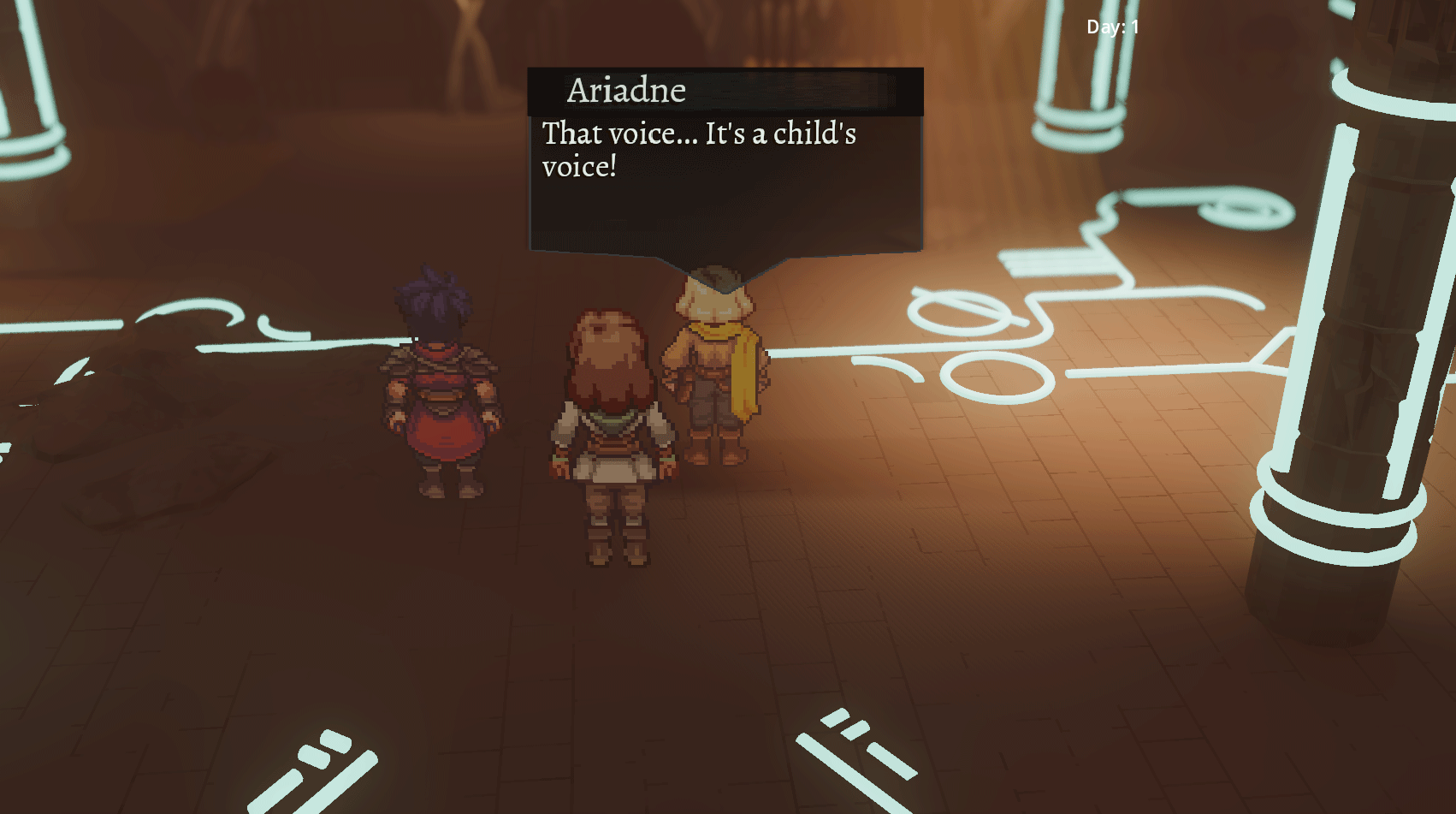 A huge part of Godot is that it is able to use 3D quite well. Now, about that…
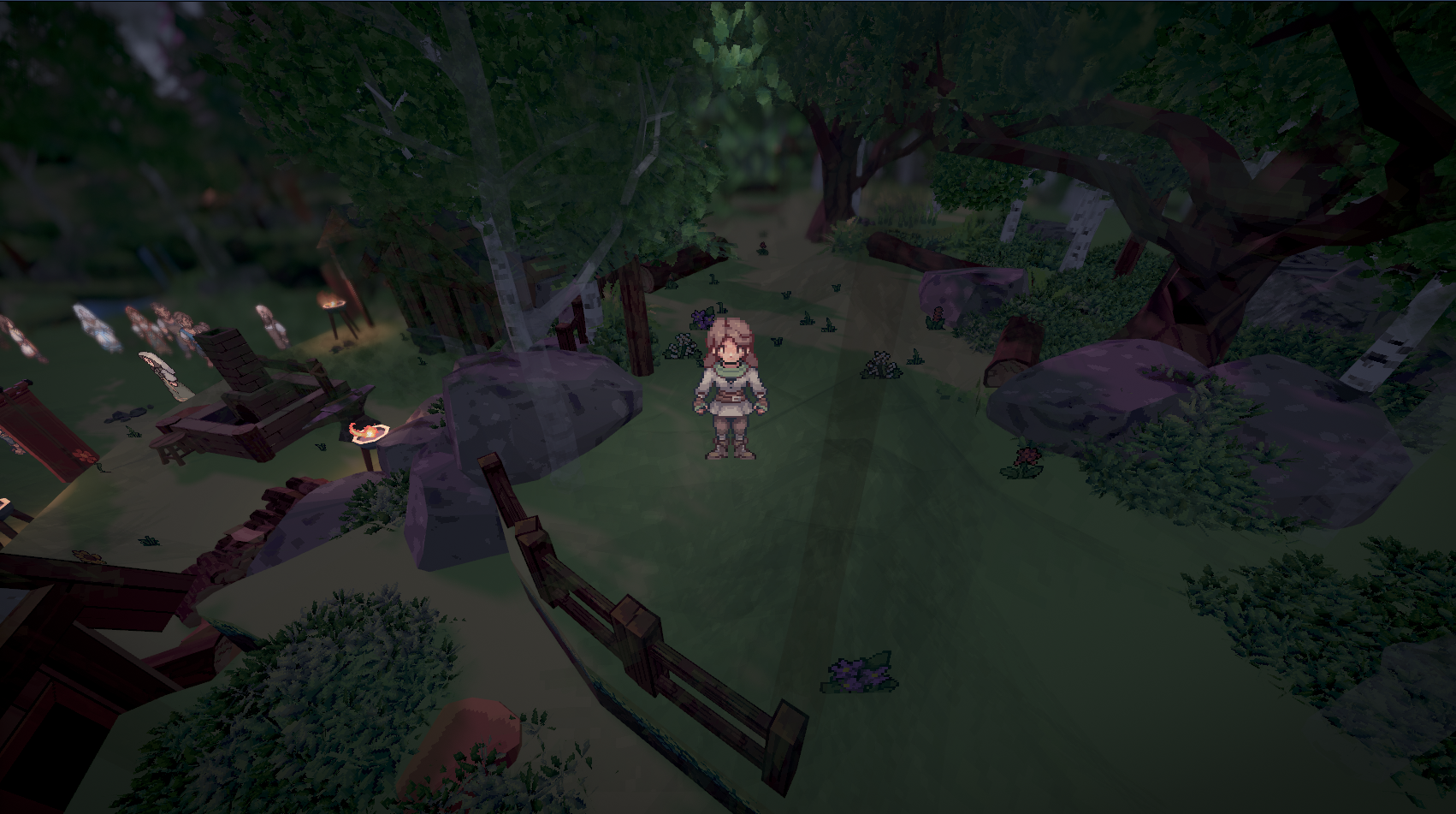 In regards to gameplay, the new art style allows us to create more interesting environments. After all, we’ll be able to use verticality for exploration, combat and puzzles.
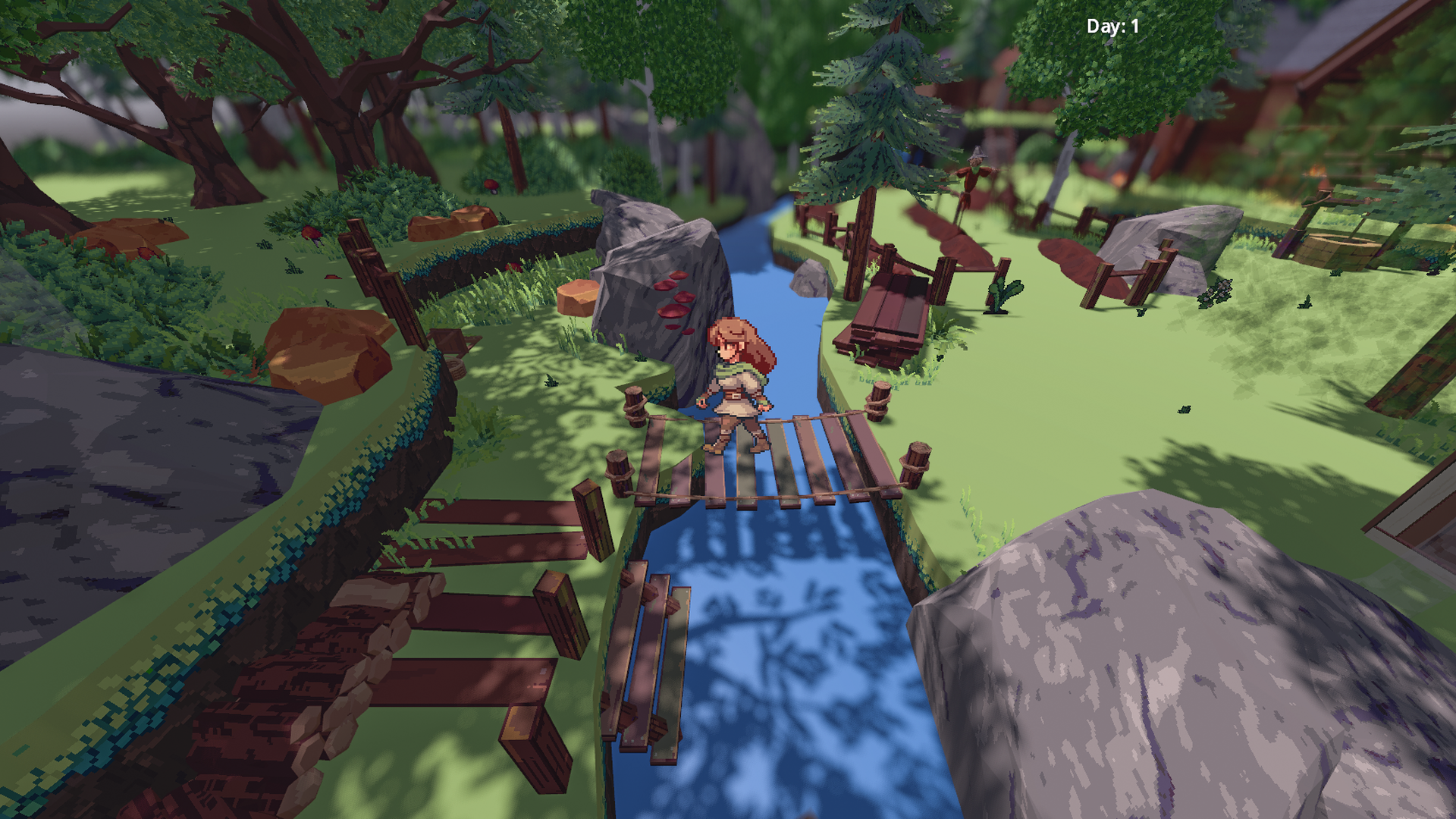 Thanks for reading, talk to you again soon!
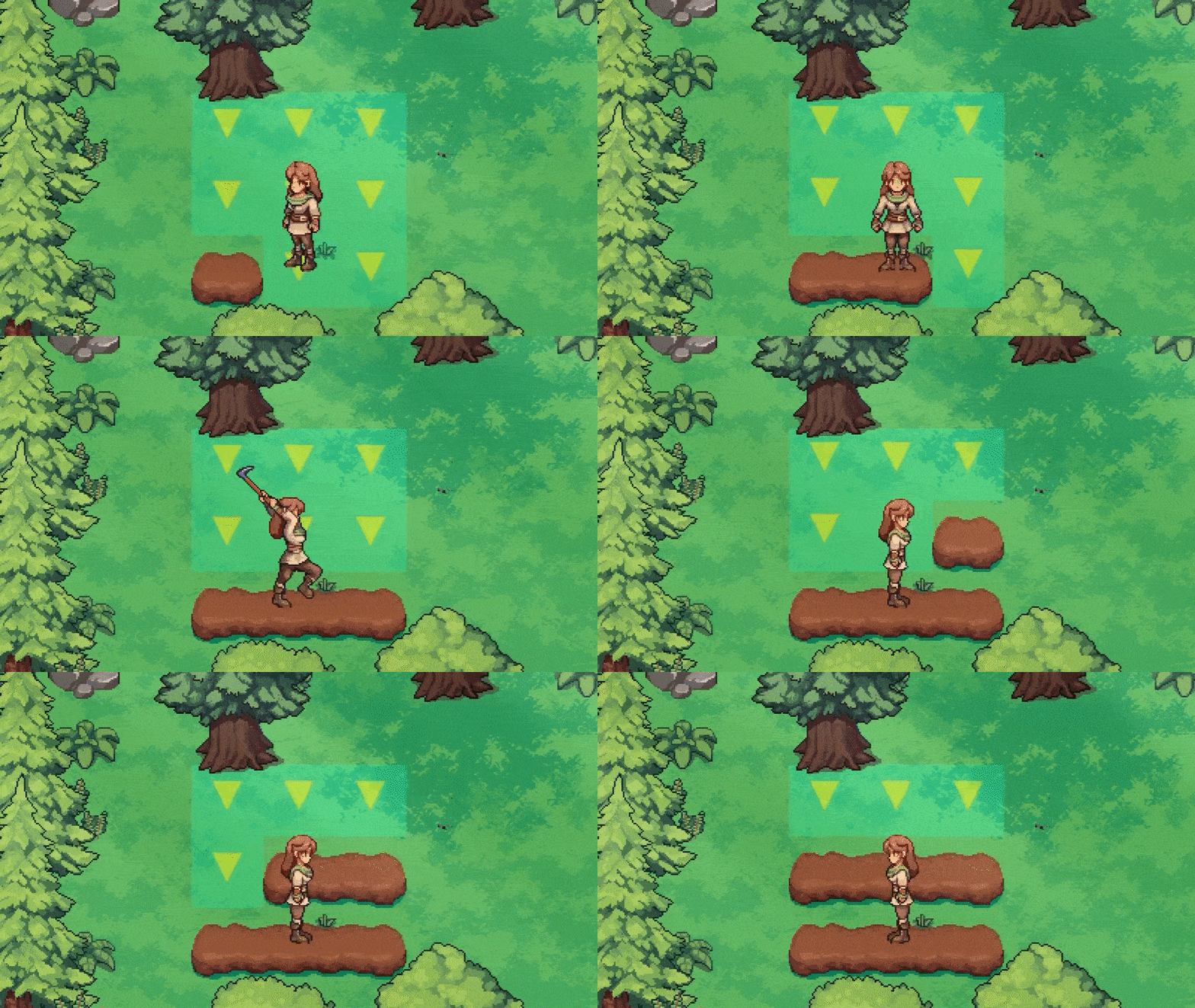 If you’ve tried the demo, you know that farming is pretty simple. Just follow these steps:
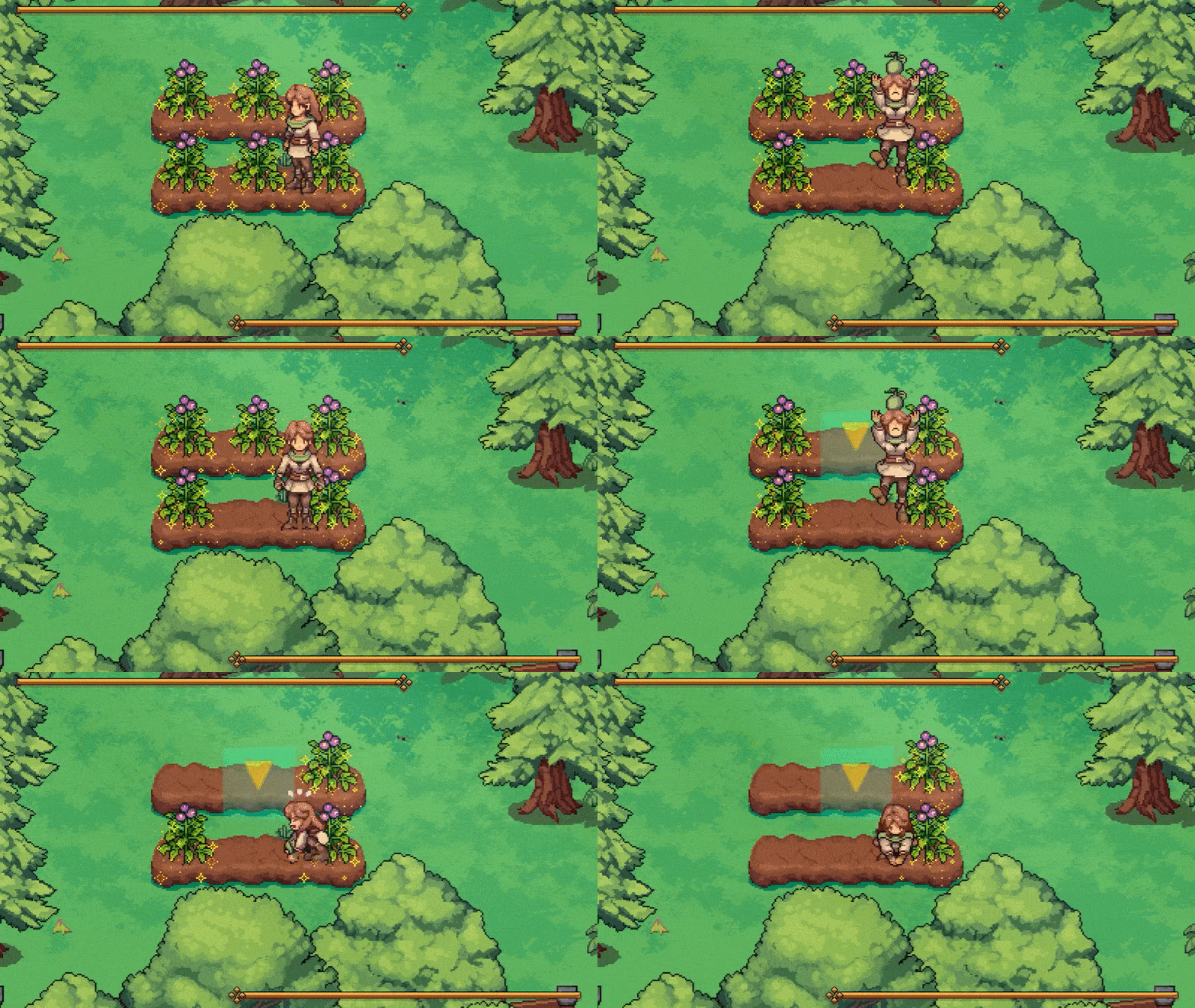
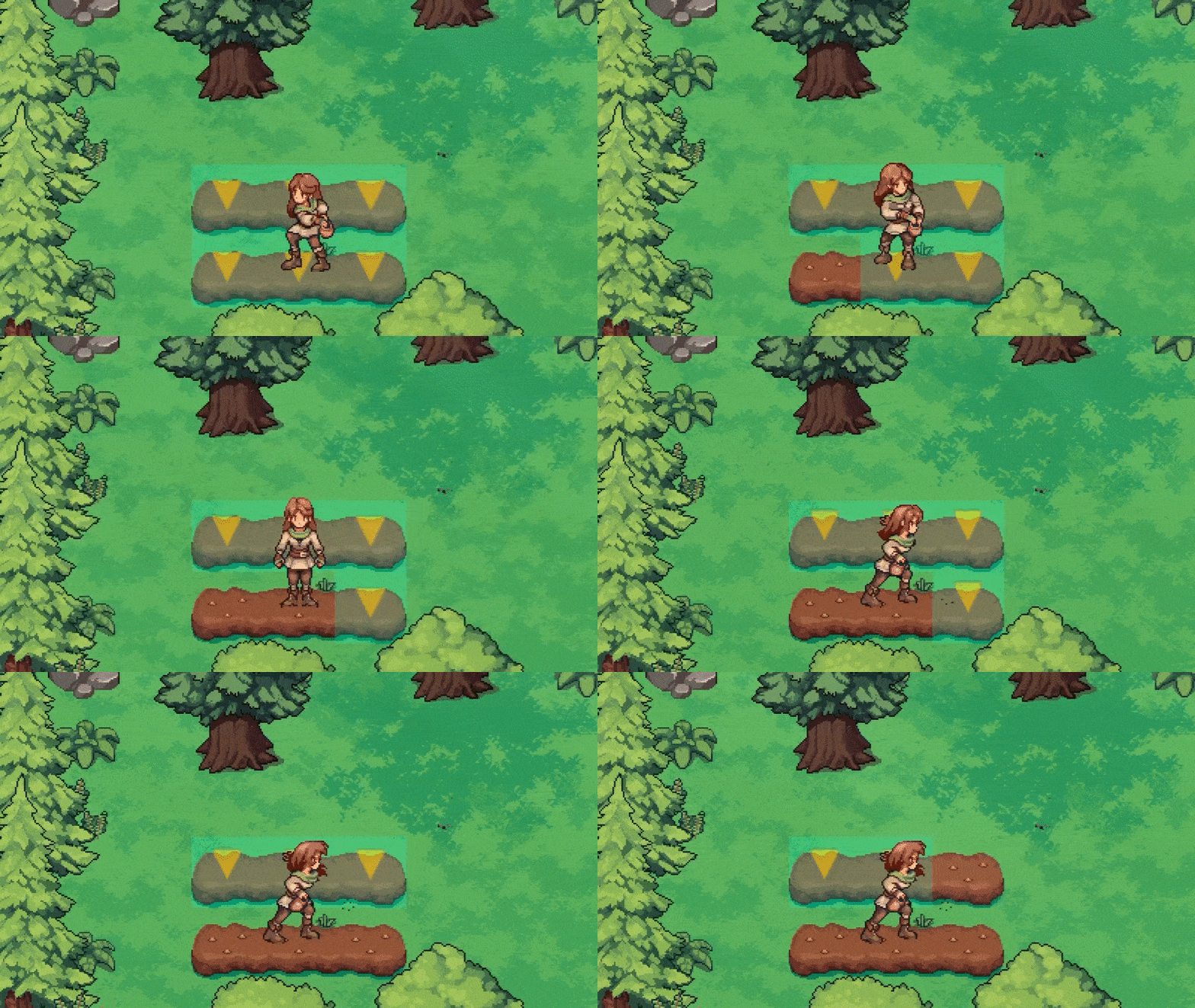 First up, soil deterioration. If you overwork the land, it might get mushy or barren. Right now, this happens randomly, but we might tweak it based on your feedback. We’re also thinking about adding more depth to the system - like factoring in fertilizing, watering, and planting the same crop repeatedly.
 ---
---


 Loading

