



Install Steam
sign in
|
language
简体中文 (Simplified Chinese)
繁體中文 (Traditional Chinese)
日本語 (Japanese)
한국어 (Korean)
ไทย (Thai)
Български (Bulgarian)
Čeština (Czech)
Dansk (Danish)
Deutsch (German)
Español - España (Spanish - Spain)
Español - Latinoamérica (Spanish - Latin America)
Ελληνικά (Greek)
Français (French)
Italiano (Italian)
Bahasa Indonesia (Indonesian)
Magyar (Hungarian)
Nederlands (Dutch)
Norsk (Norwegian)
Polski (Polish)
Português (Portuguese - Portugal)
Português - Brasil (Portuguese - Brazil)
Română (Romanian)
Русский (Russian)
Suomi (Finnish)
Svenska (Swedish)
Türkçe (Turkish)
Tiếng Việt (Vietnamese)
Українська (Ukrainian)
Report a translation problem

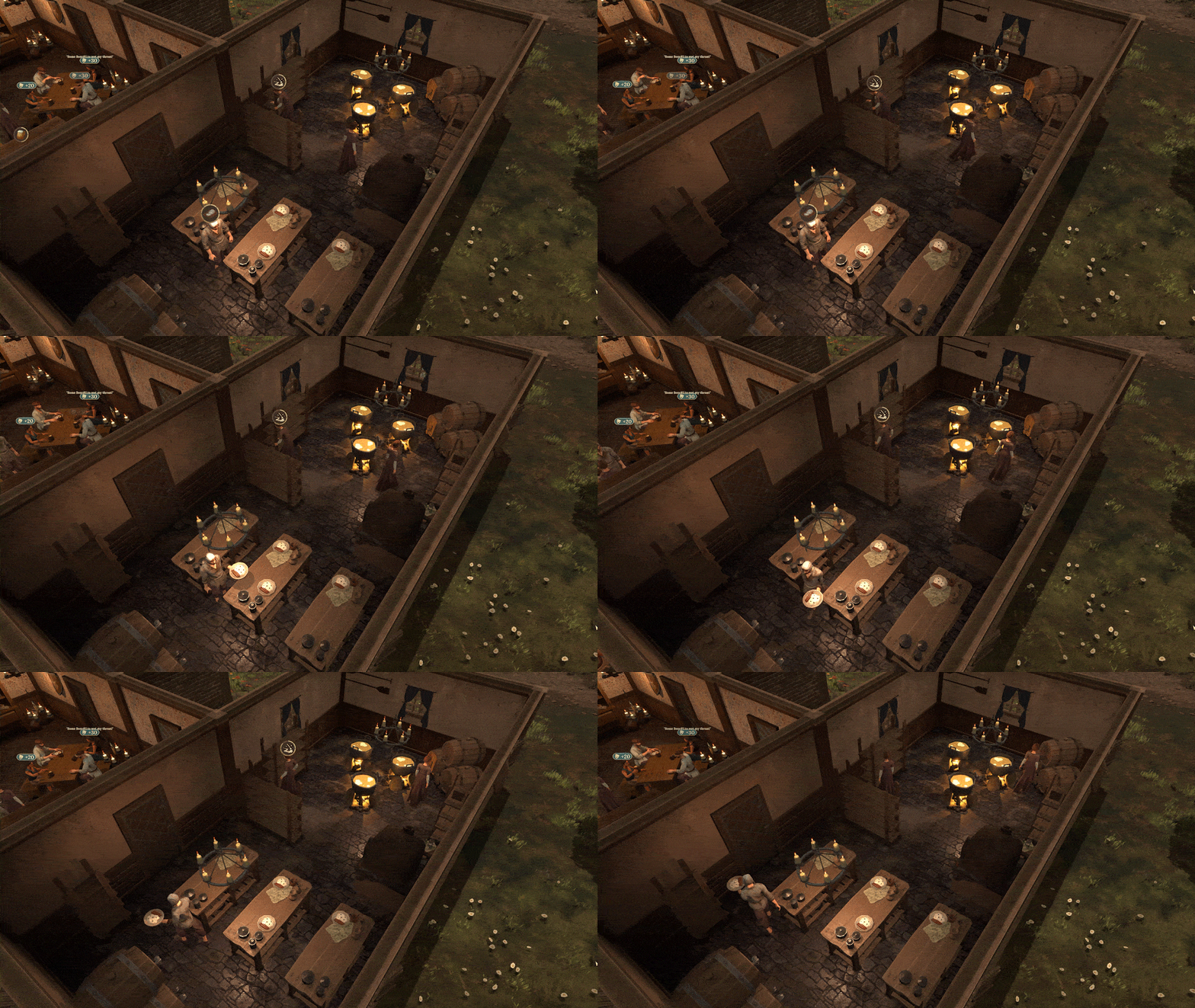 We gave a new meaning to cooking in the game - now different guests come with varied palates to be satisfied. Depending on who is visiting your inn - their background and social group level - they will have different needs and preferences. If you do well, then they will likely stay at your inn longer, raise their happiness level, spend more guldens and interact with other guests. More on guests another time though! Let’s get to cooking.
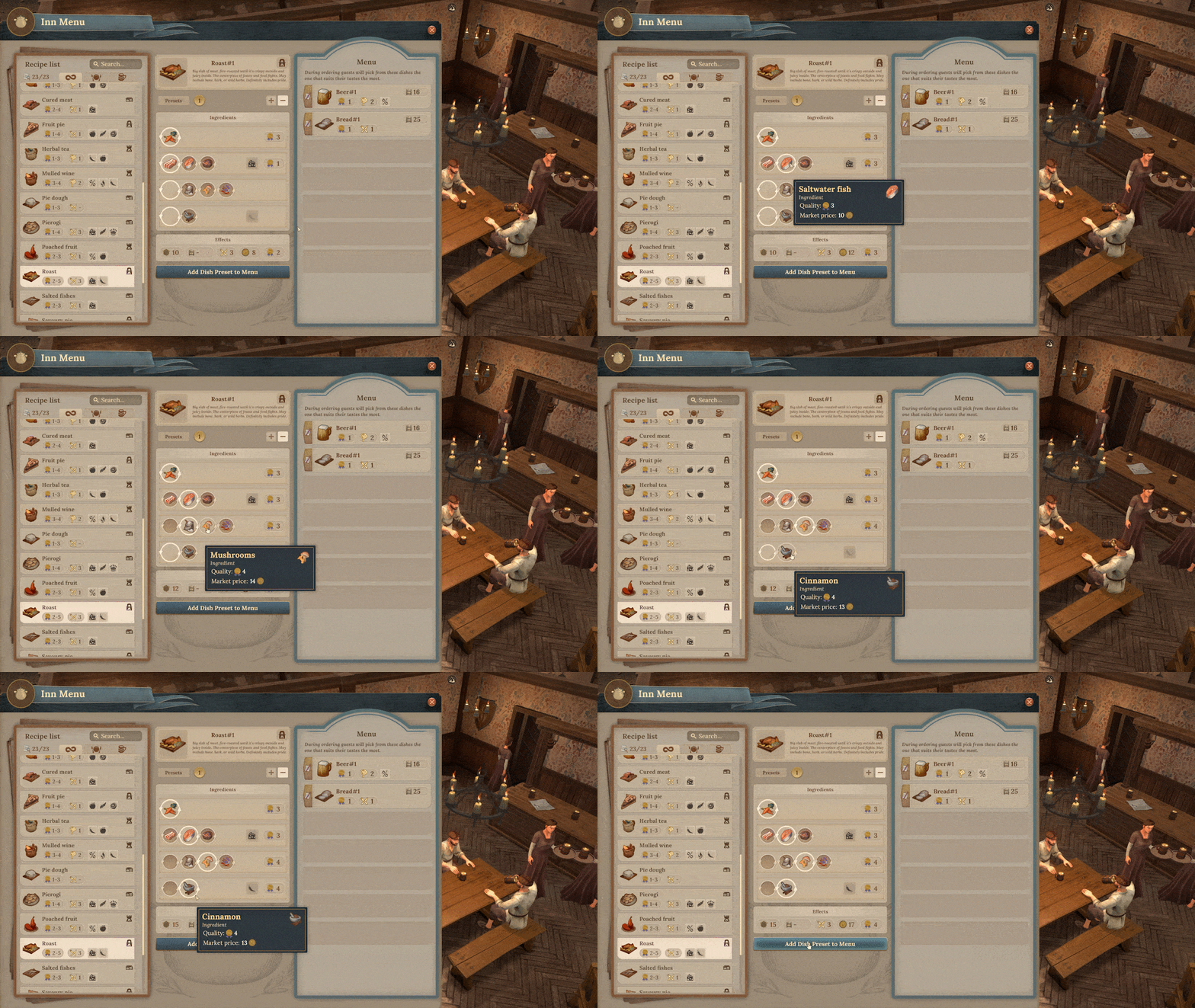 Every dish consists of at least 2 mandatory ingredients. In some recipes you can add up to 4 ingredient slots in total. Those 2 extra ingredient slots come with additional functionality - they add more quality or traits (or both) to the recipe. The recipe itself can already come with some traits and it always has a base quality.
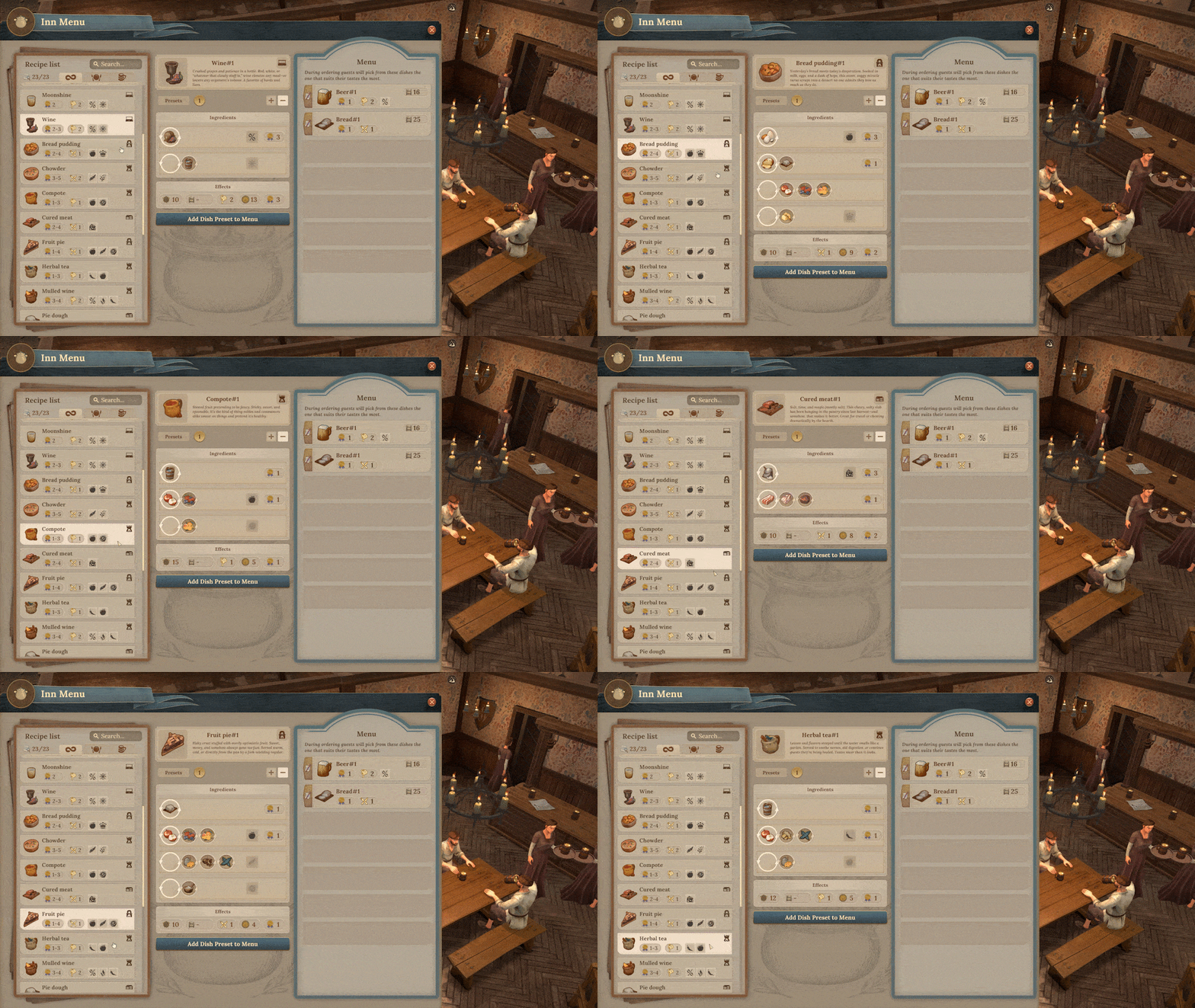 The dish can have up to 3 traits. The more traits you overlap with certain guests preferences, the more bonus you gain for catering to their taste. There are different guests who can be satisfied with a single well-balanced dish, so it pays off to pay attention to what your patrons are interested in!
 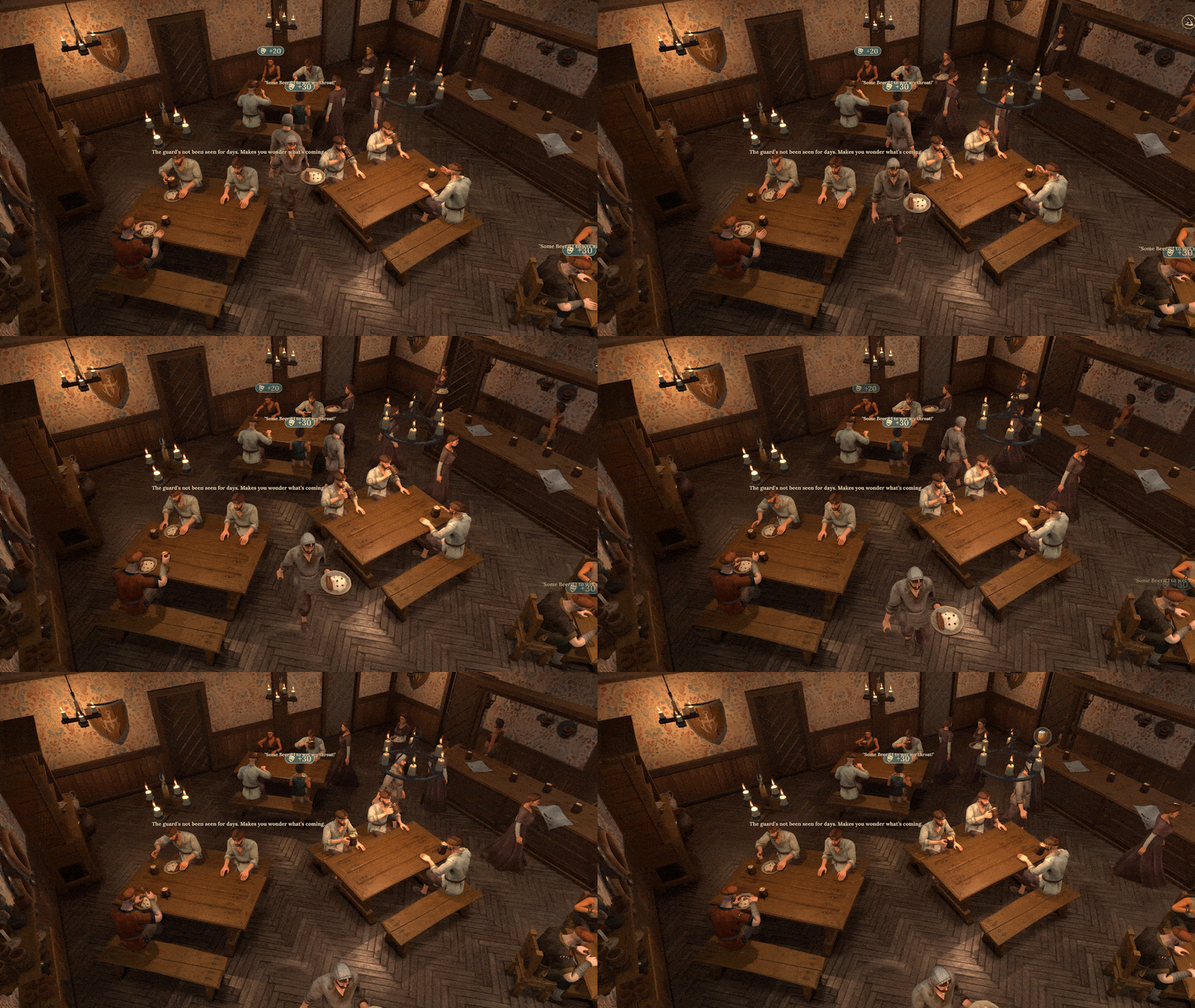 In the future, we want the dish traits to also influence guests social reactions, like for example being more sleepy from having a hearty dish or developing a need for a drink after a salty one. This way, if done correctly, you could steer your guests into staying overnight and spending more guldens on drinks.
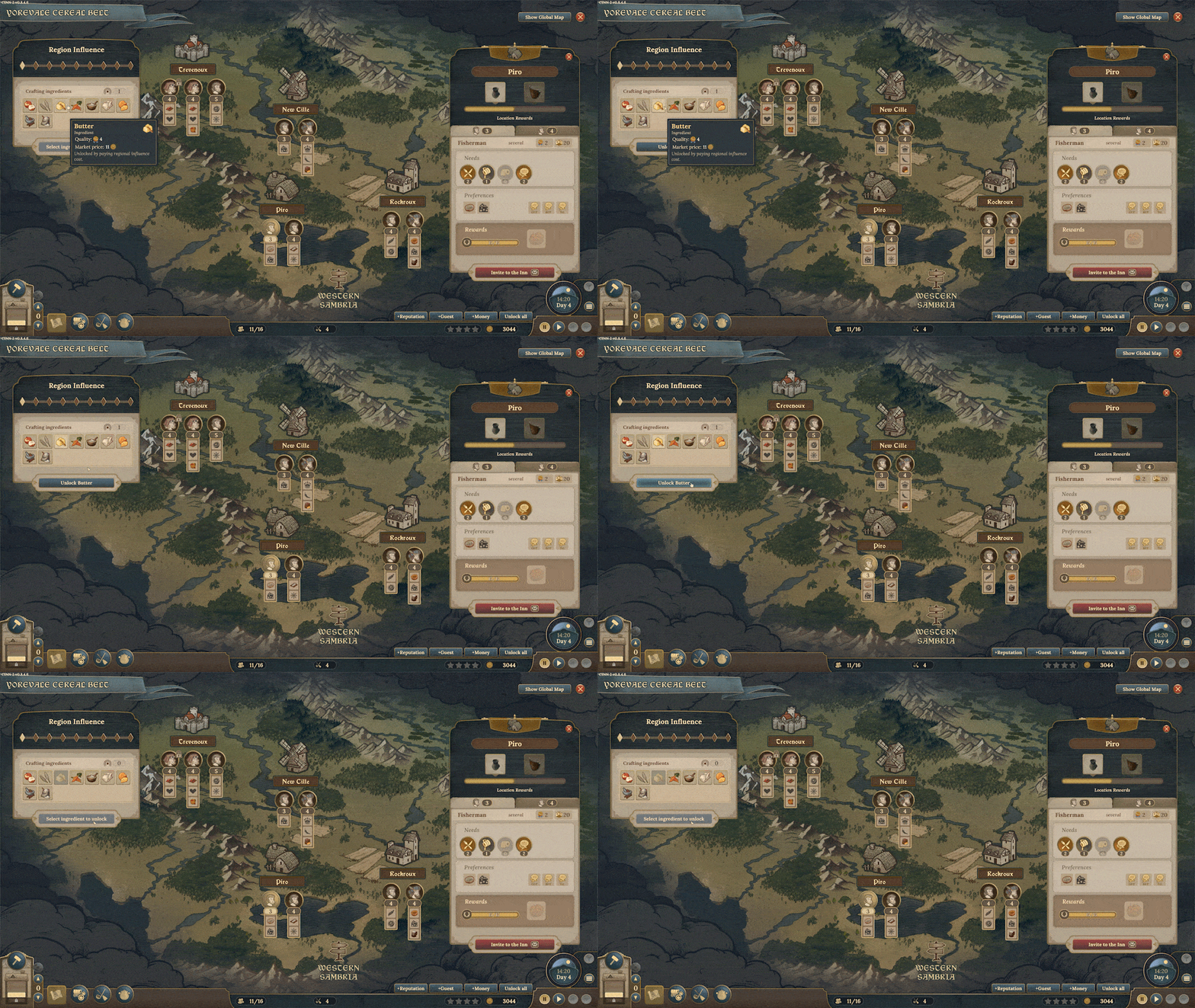 You obviously start with some basic recipes, something like beer and bread to get you going. As you progress with different Backgrounds (Guest types), you unlock more and more recipes and also gain Regional Influence which allows you to unlock much needed ingredients. Ingredients have different quality values that can be run down by spoilage - and in the end influence the overall quality score of the dish - so it is essential to keep your produce fresh.

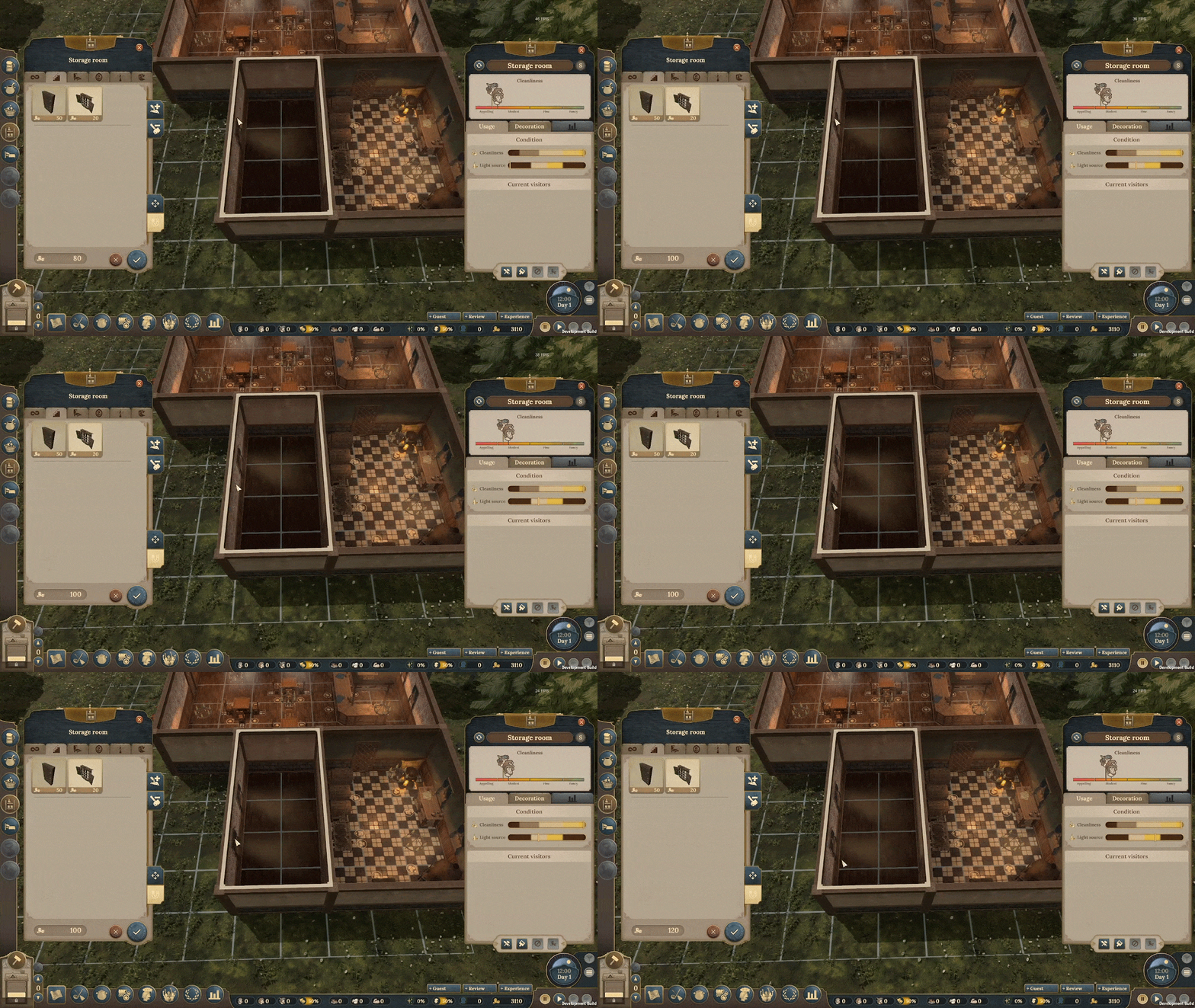 Placing windows gives a cone of light
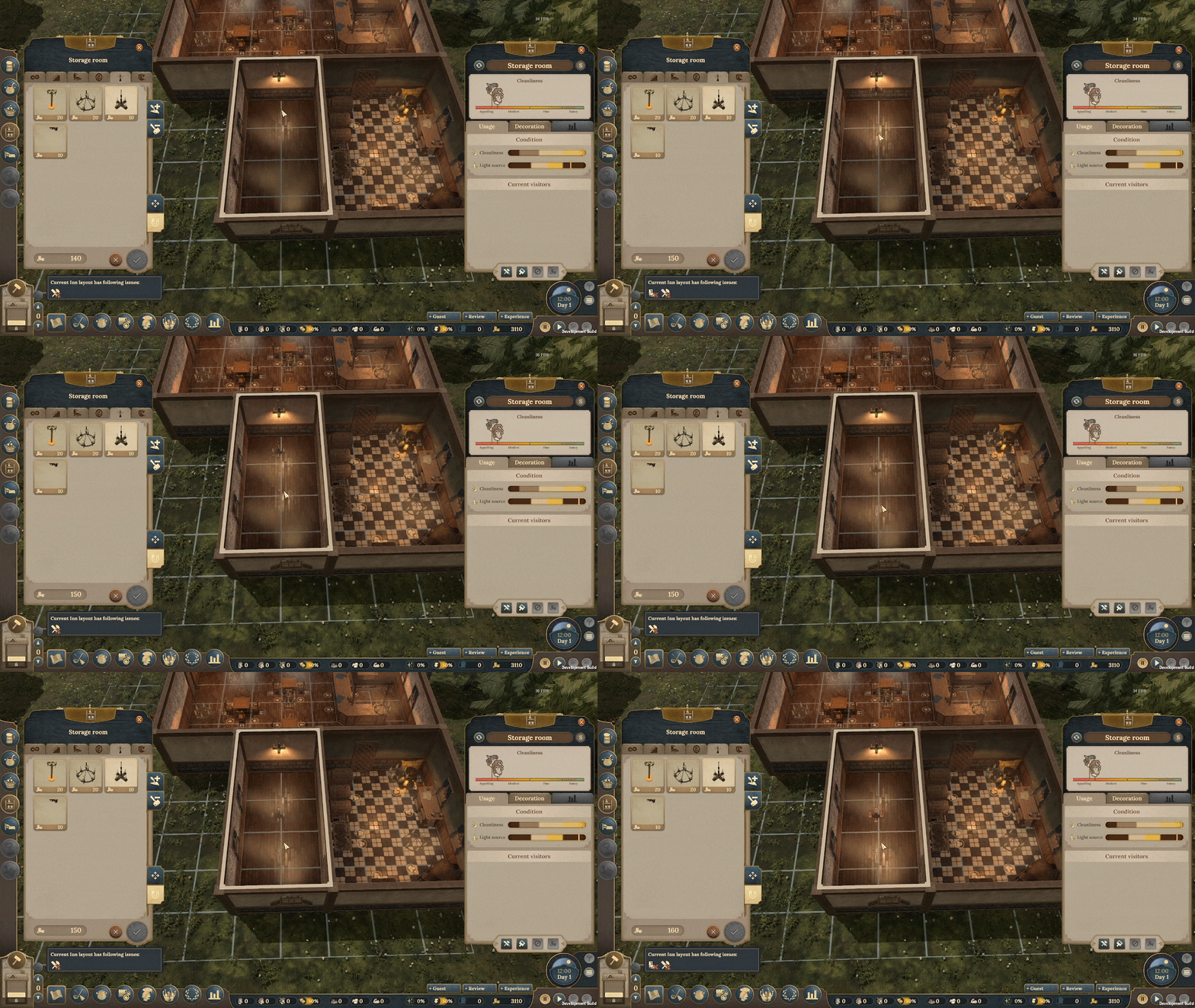 Placing lighting enhances the volumetrics of both light sources
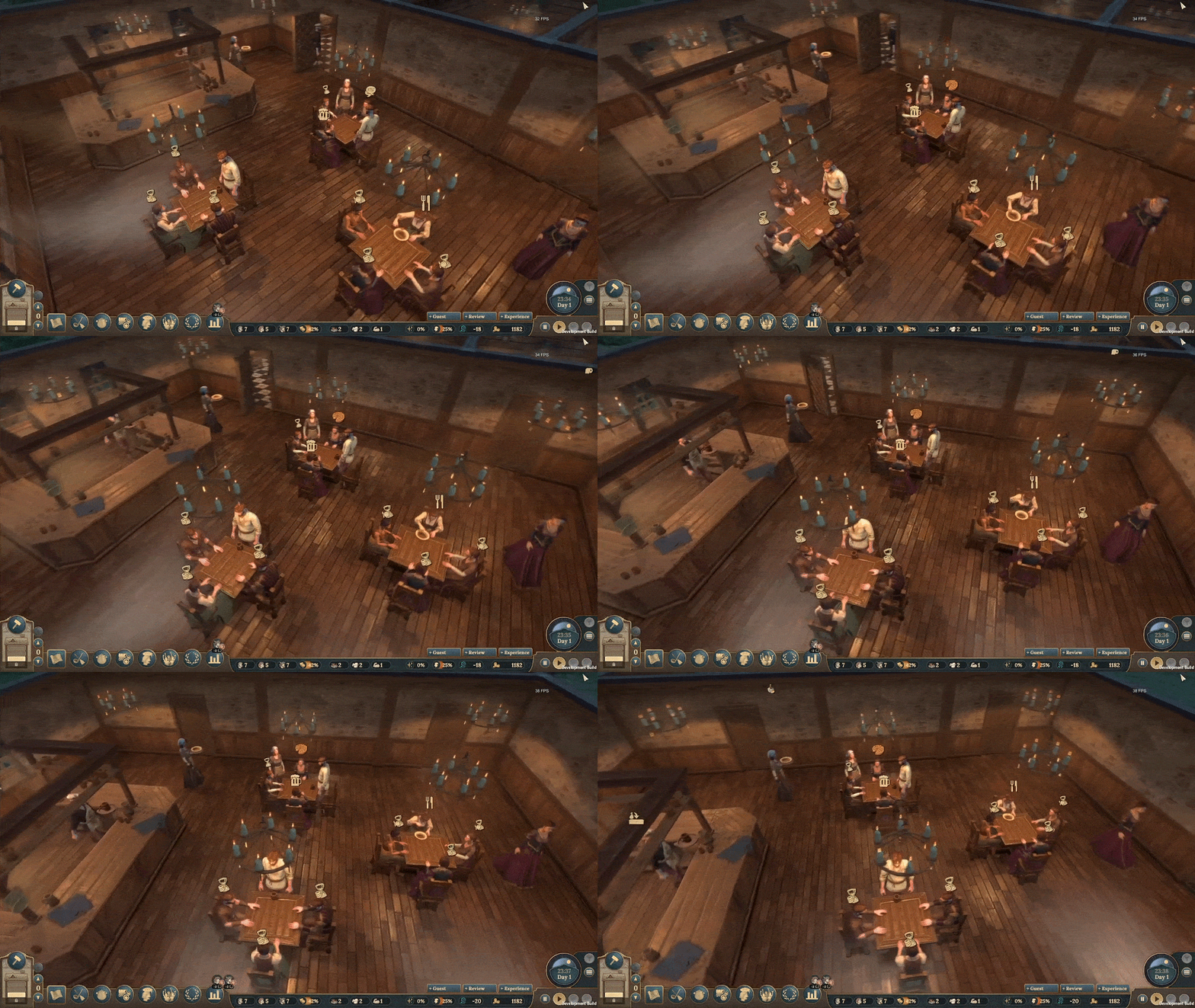 [h4]Worker NPCs Update[/h4]
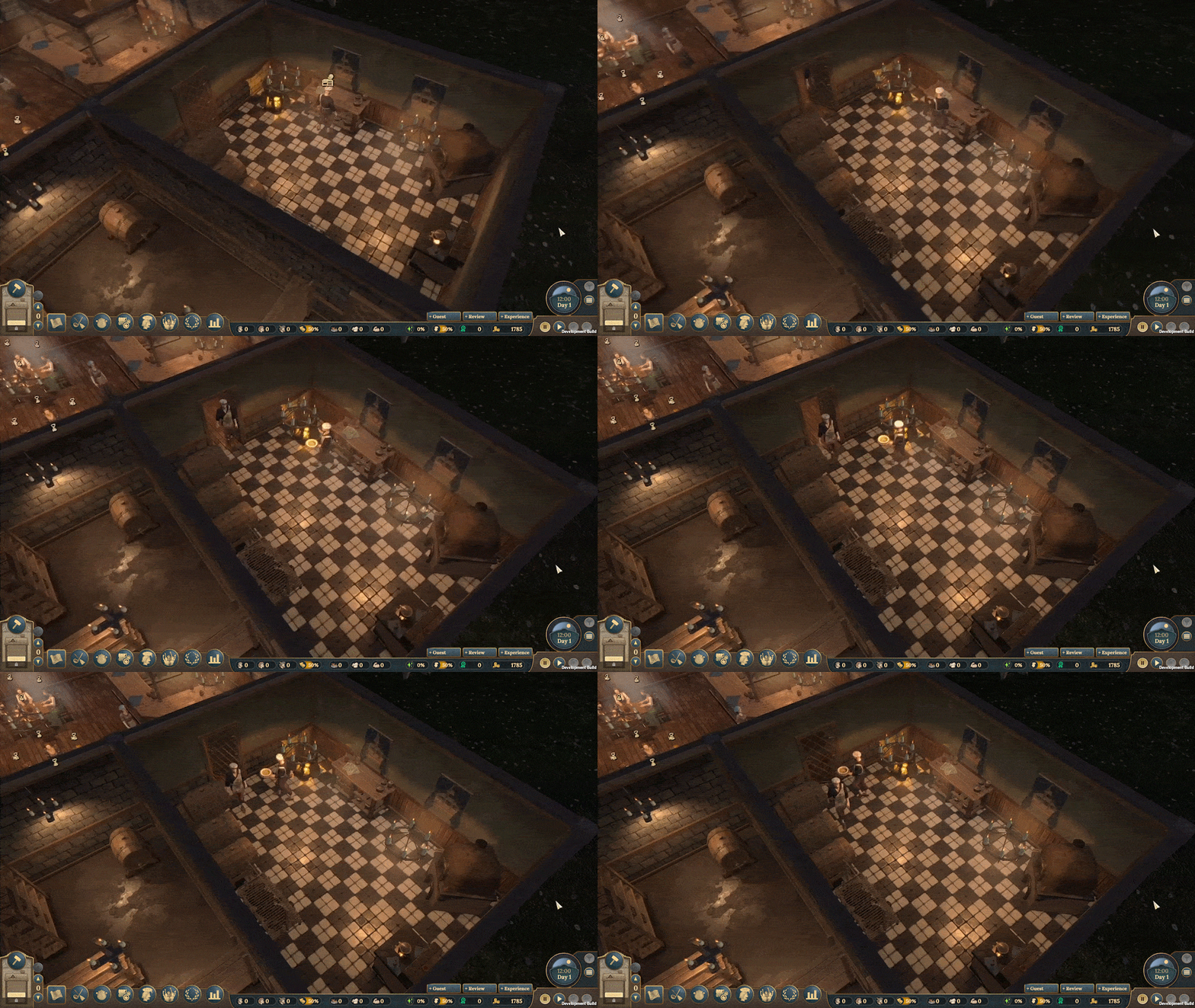 [h4]New Wall & Floor Textures[/h4]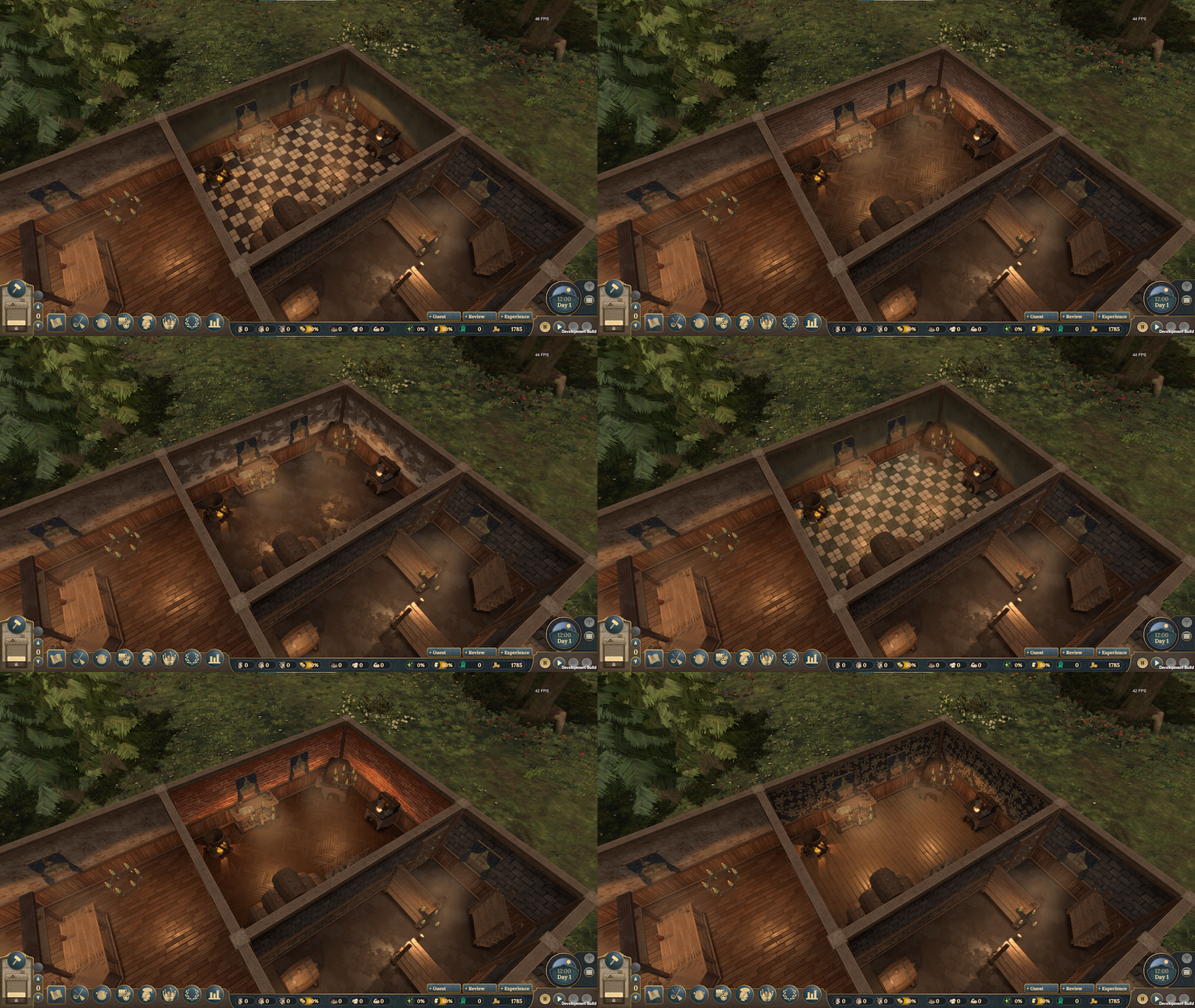
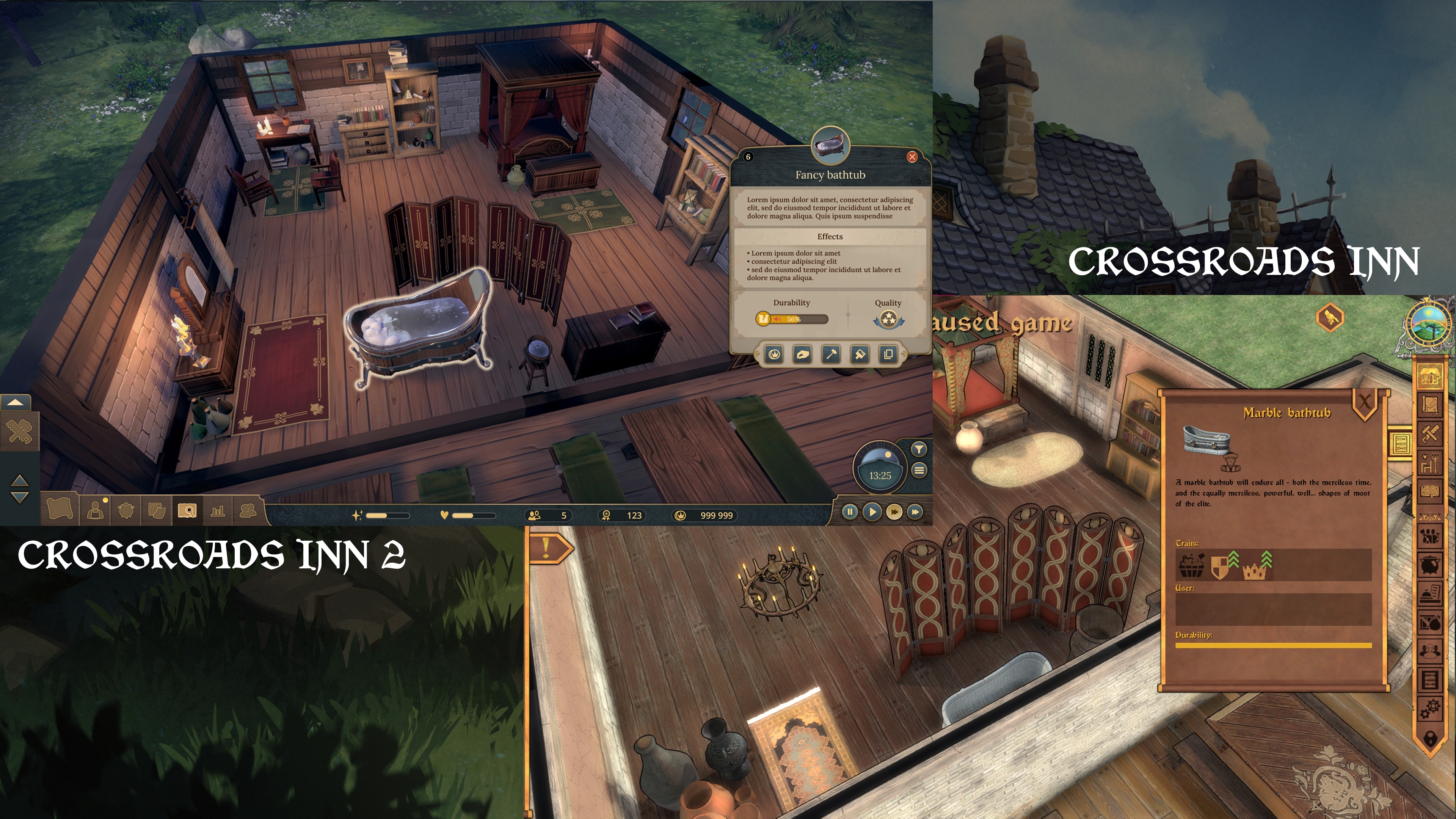 Crossroads Inn vs. Crossroads Inn 2As you can see, the new UI design is lighter, and smoother, while also being much clearer as to its functionality, details of objects, and so on.
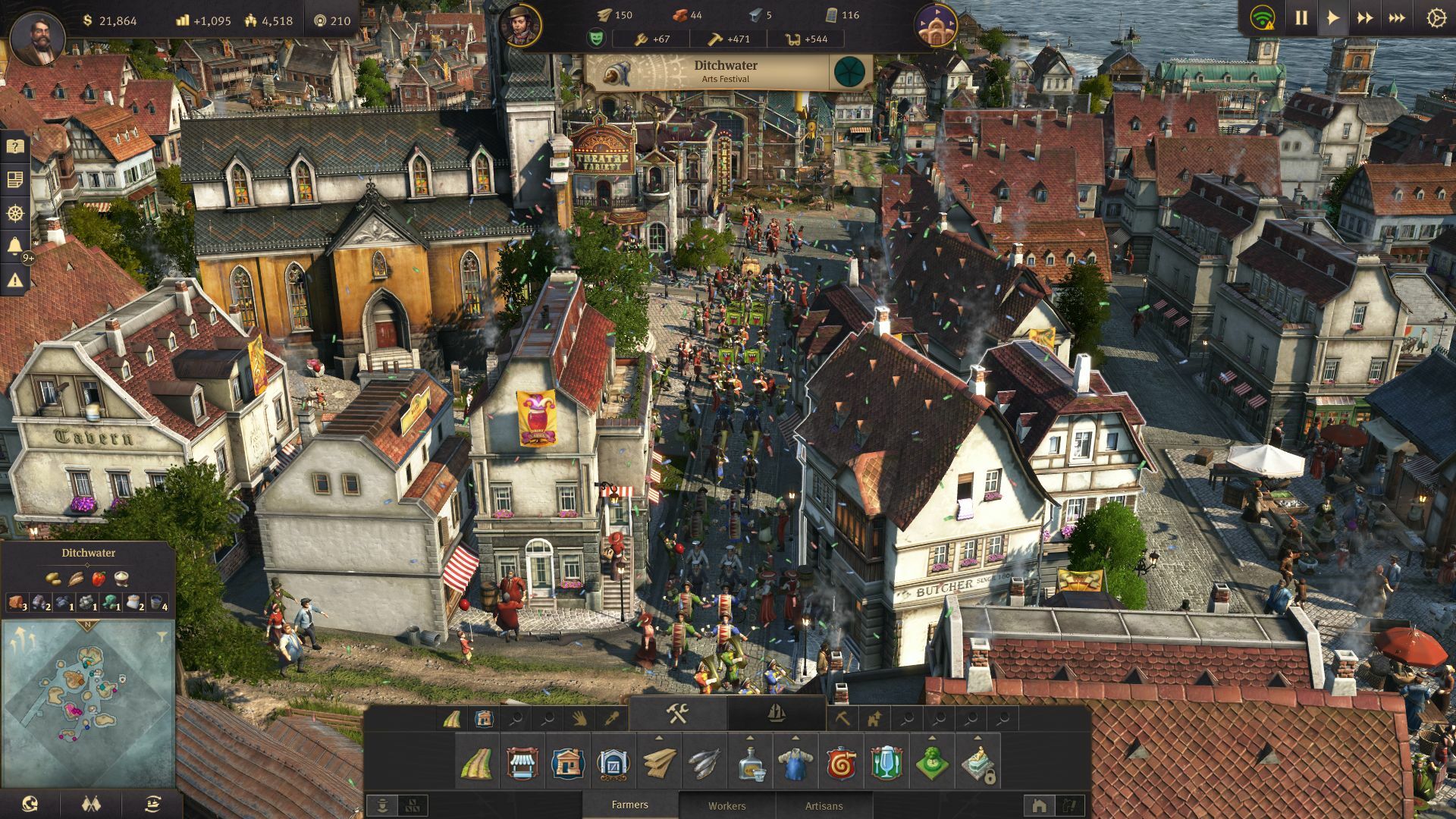 As it often happens during a creative process, we went to some of our favourite games to find inspiration for the new UI. First of them was Anno 1800. With its clear division of elements of the UI, it creates a functional system that’s not obscuring the game itself, while the colours, textures, and slight decorations create a visual feeling bringing the setting to life.
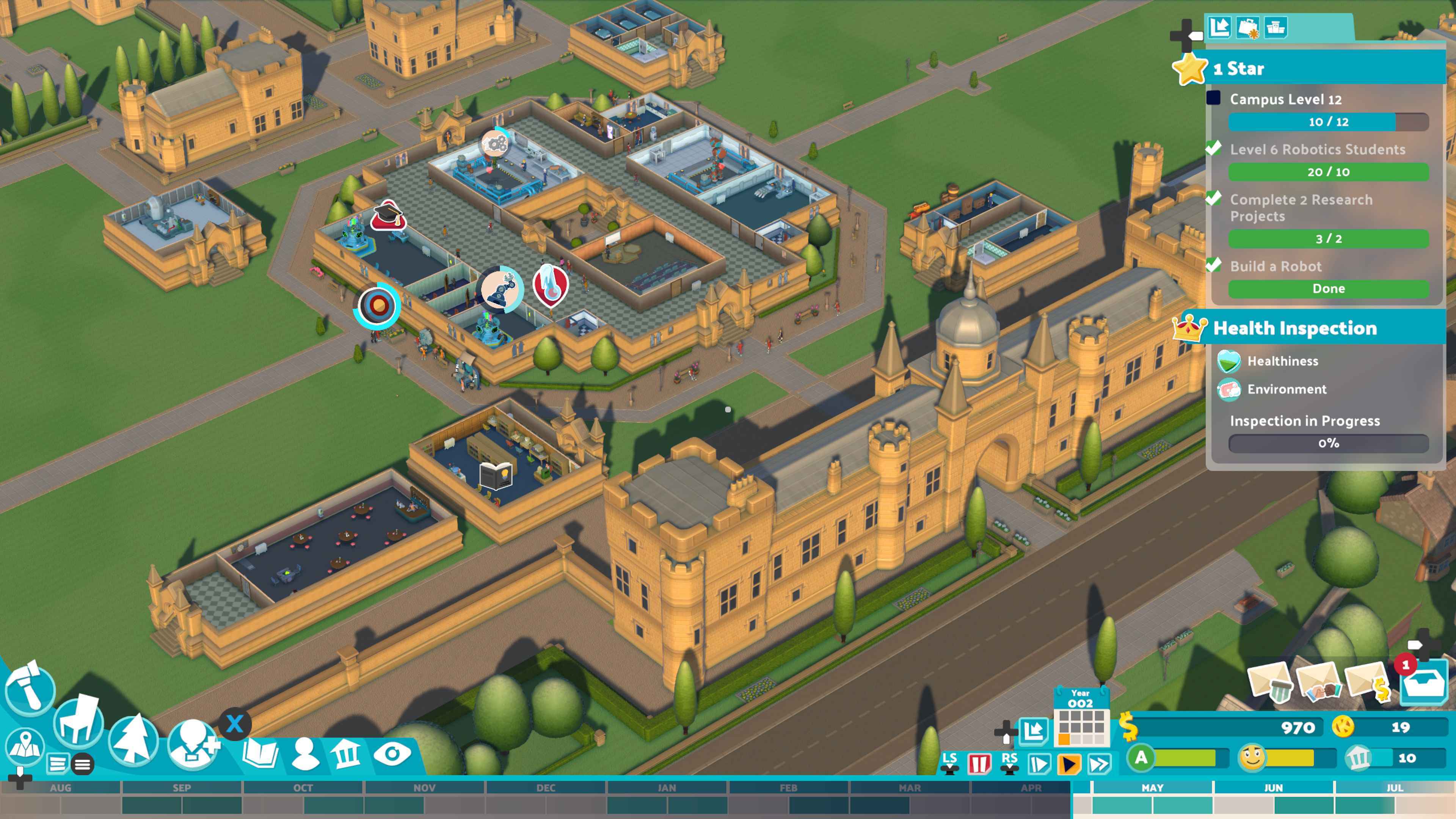 While completely different in mood, Two Point Campus is another of our inspirations. The UI is not overly stylized and it conveys all the important feedback and information in a clear way, never leaving the player wondering what exactly is going on and where, how, and what they can do.
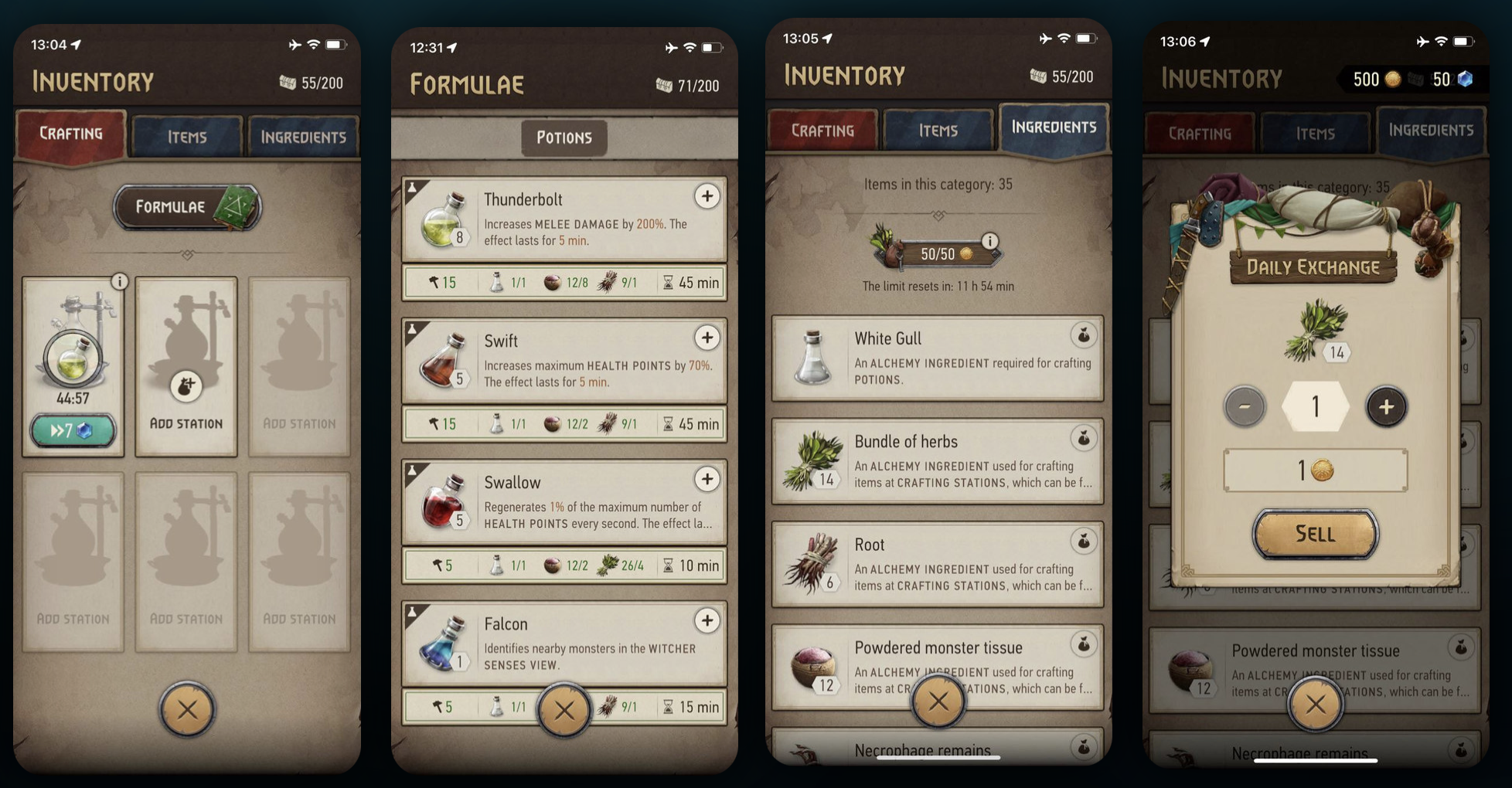 Another game worth a mention is The Witcher: Monster Slayer. While it’s a game aimed at a different platform, the use of clearly defined icons and brackets, combined with aptly chosen textures and ornaments, creates a perfectly clear and yet climactic UI.
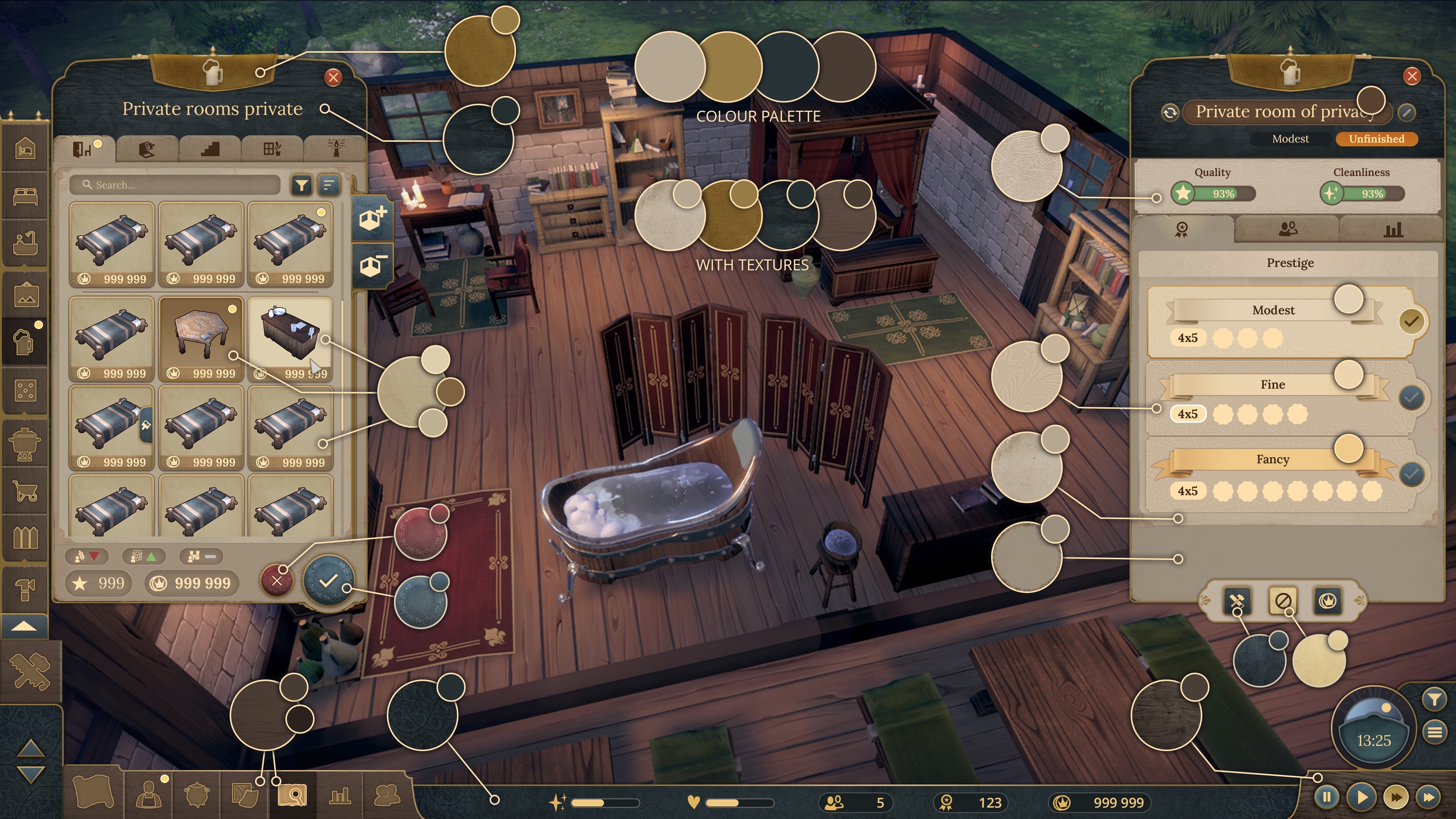 Colour palette and textures.
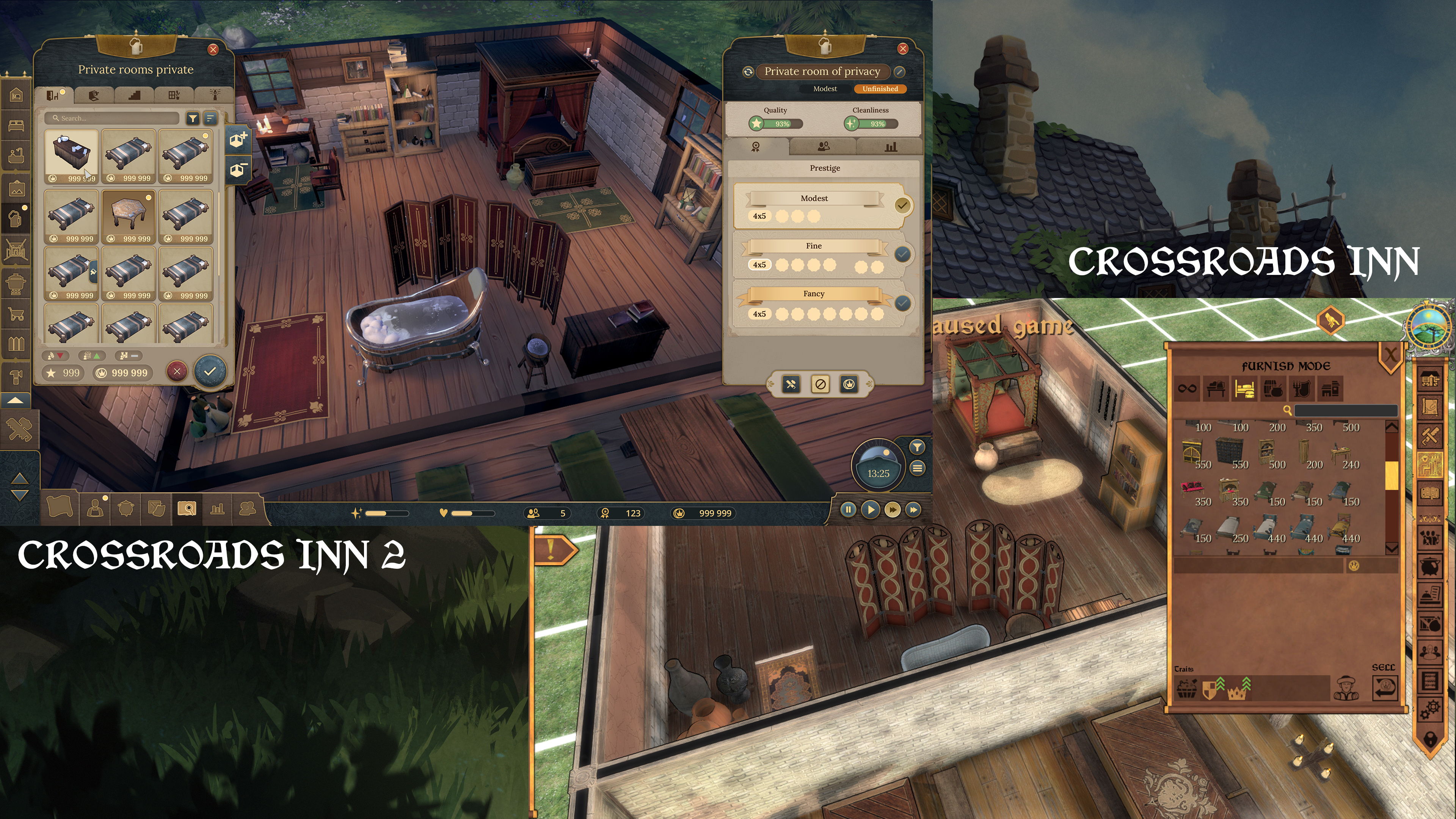 Placing furniture in Crossroads Inn and Crossroads Inn 2.
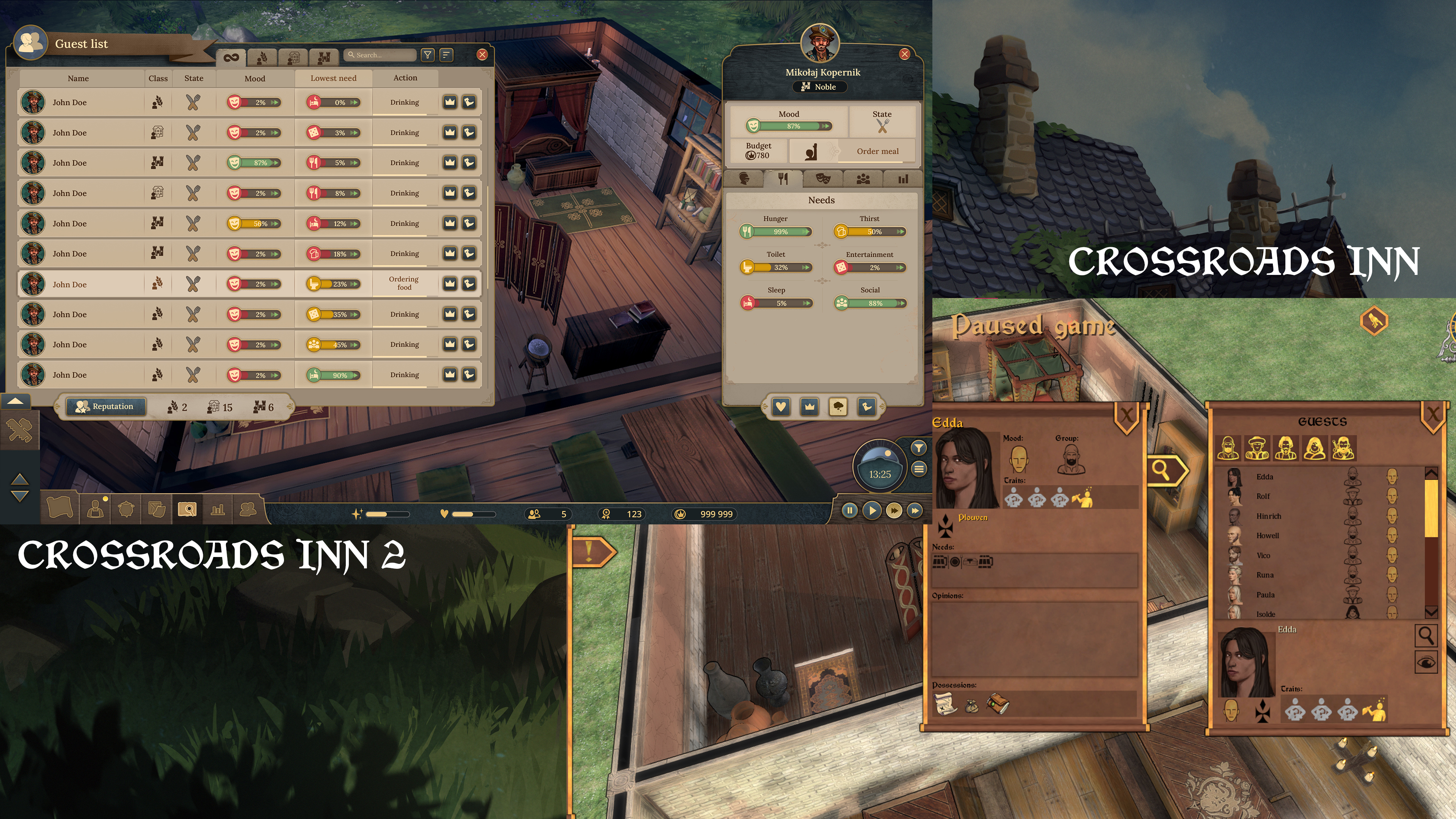 Guest list and guest details in Crossroads Inn and Crossroads Inn 2.
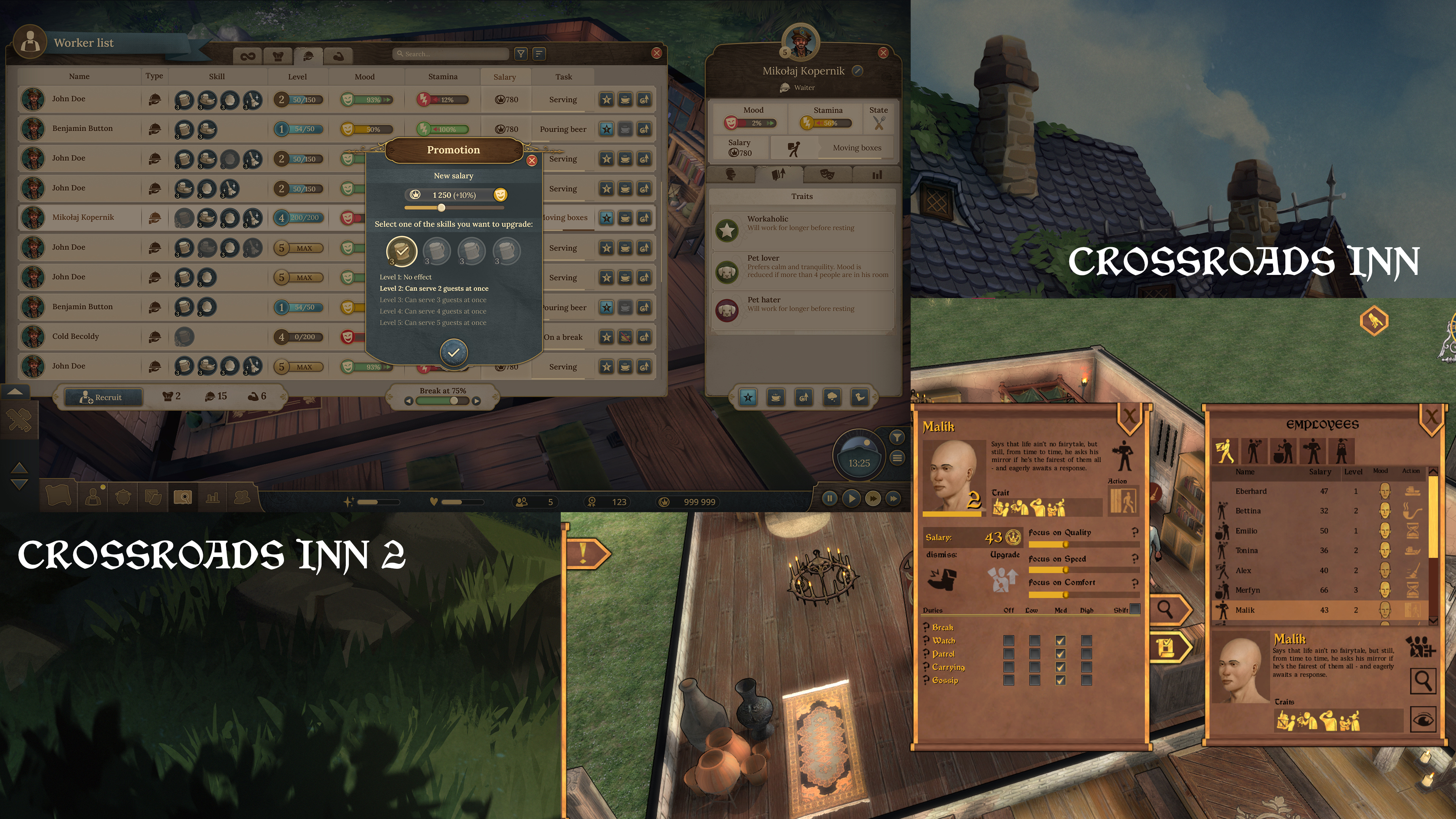 Worker list and details (and worker promotion window) in Crossroads Inn and Crossroads Inn 2.
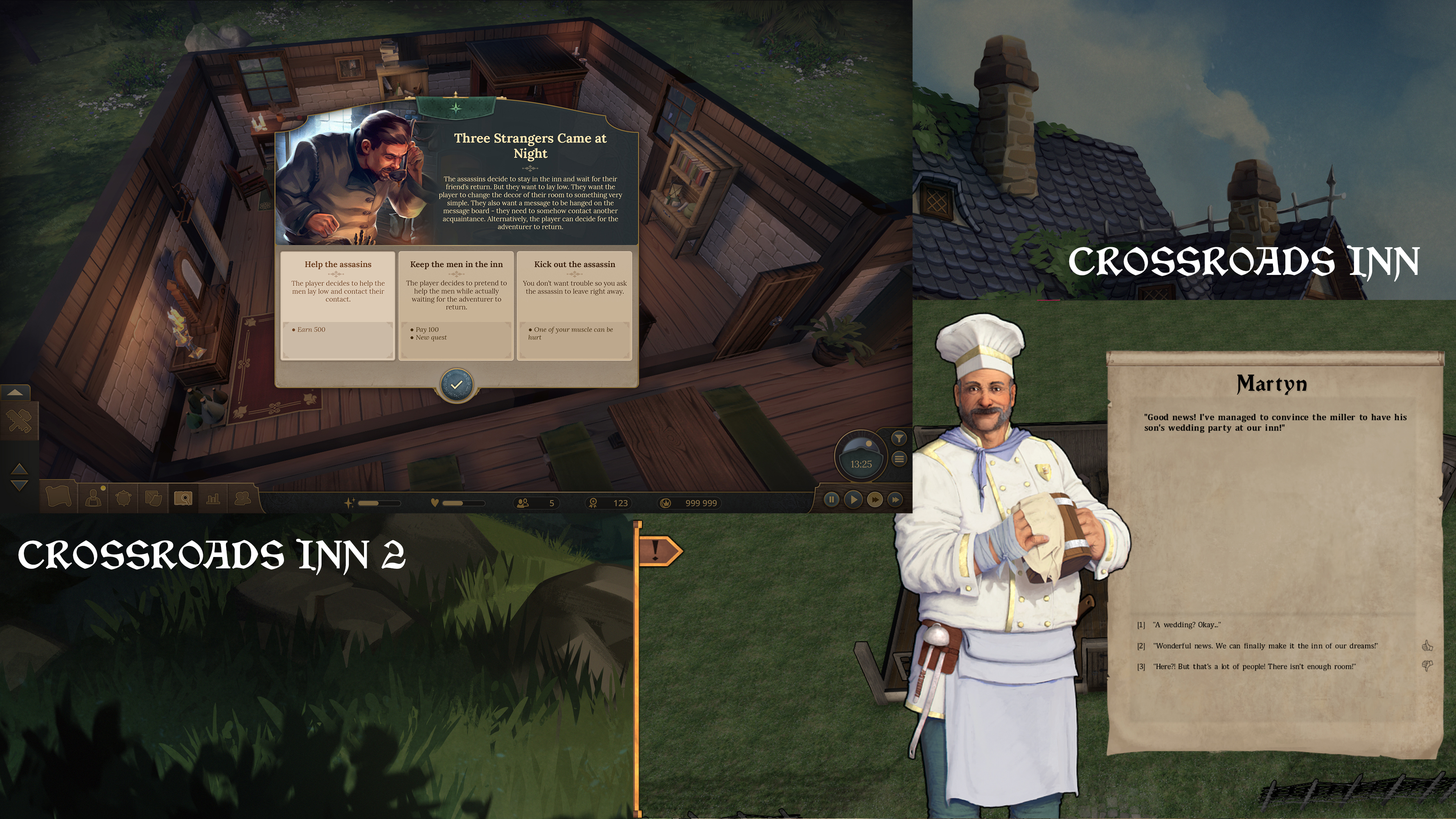 Crossroads Inn and Crossroads Inn 2 events.


 Loading

