


Install Steam
sign in
|
language
简体中文 (Simplified Chinese)
繁體中文 (Traditional Chinese)
日本語 (Japanese)
한국어 (Korean)
ไทย (Thai)
Български (Bulgarian)
Čeština (Czech)
Dansk (Danish)
Deutsch (German)
Español - España (Spanish - Spain)
Español - Latinoamérica (Spanish - Latin America)
Ελληνικά (Greek)
Français (French)
Italiano (Italian)
Bahasa Indonesia (Indonesian)
Magyar (Hungarian)
Nederlands (Dutch)
Norsk (Norwegian)
Polski (Polish)
Português (Portuguese - Portugal)
Português - Brasil (Portuguese - Brazil)
Română (Romanian)
Русский (Russian)
Suomi (Finnish)
Svenska (Swedish)
Türkçe (Turkish)
Tiếng Việt (Vietnamese)
Українська (Ukrainian)
Report a translation problem

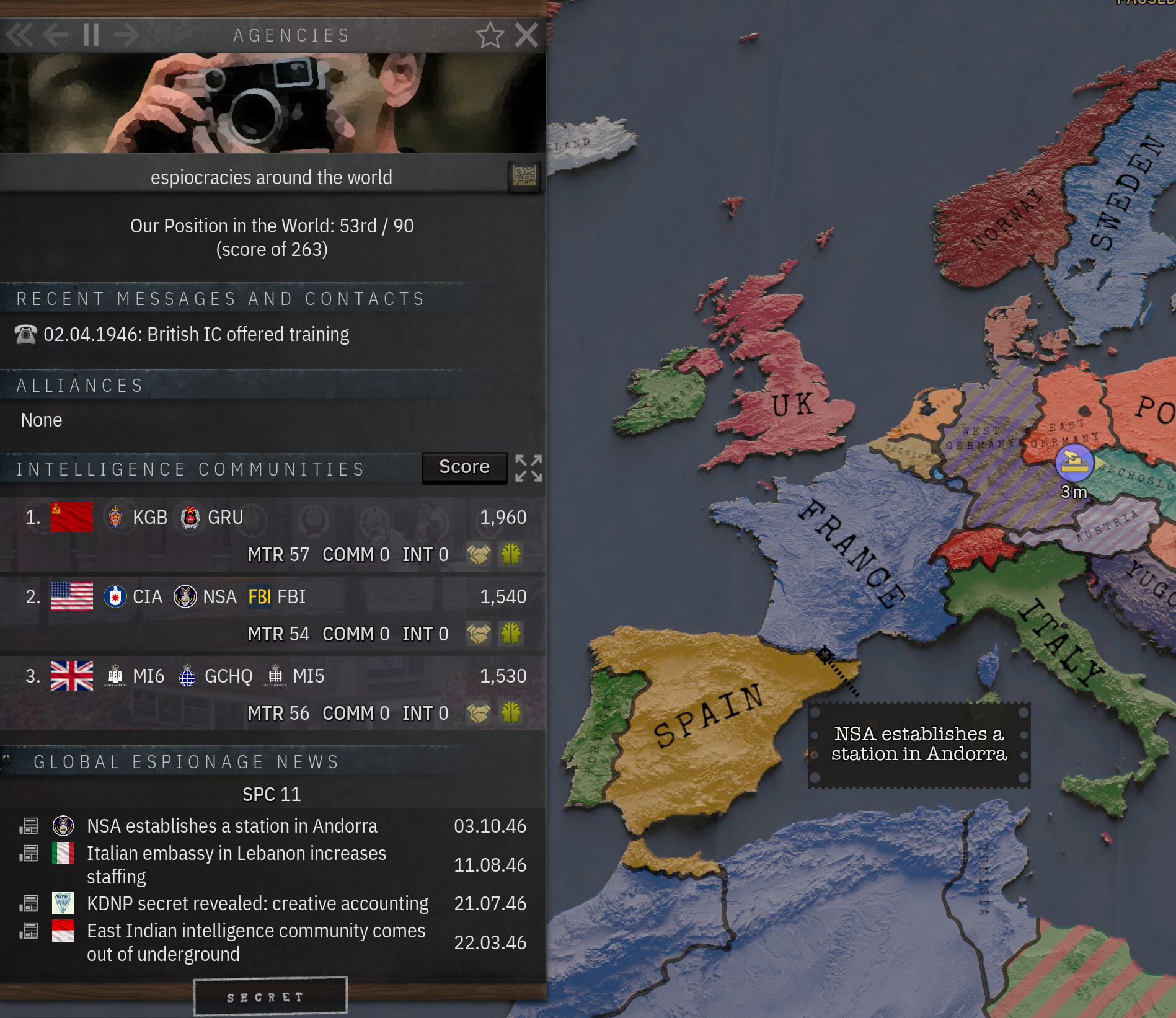
 Counterintelligence - the art of hunting spies - is the backbone of real intelligence world, Cold War history, and spy fiction. Therefore, it should be also an important part of any video game implementing espionage mechanics. This, however, isn't the case and there are simply no games that explore counterintelligence in depth. Espiocracy will change that. This diary and the next diary will explore counterintelligence (CI) mechanics in the game.


 ---
---
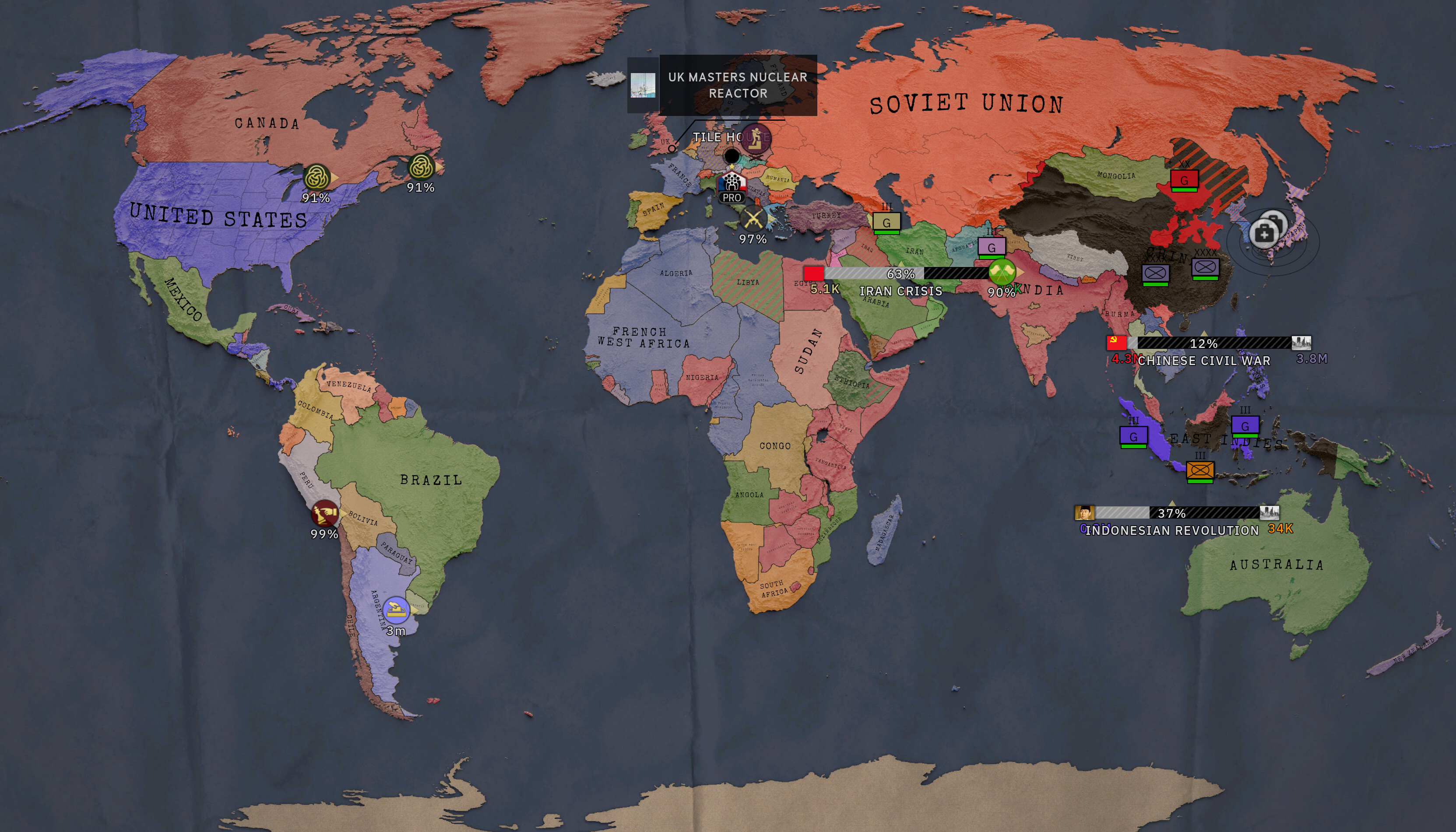
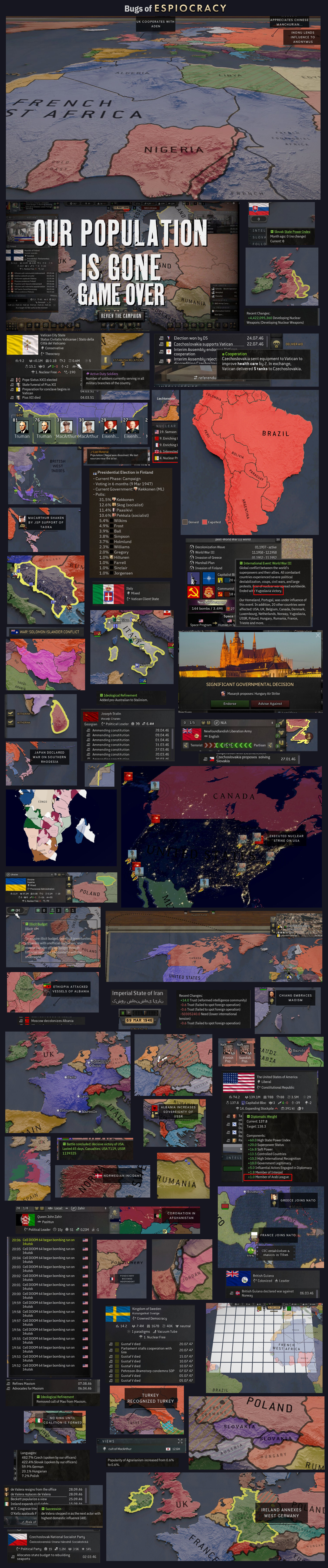
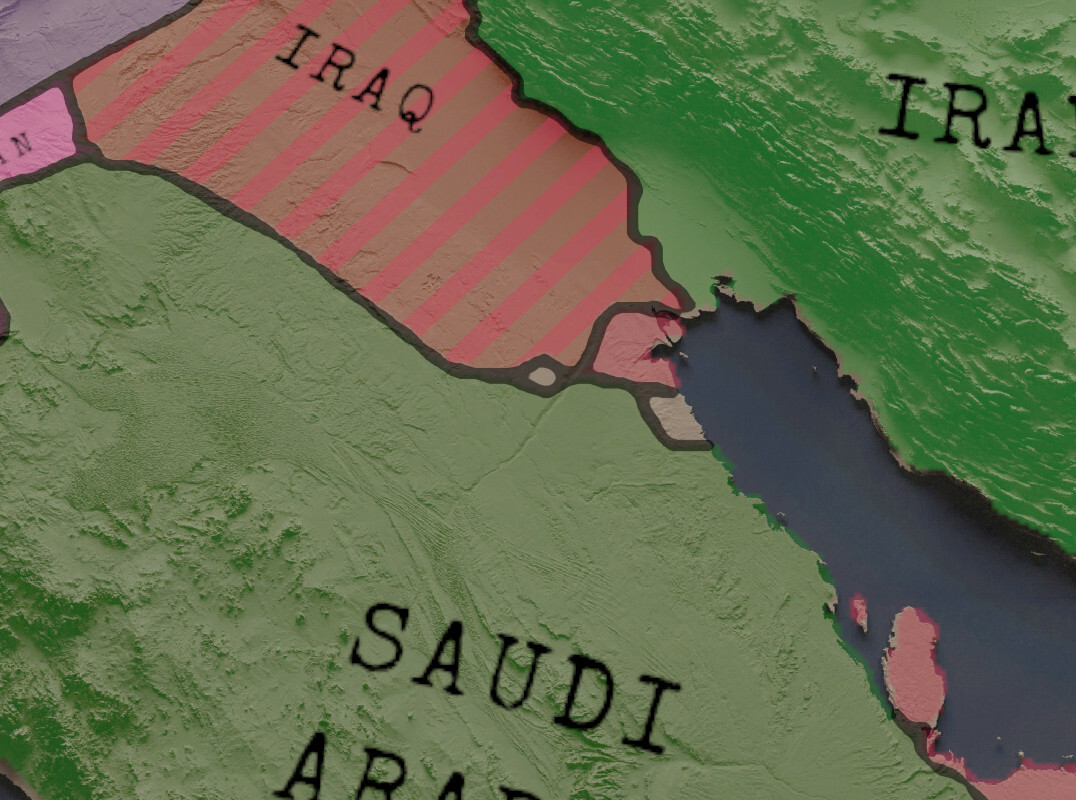 All the borders and areas are fully dynamic. This narrow strip of British Togoland right by the Gold Coast (modern day Ghana)...
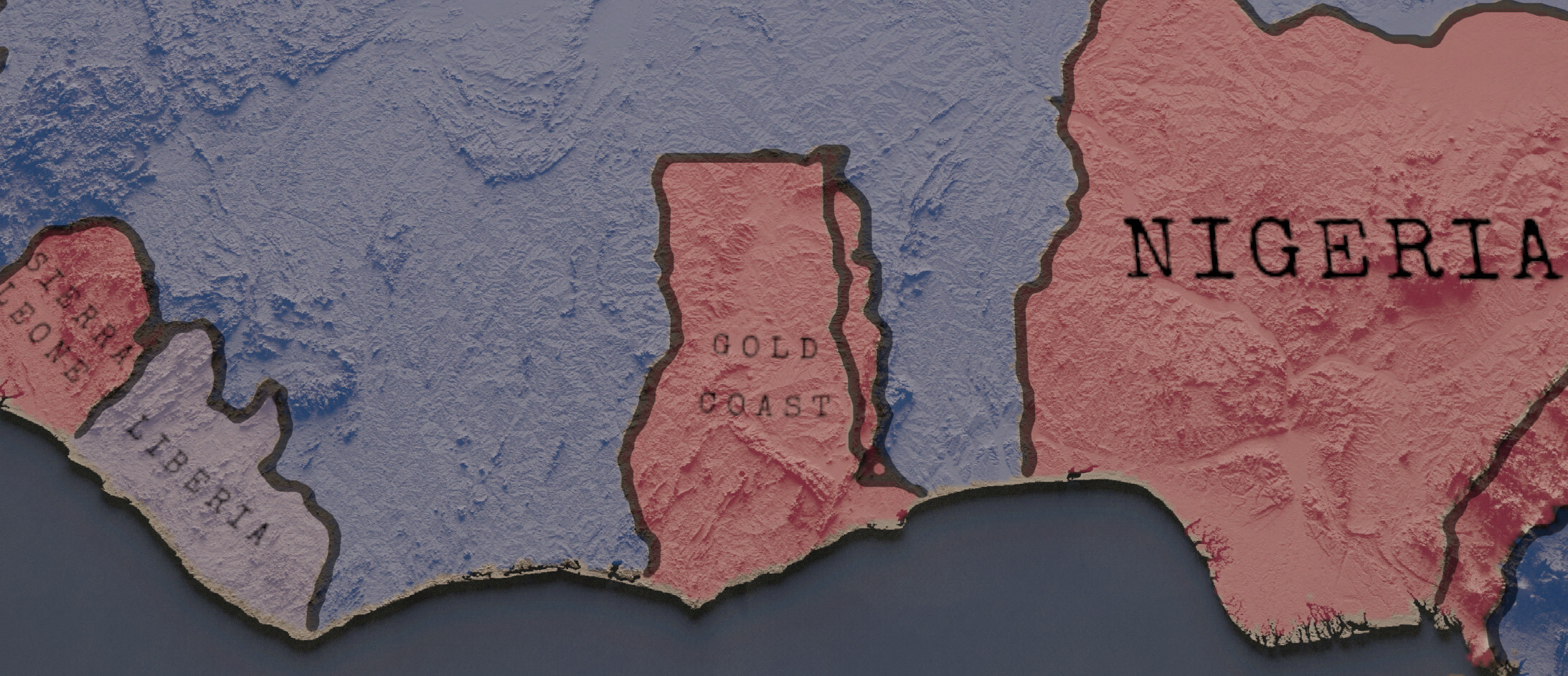 ...usually, as was the case in the real history, holds a referendum to join the Gold Coast after which this territory may be merged with the British colony on the map:
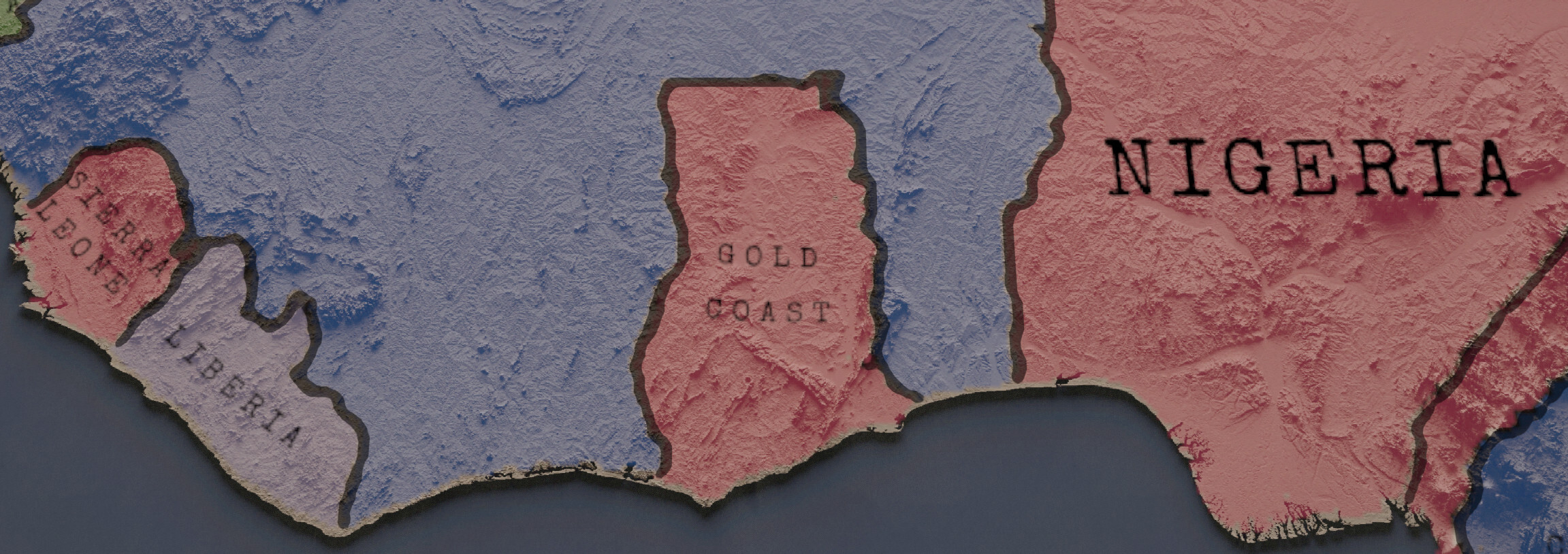 However, other scenarios are possible in the game as well. If French Togoland separates from French West Africa early enough...
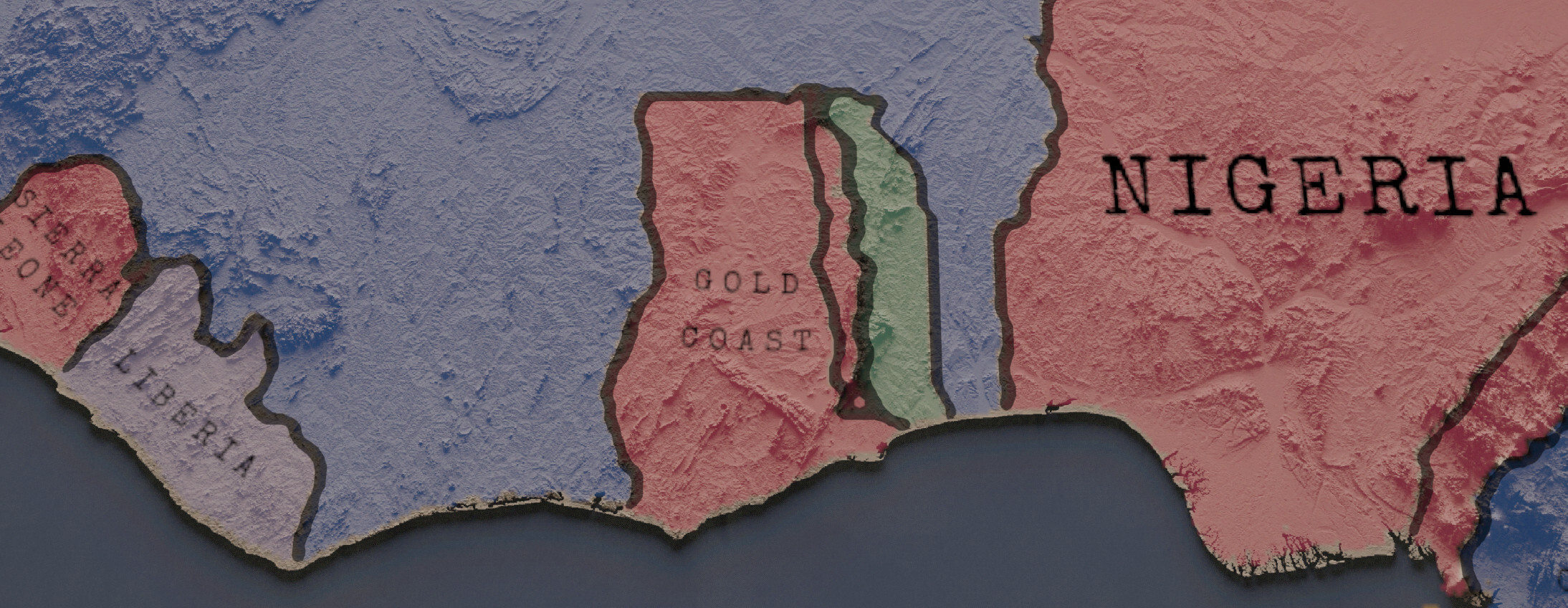 ...then, it may be instead the subject of referendum (as was the wish of Ewe people), and therefore new Togo may be compromised of both British and French parts:
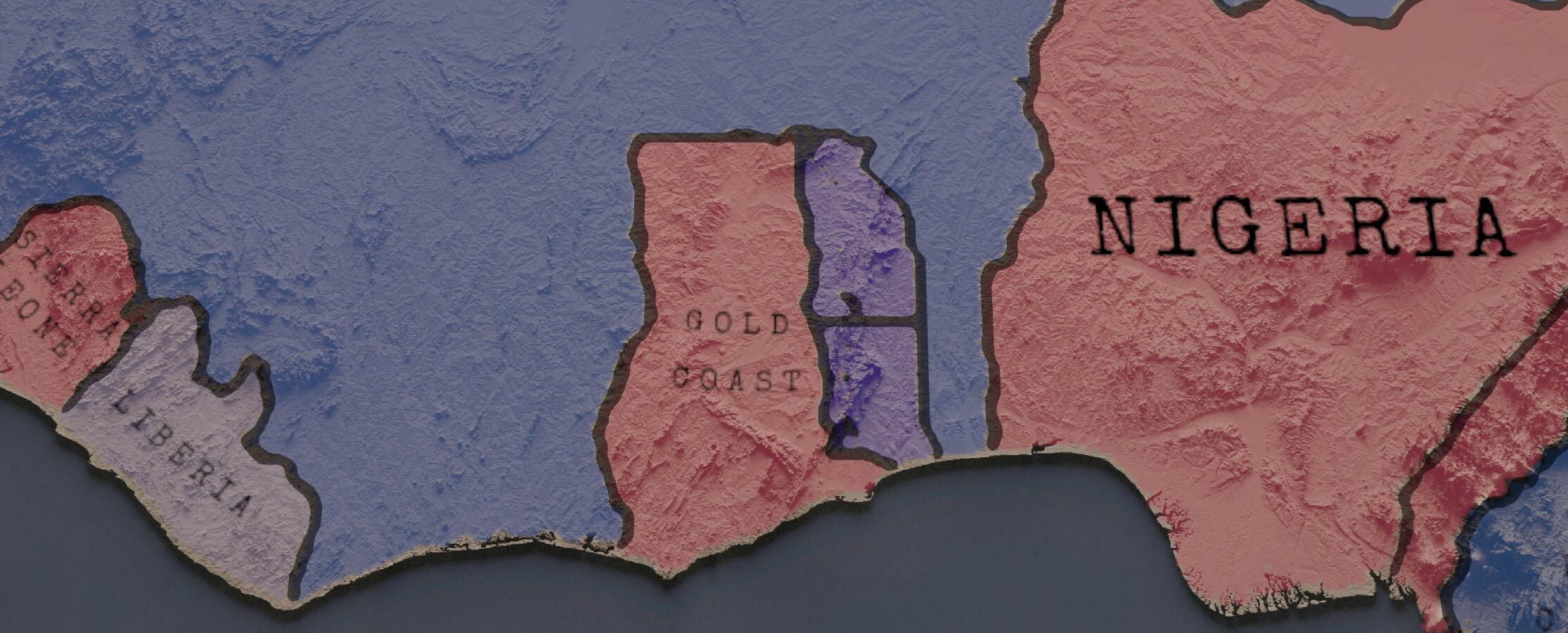
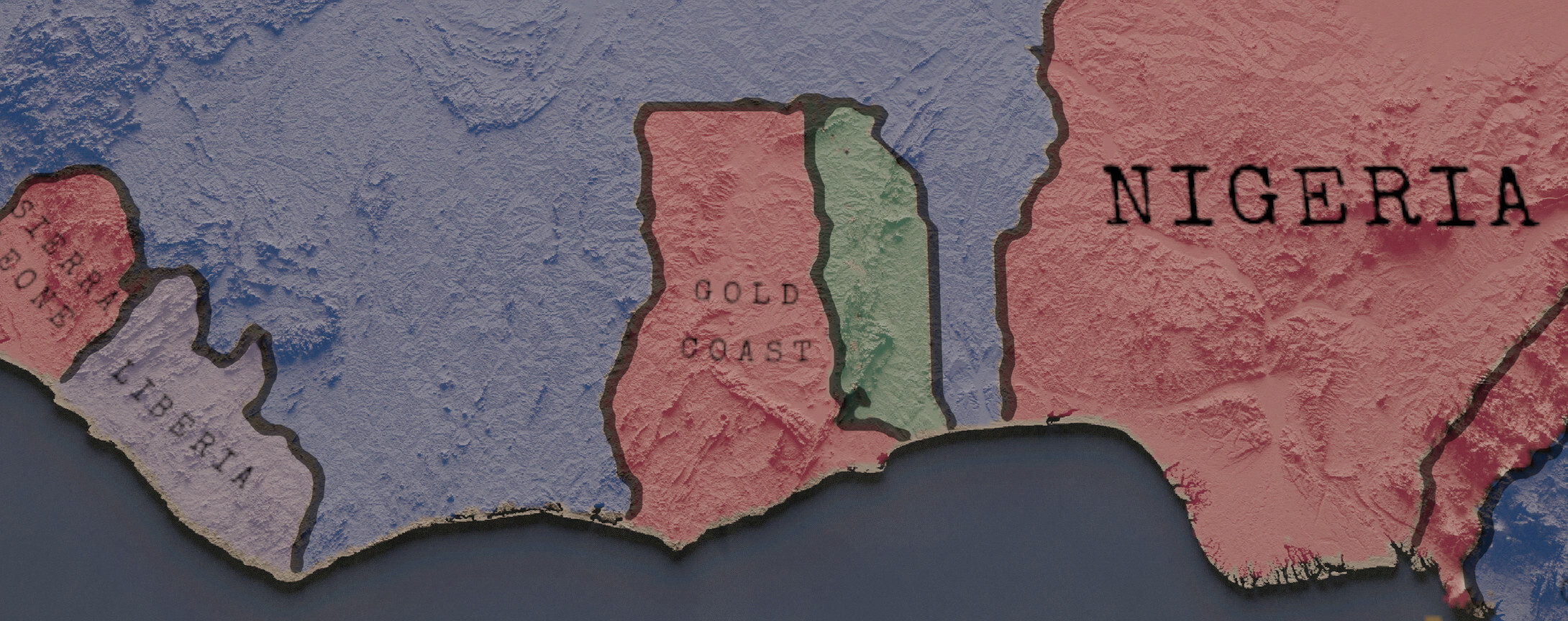 If, after some time, British and French parts fail to integrate and instead pursue separatist paths, they can separate by drawing any new border between them, for instance along one of the parallels as was the custom in a number of 20th century conflicts:
 Controlled area during a conflict has similar level of detail. Military units can control any narrow stretches of land:
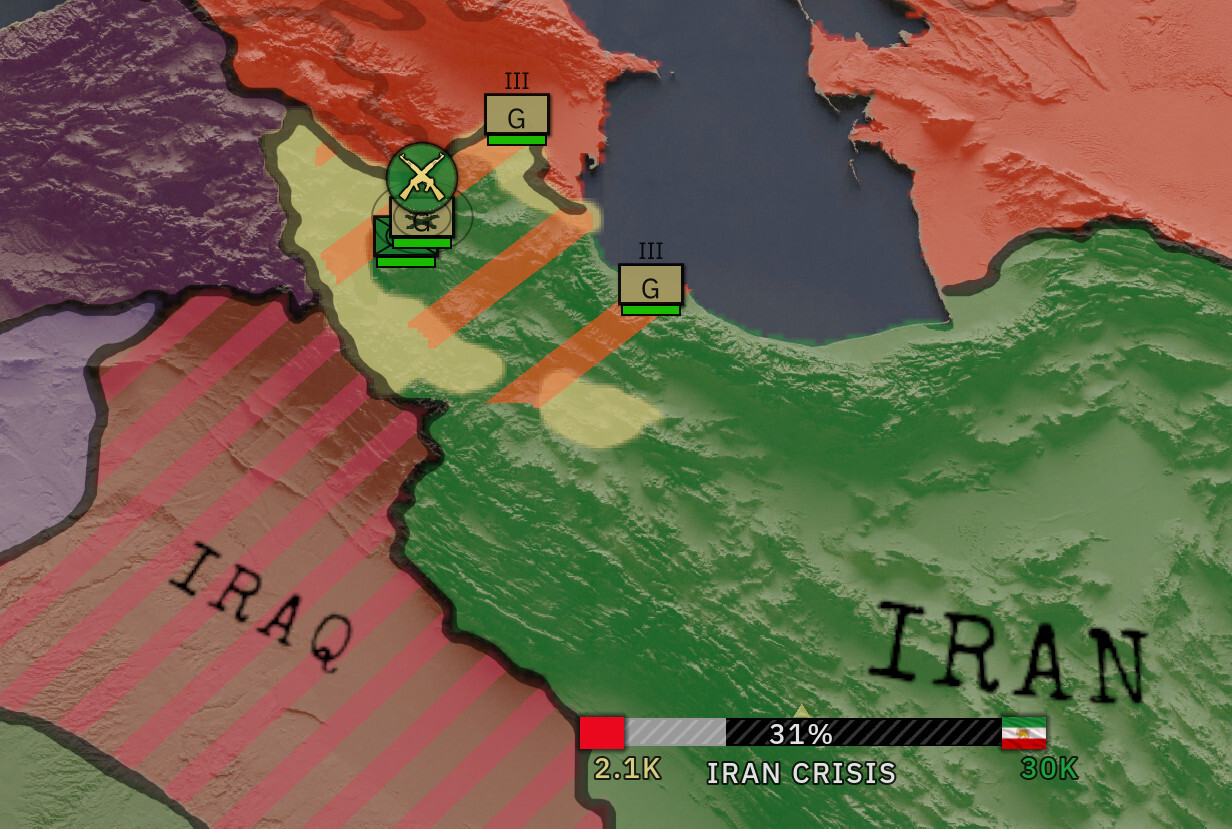 They can get into any combination of pockets and encirclements:
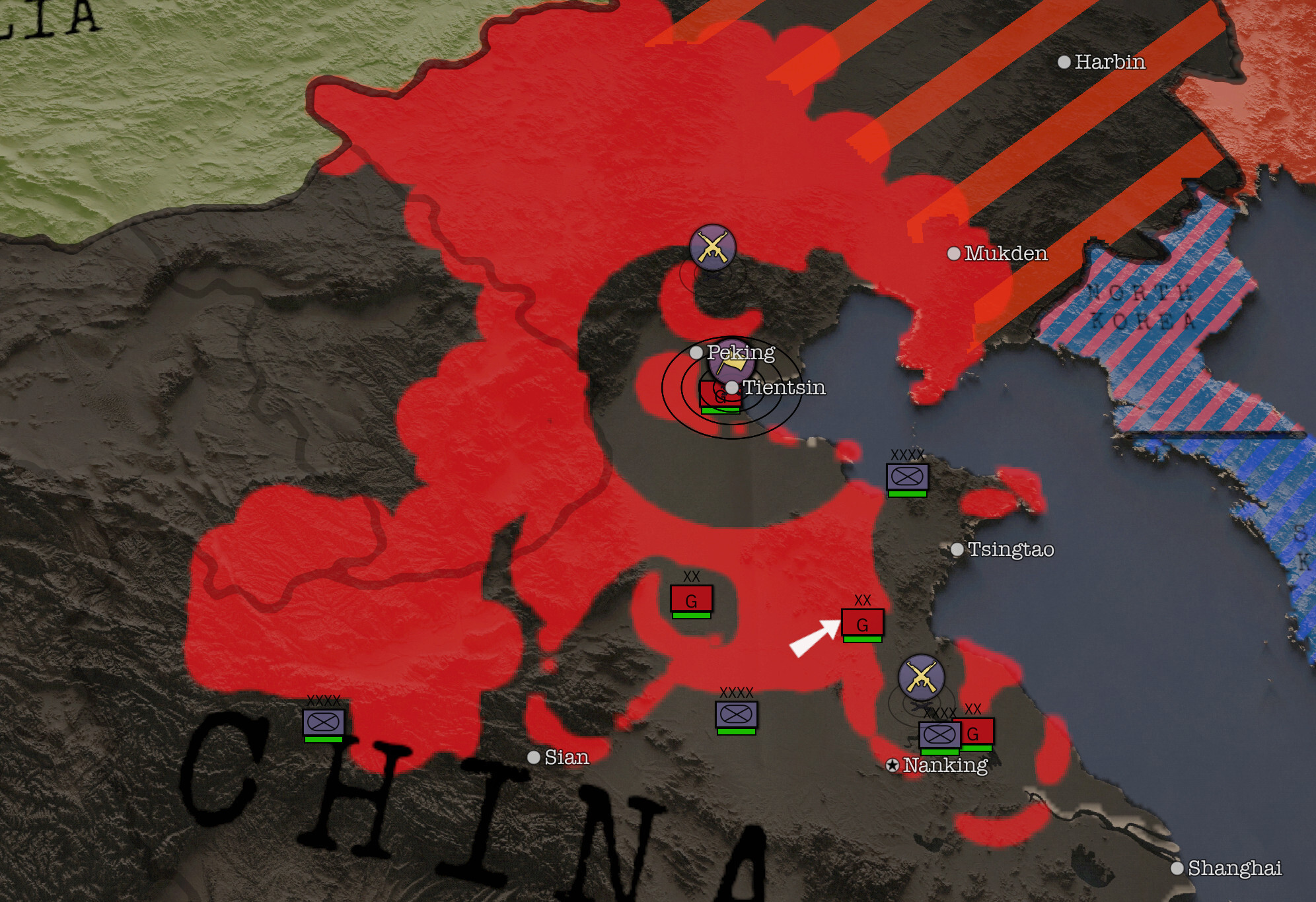 The situation may become complex during insurgencies and civil wars: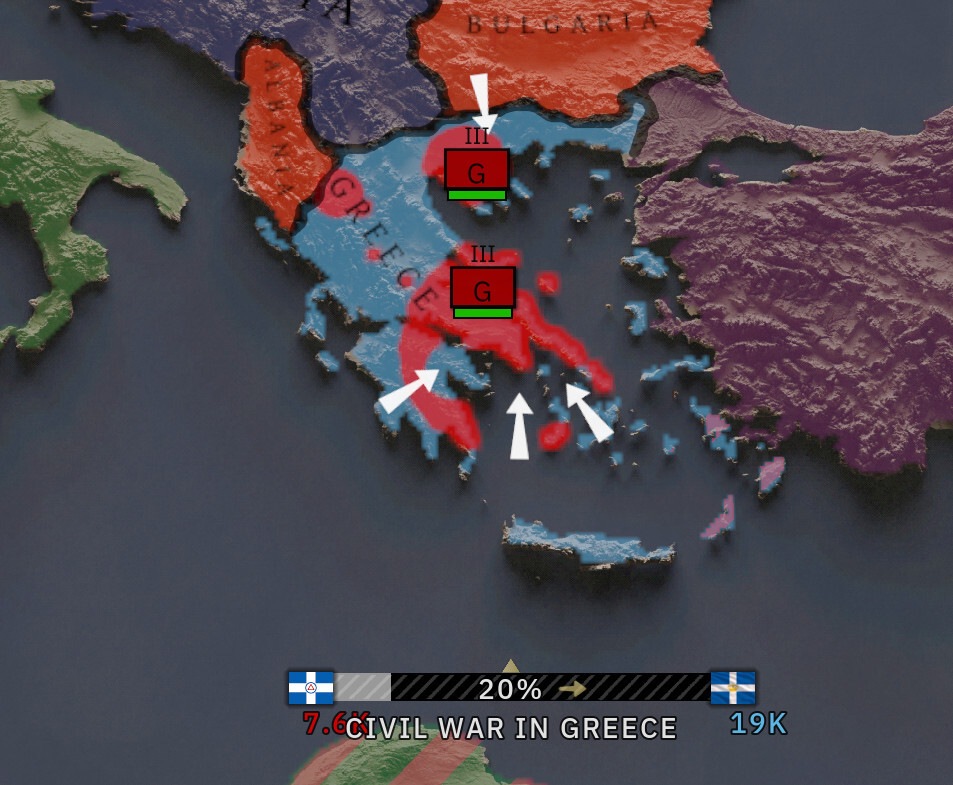
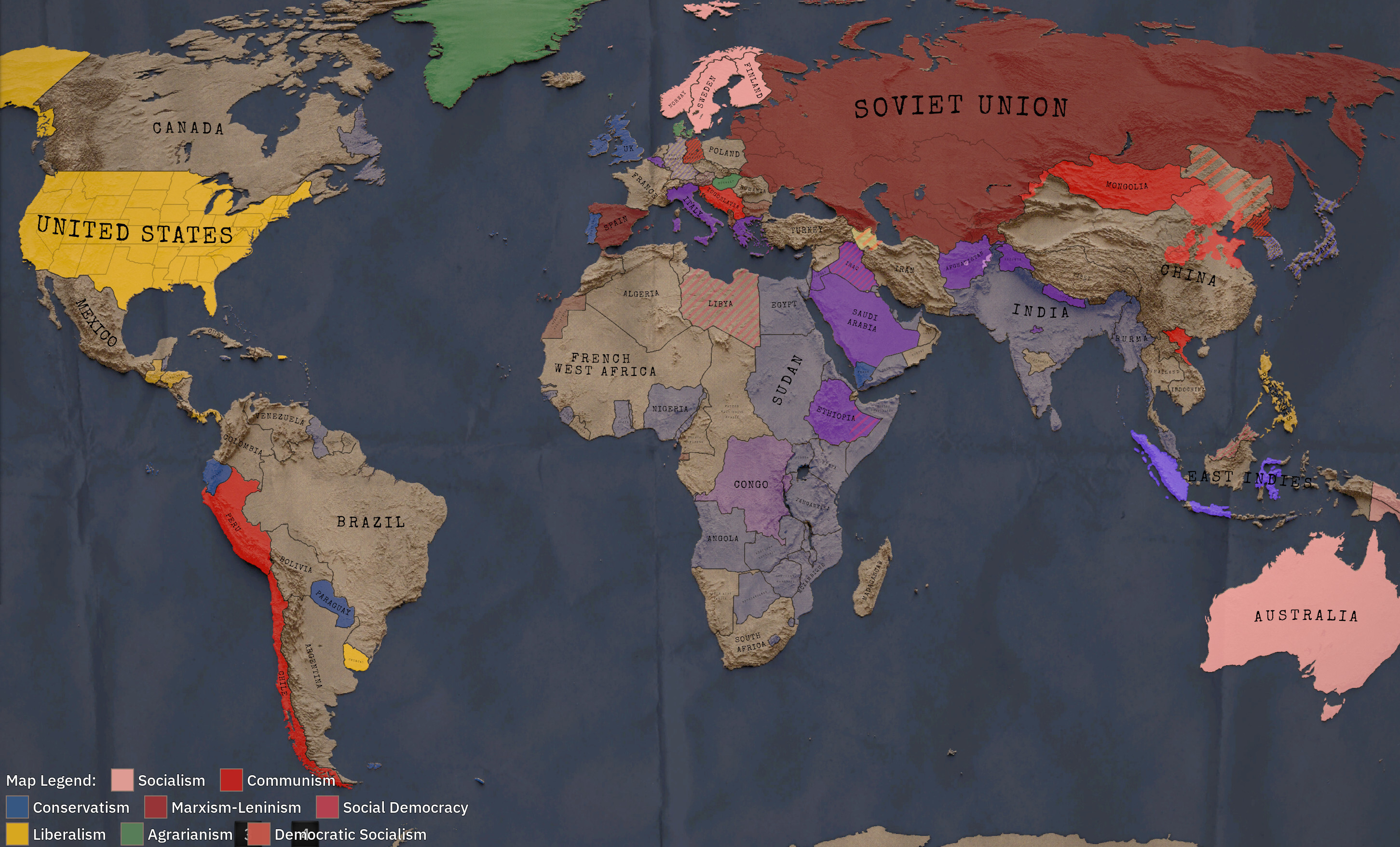
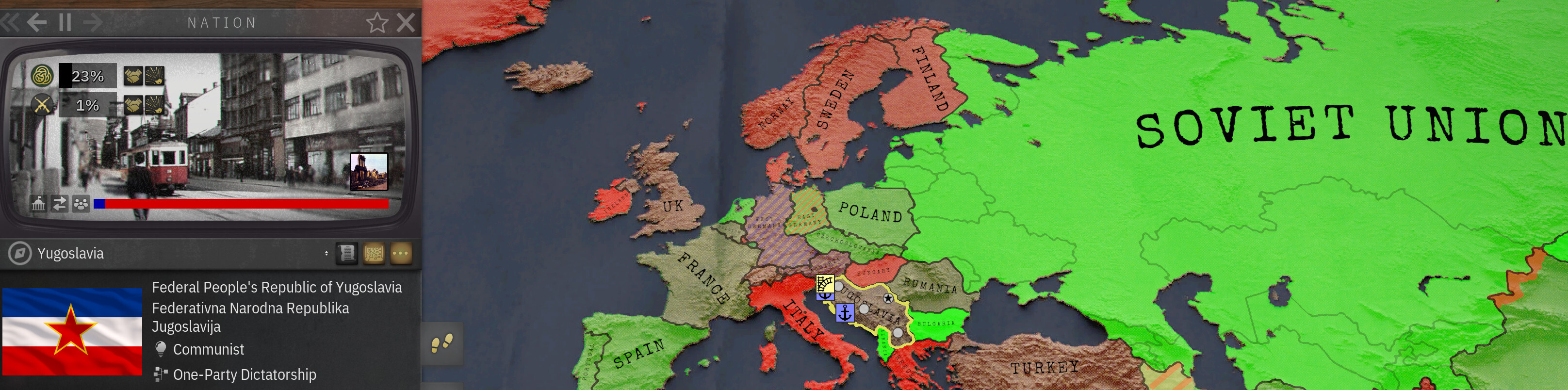
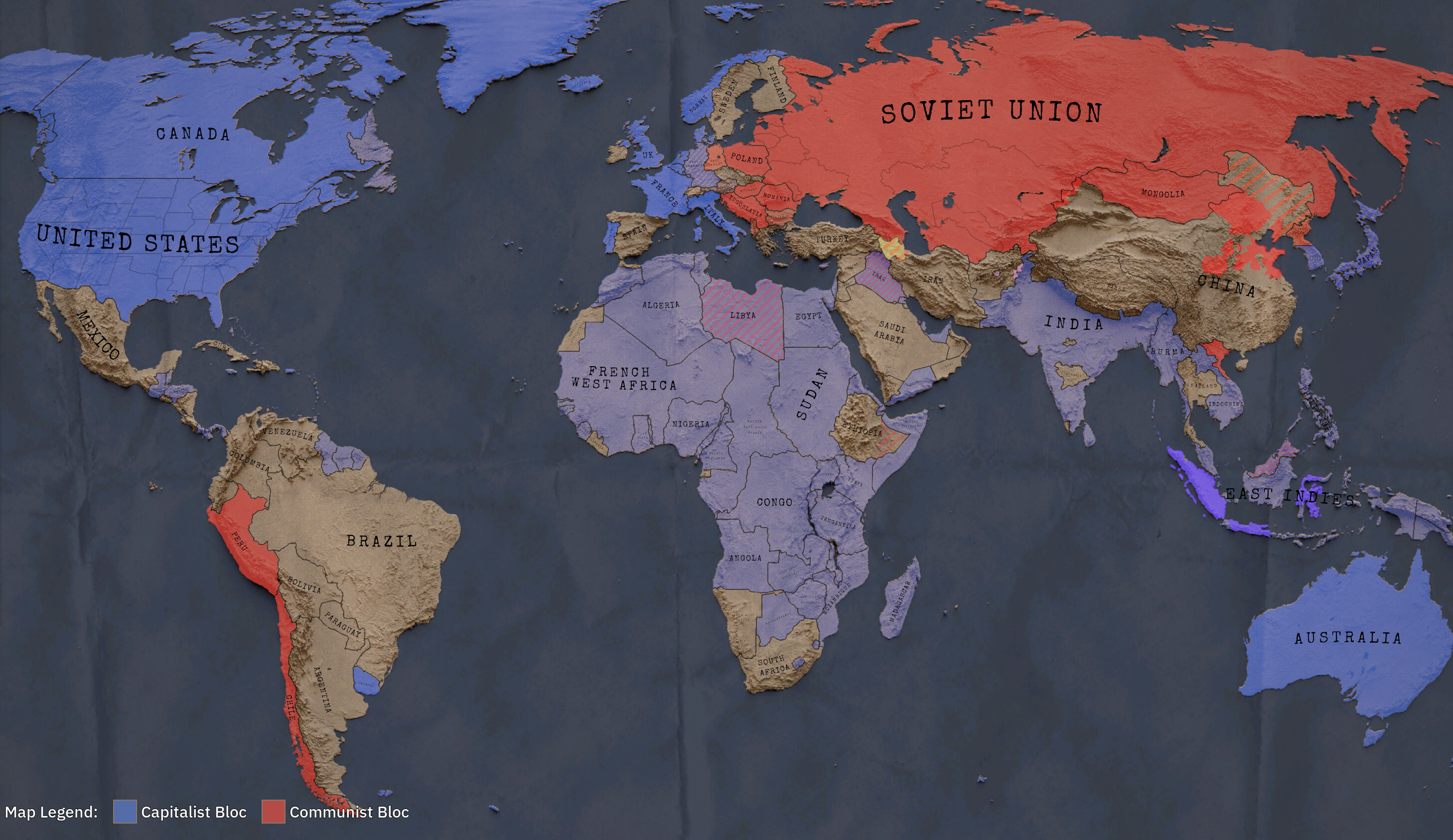 Ideologies:
 Diplomatic (alignment) mode:
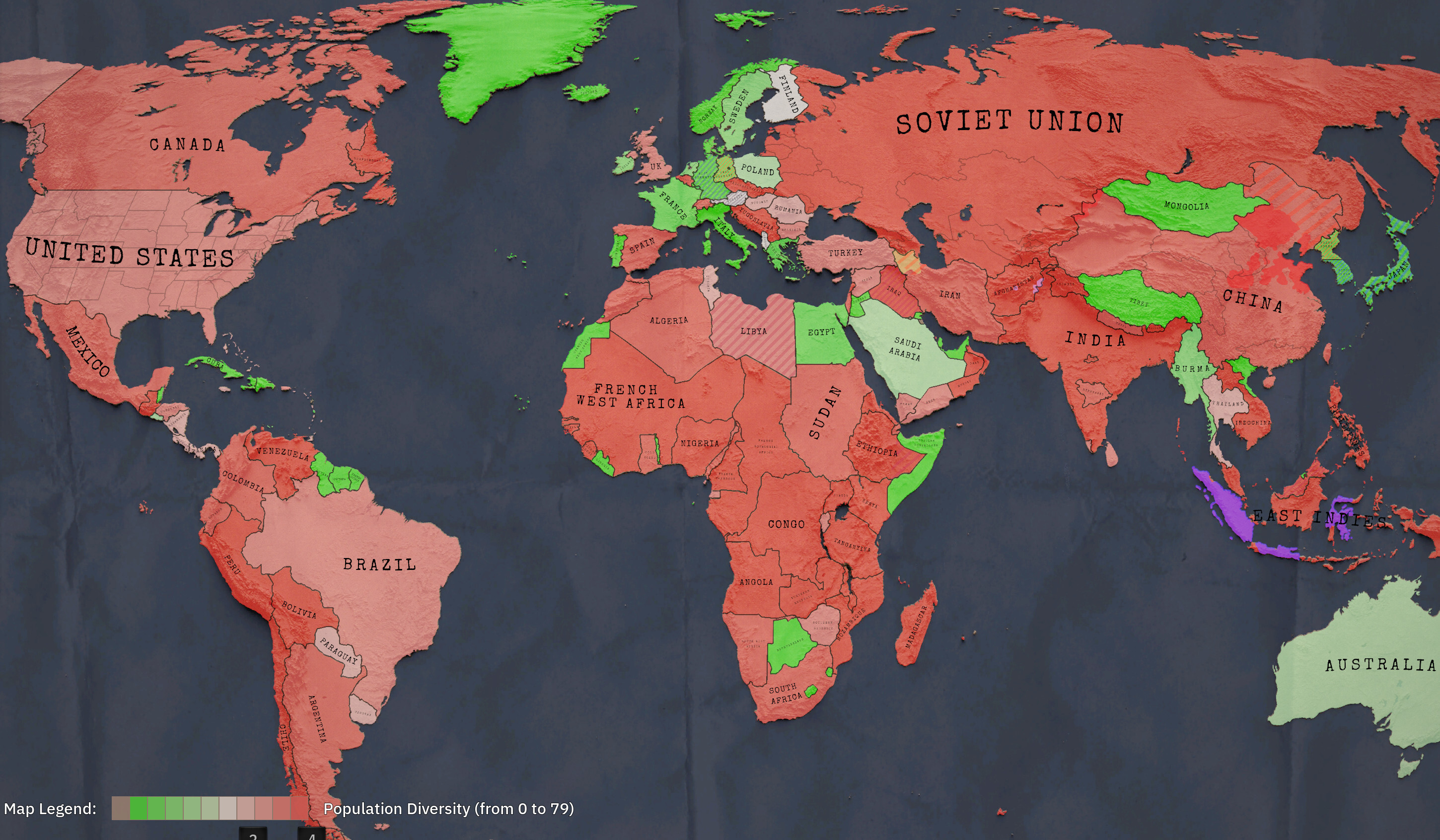
 Population diversity:
 Oil reserves: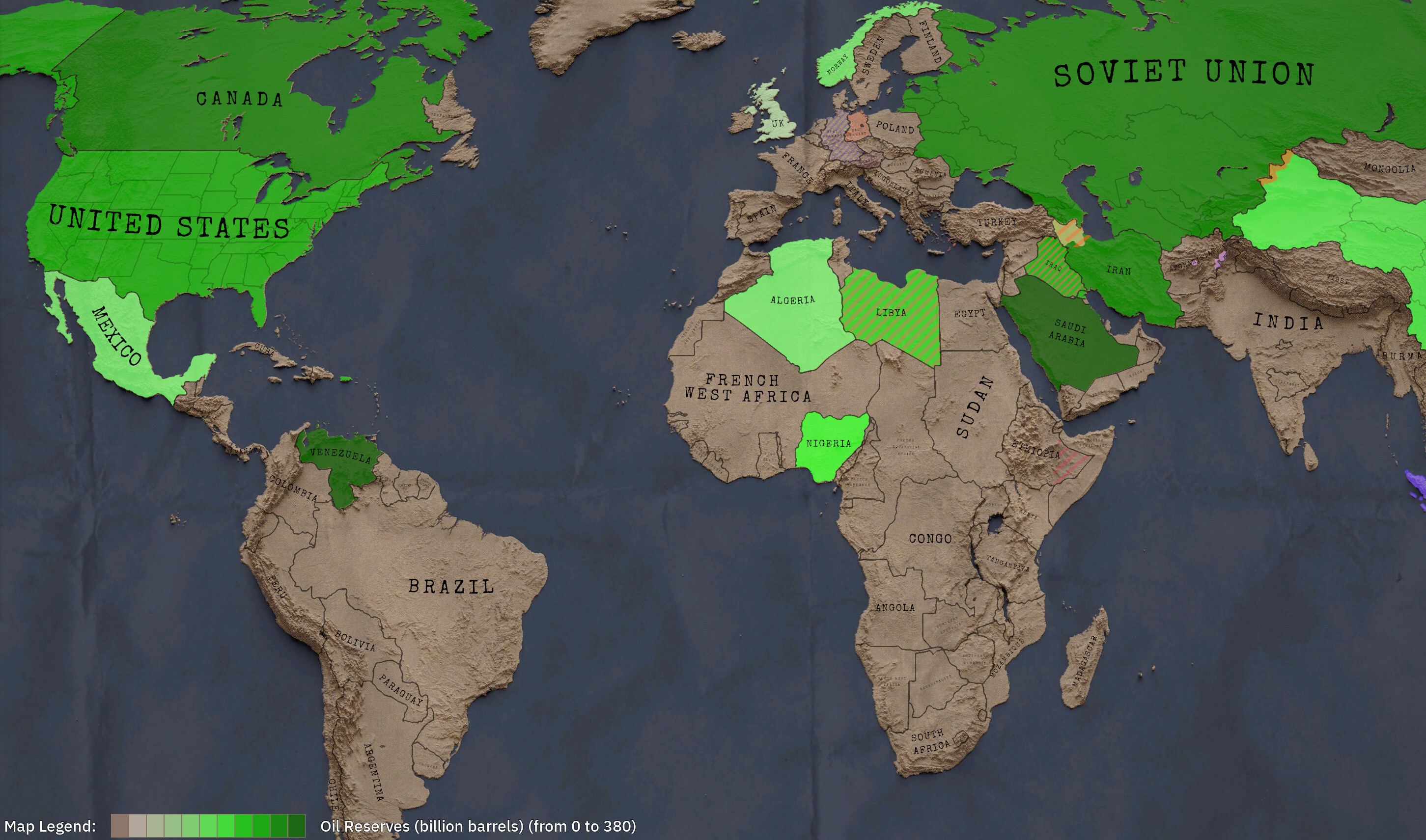
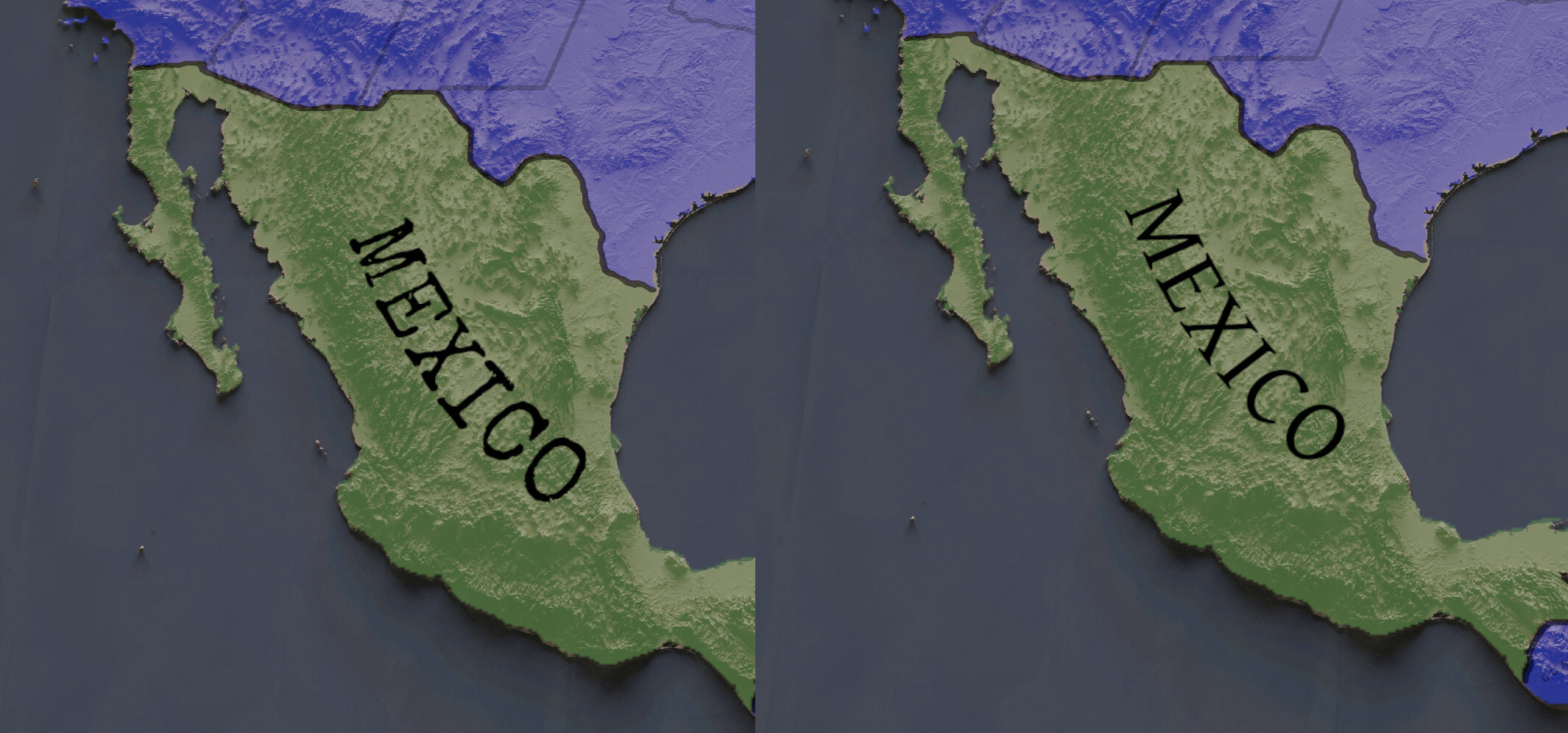
 Labels evolve over time, with font adjusting to the phase of the game (post-WW2, early Cold War, mid Cold War etc):
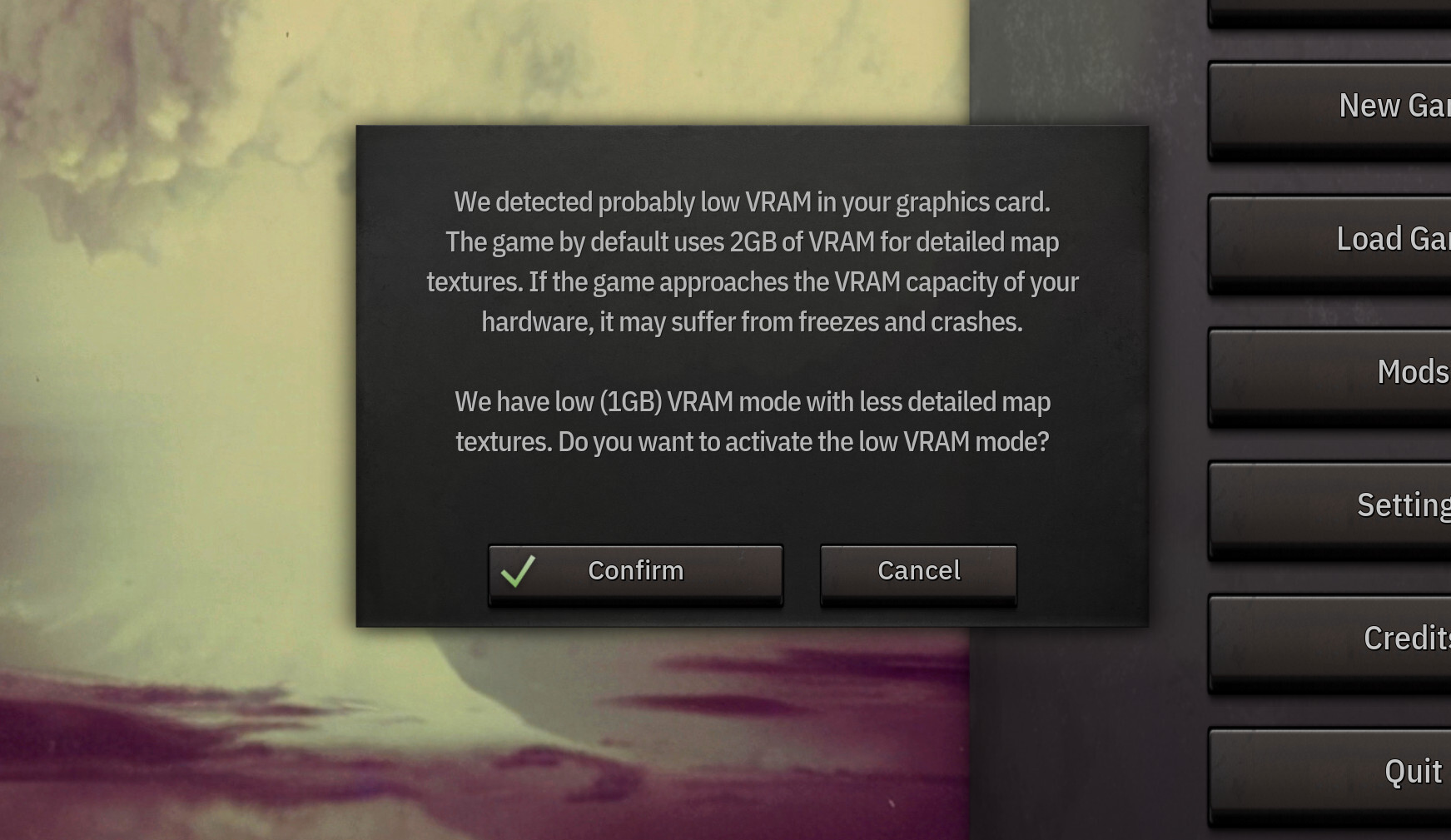
 Map textures can be relatively large, so to play comfortably on low-end hardware you can turn on "low VRAM mode" that skips loading of more detailed textures:
 Pre-game simulation can redraw borders along various alternate scenarios that could happen between September 1945 and March 1946, for instance the USSR keeping Baltic states as satellites instead of annexed republics: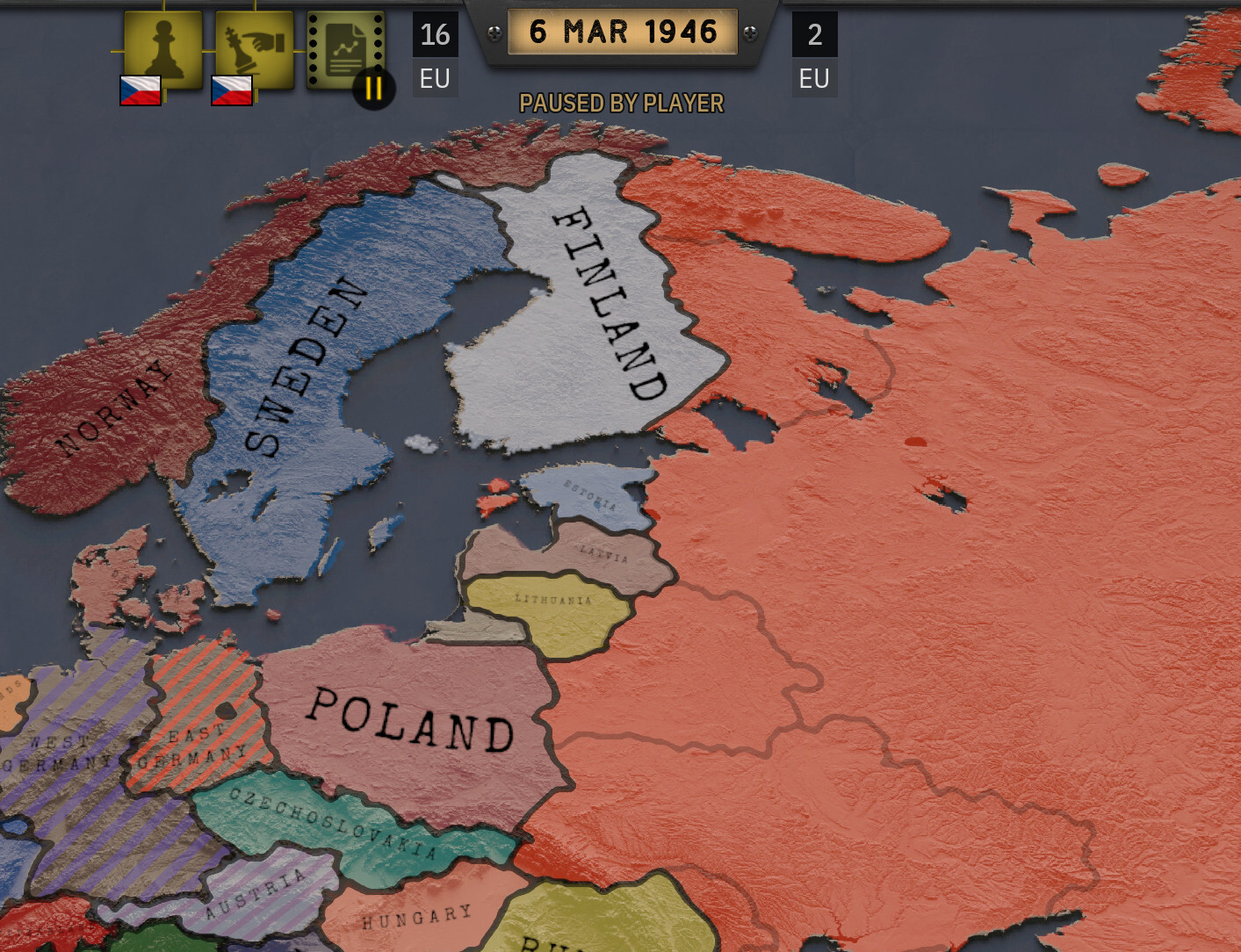



 Loading

