



Install Steam
sign in
|
language
简体中文 (Simplified Chinese)
繁體中文 (Traditional Chinese)
日本語 (Japanese)
한국어 (Korean)
ไทย (Thai)
Български (Bulgarian)
Čeština (Czech)
Dansk (Danish)
Deutsch (German)
Español - España (Spanish - Spain)
Español - Latinoamérica (Spanish - Latin America)
Ελληνικά (Greek)
Français (French)
Italiano (Italian)
Bahasa Indonesia (Indonesian)
Magyar (Hungarian)
Nederlands (Dutch)
Norsk (Norwegian)
Polski (Polish)
Português (Portuguese - Portugal)
Português - Brasil (Portuguese - Brazil)
Română (Romanian)
Русский (Russian)
Suomi (Finnish)
Svenska (Swedish)
Türkçe (Turkish)
Tiếng Việt (Vietnamese)
Українська (Ukrainian)
Report a translation problem

 [FILM]
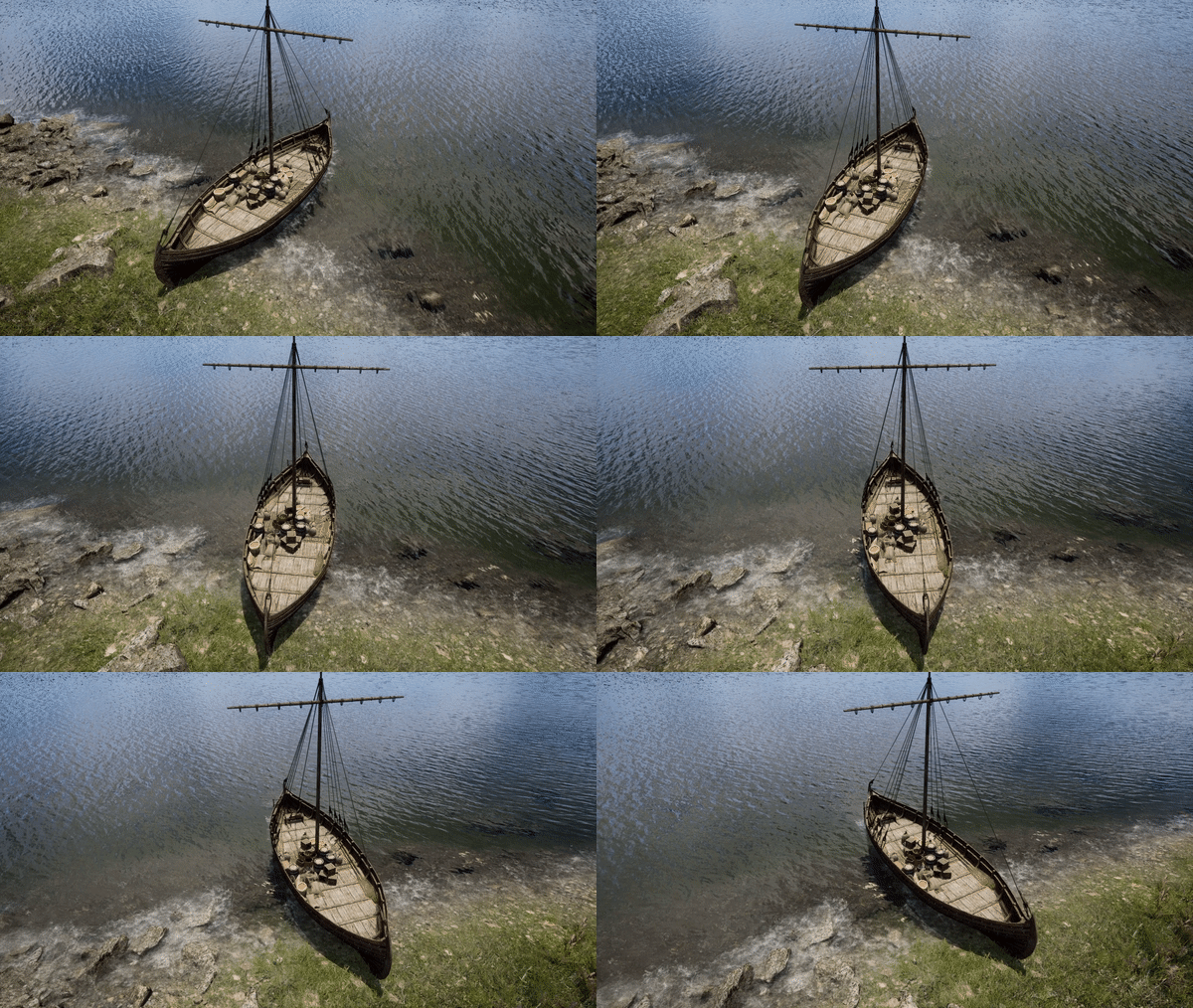
 As for merchant vessels, let's look at the knarr. They were about 13.8 meters long (45 feet), 3.4 meters wide (11 feet), and had a draught of 84 centimeters (33 inches). Compared to lonships, they required smaller crew and could carry much larger cargo - up to 4.1 tons. Some ocean-going versions, larger and wider, could carry up to 13 tons of goods. These ships had an open construction with partially enclosed decks that contained holes for oars, which were necessary for maneuvering while approaching the shore. However, smaller crew and bigger size translated to being reliant on sail, as the main force of propulsion.
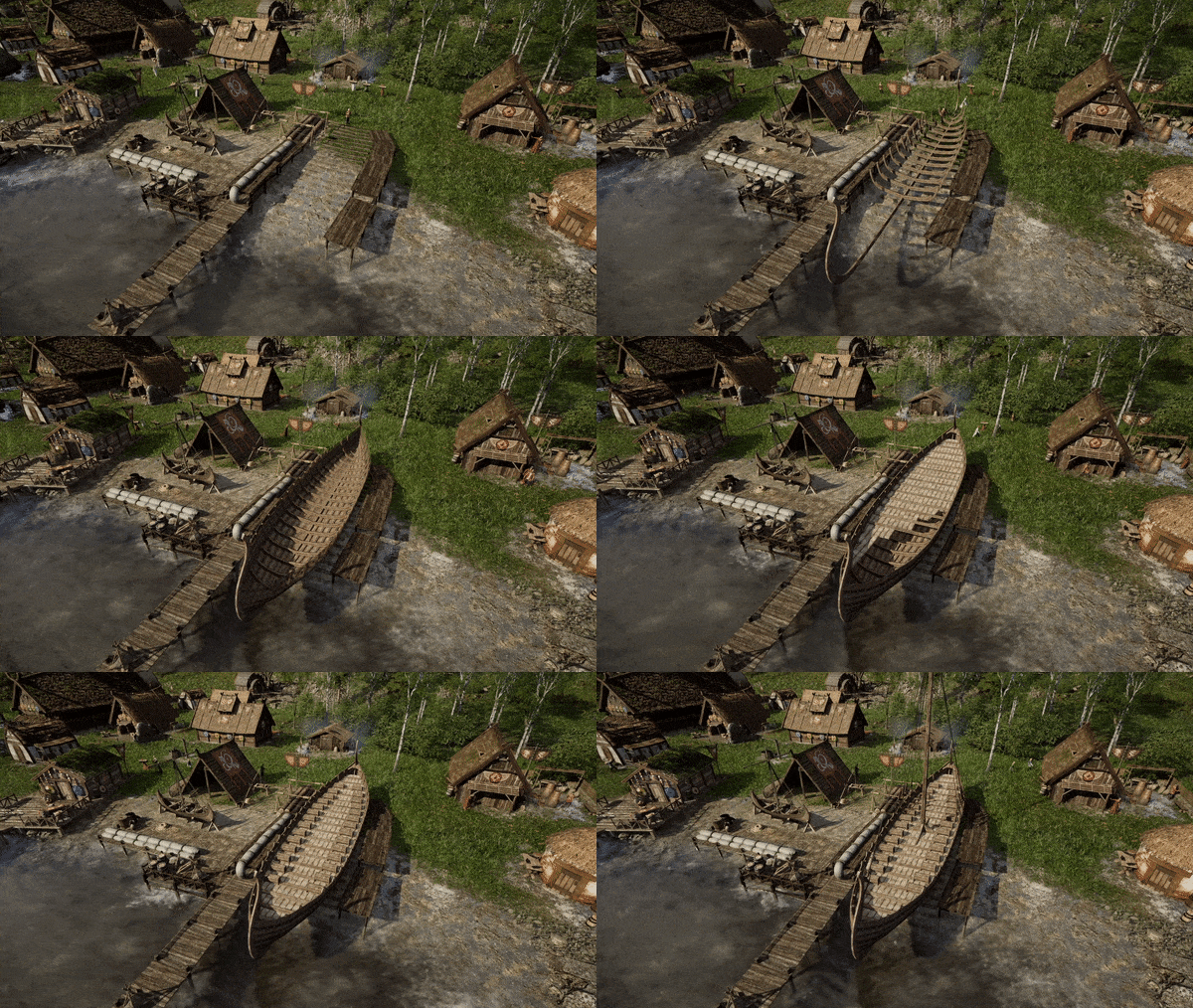
  As you can probably guess, ships will be an integral part of our game, and their production will be the responsibility of the Shipwright. Building a ship is both time-consuming and costly. The Shipwright begins by finding an oak tree trunk, which will serve as the keel, the backbone of the ship. Frames, also known as ribs, are then added. The revolutionary clinker planking technique is used, with overlapping planks that are split and fitted together. It's this technique that gave Viking ships such an advantage over other ships. The remaining wooden components include the deck, mast, oars, and rudder. The structure is held together with valuable iron rivets. Lastly, a sail was needed, created on looms (by a Tailor).
 We hope that our devlog has provided you with a lot of valuable information about Viking ships. Let us know how you liked this material, and don't forget to join our community on Discord, where you can stay up to date with the latest news and interact with other Viking enthusiasts!


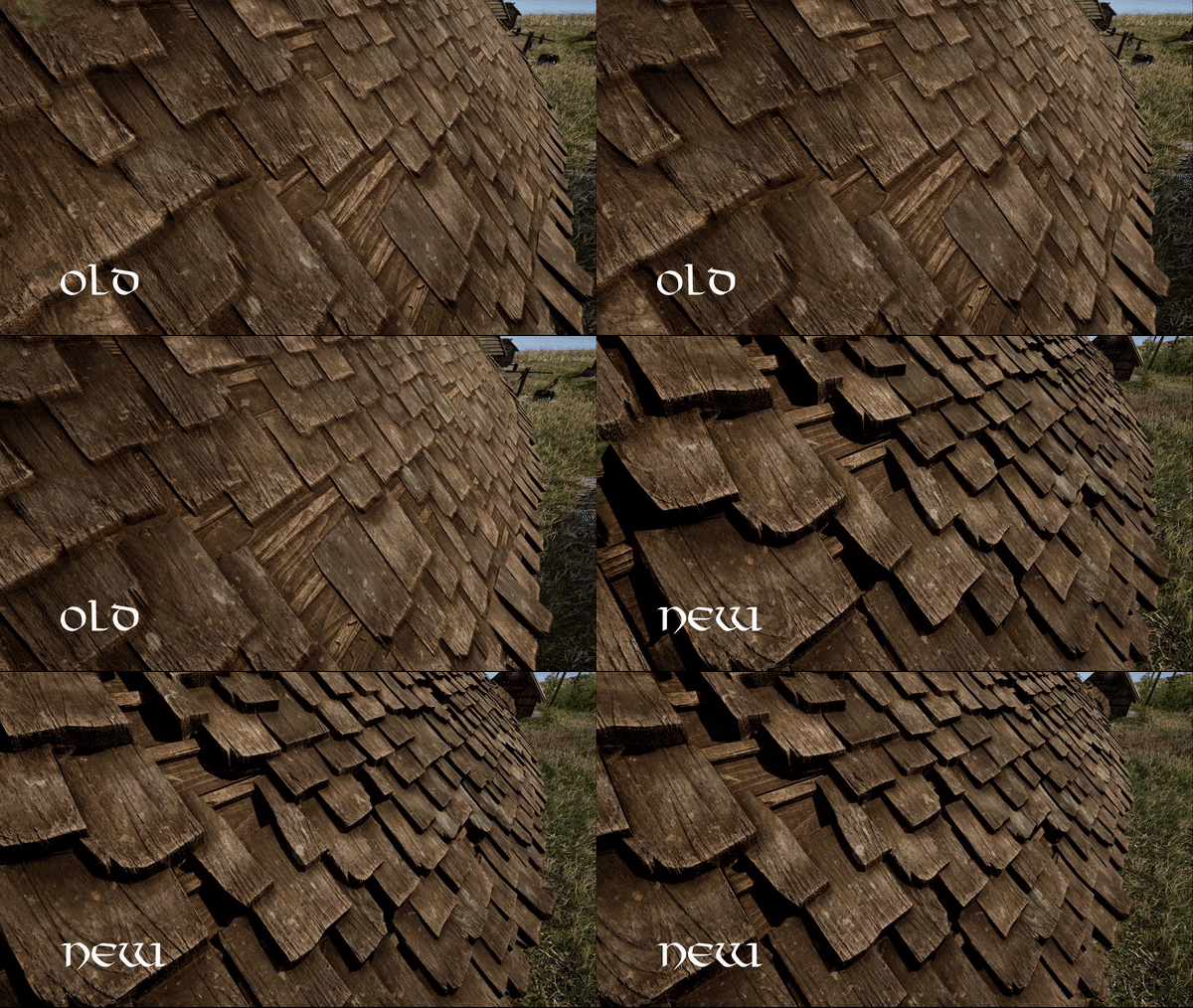 Thanks to Nanite, Unreal Engine 5 can render billions of polygons in real-time, creating highly-detailed macro and micro-level details that rival those found in blockbuster films. In addition, Nanite uses artificial intelligence (AI) to analyze 3D models in real-time and automatically choose the level of detail (LoD) to be displayed based on the distance of the object from the camera. This means that artists working on 3D models don't need to spend time creating a level of detail (LoD) meshes because Nanite can generate them in just a few seconds. This new technology ensures that performance remains unaffected, allowing gamers to enjoy an incredibly engaging and captivating gaming experience.
 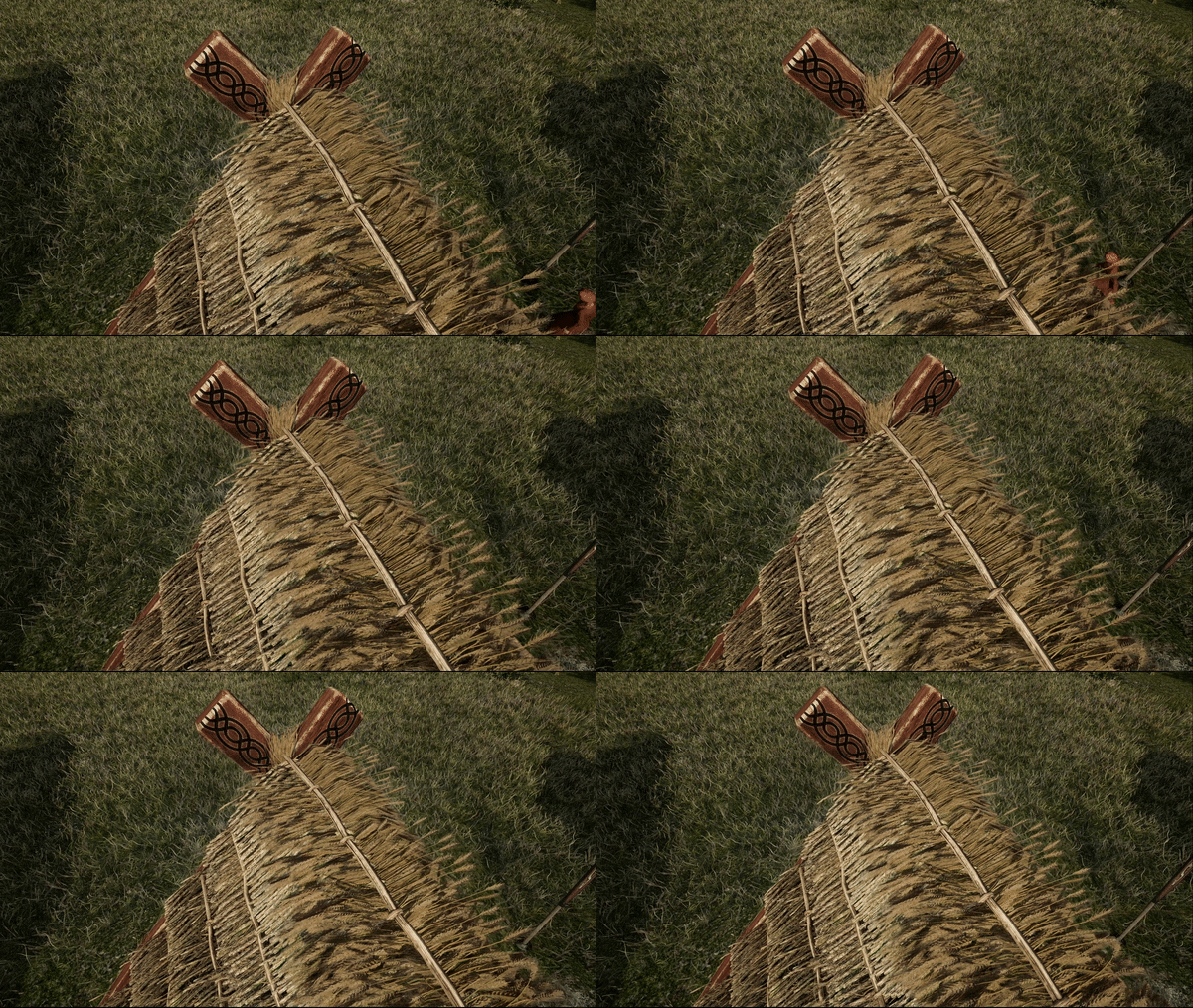 At Viking City Builder, we've always taken pride in our exceptional graphics. With the introduction of Nanite, we're pushing the boundaries even further, setting a new standard for excellence. We're constantly trying to deliver the most immersive and unique experiences for our players, and we believe that Nanite is the perfect tool to bring our vision to life.
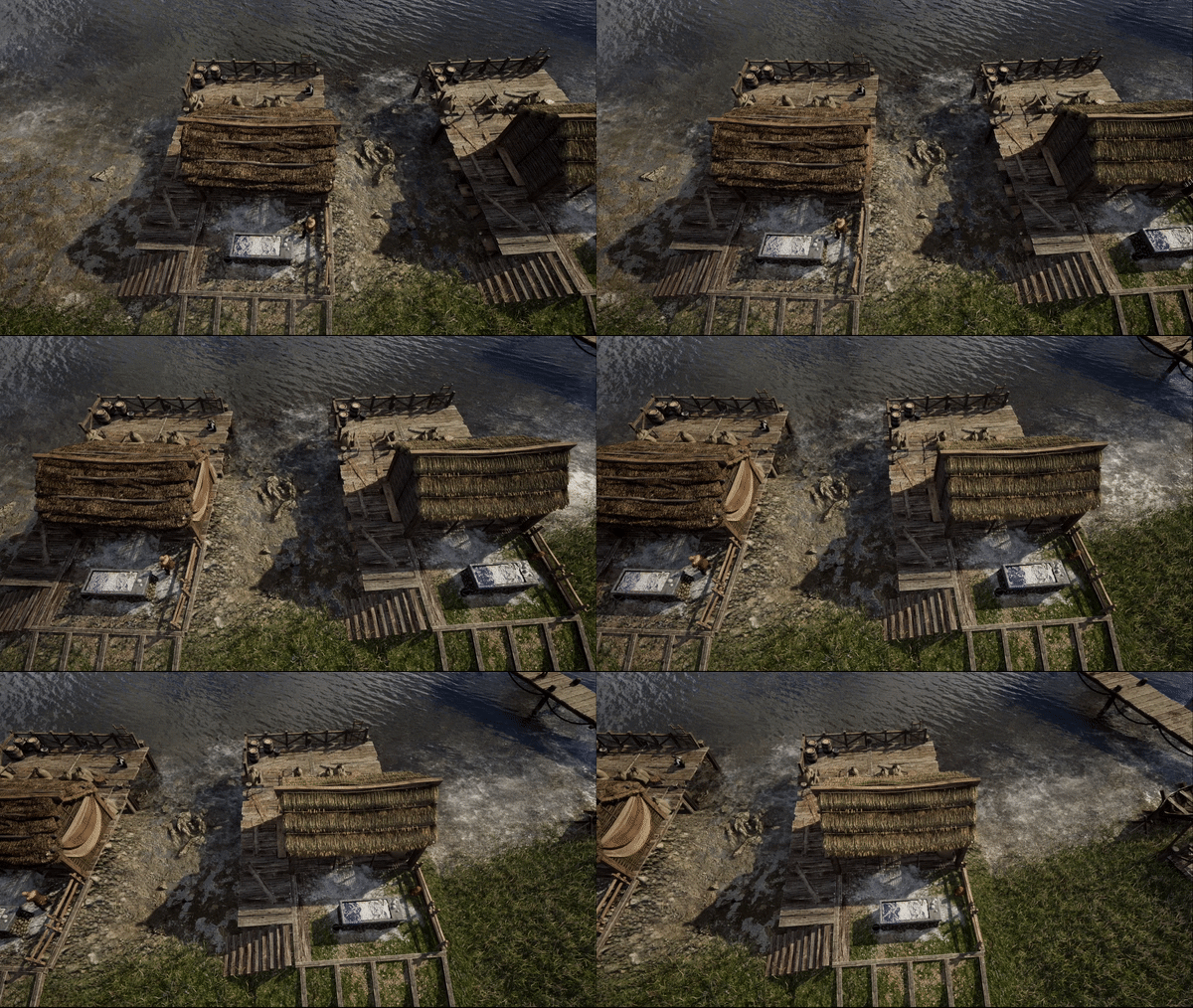 We hope you've enjoyed learning about Nanite and its incredible capabilities. We'd love to hear your thoughts and feedback, so don't hesitate to leave a comment below. For the latest updates and to connect with other Viking City Builder fans, be sure to join our Discord community.
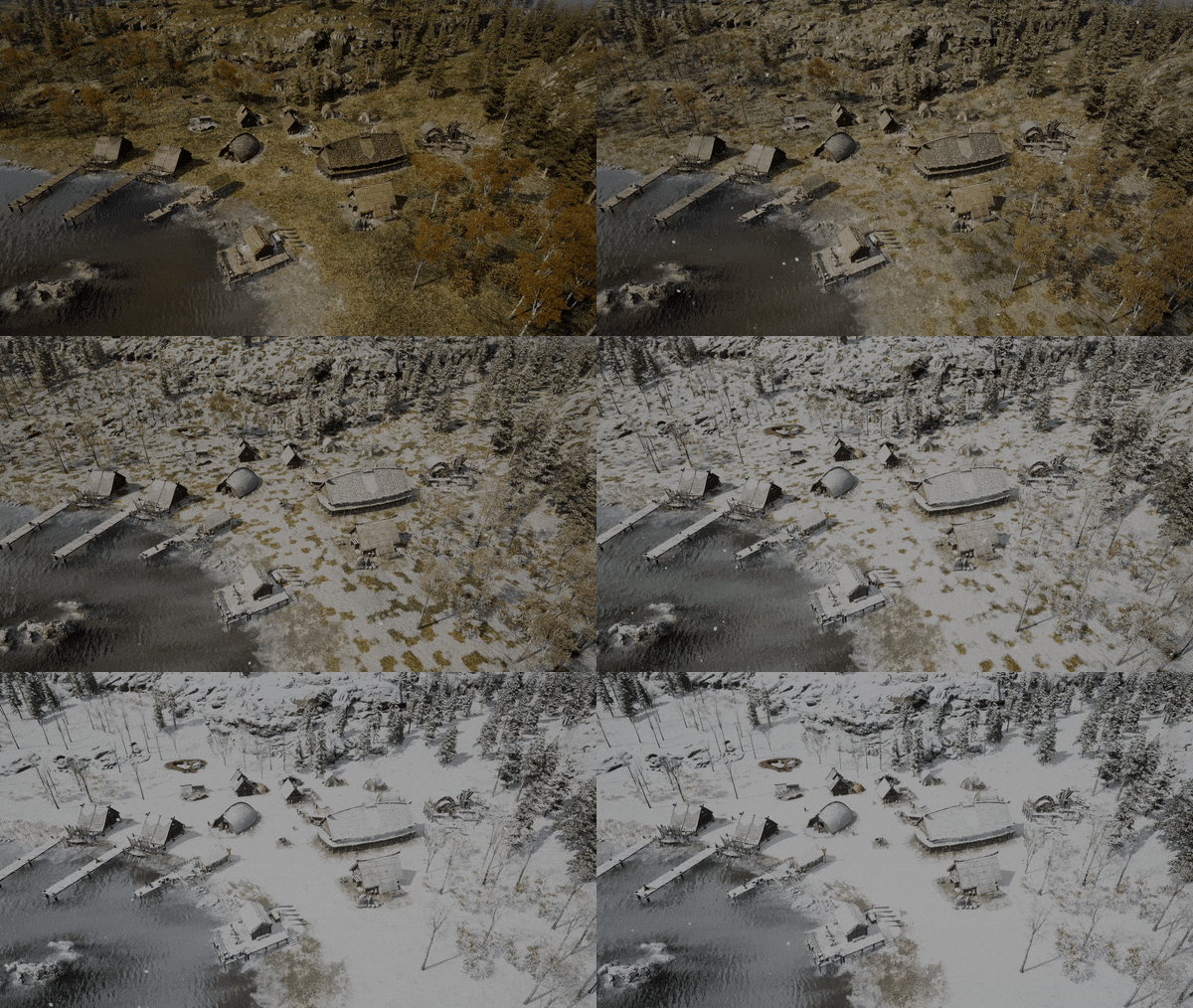 Starting from the spring desired by the Vikings, the player will feel stabilized and have the chance to supplement losses after the cruel conditions of winter. Again, there are sources of food that were inaccessible during the winter season, and herbs can now be collected to cure Ill and raise health. Migration can also be expected within this period.
 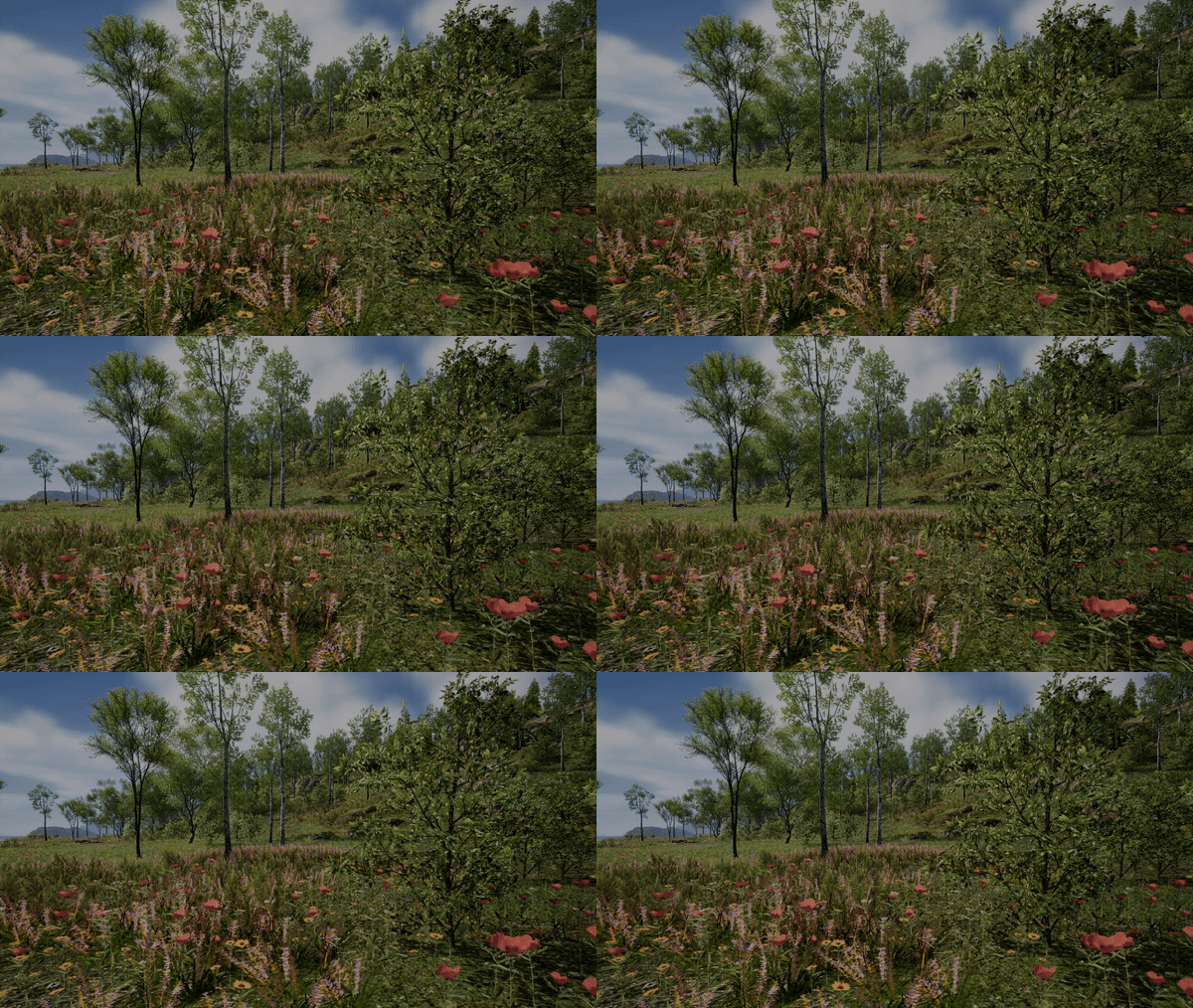 Summer will be the best time for aggressive expansion both within the village and on the world map since the settlement situation should be already stable as every building will return to normal functioning. This is the period when the player should feel the strongest and most eager to take actions.
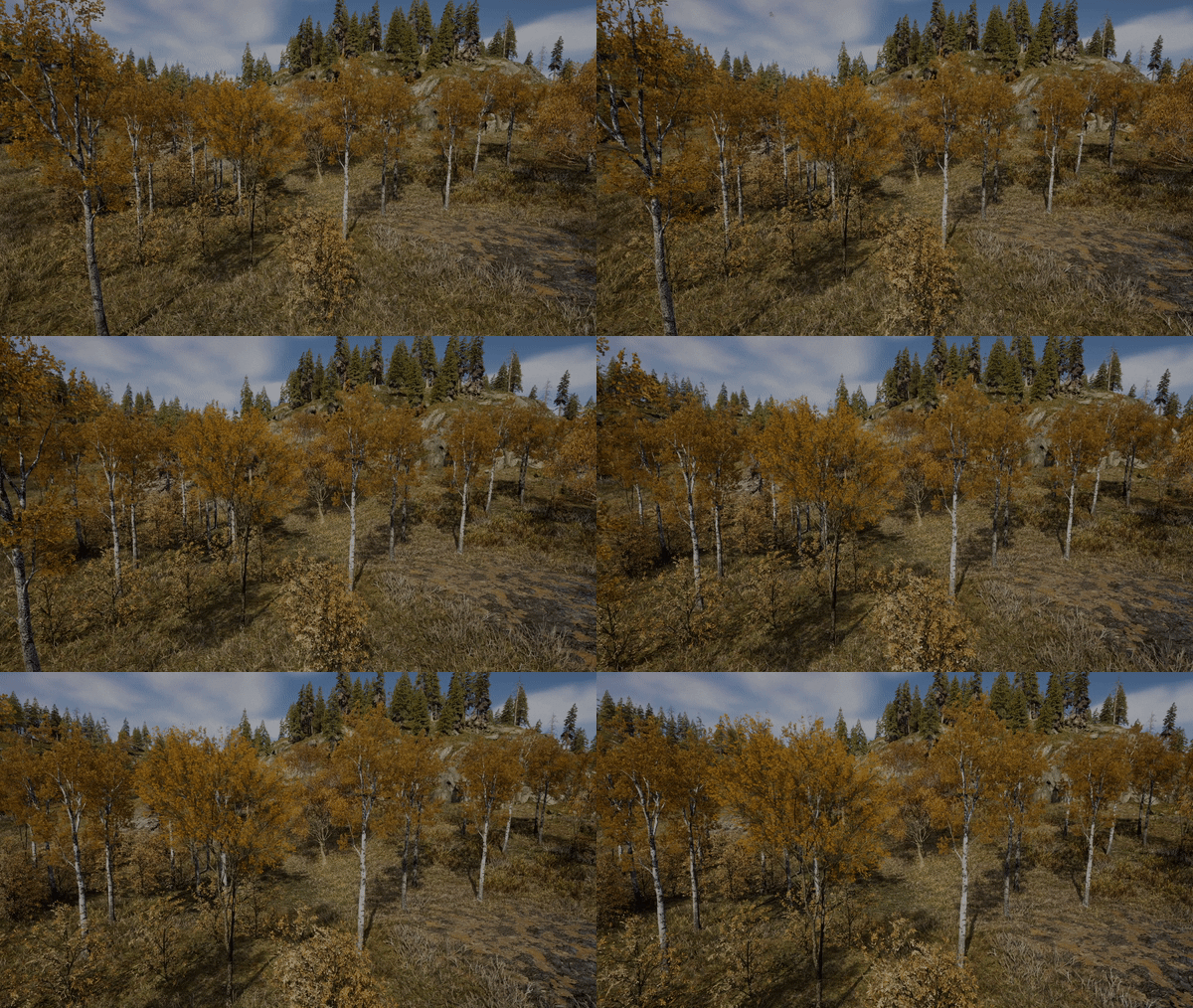
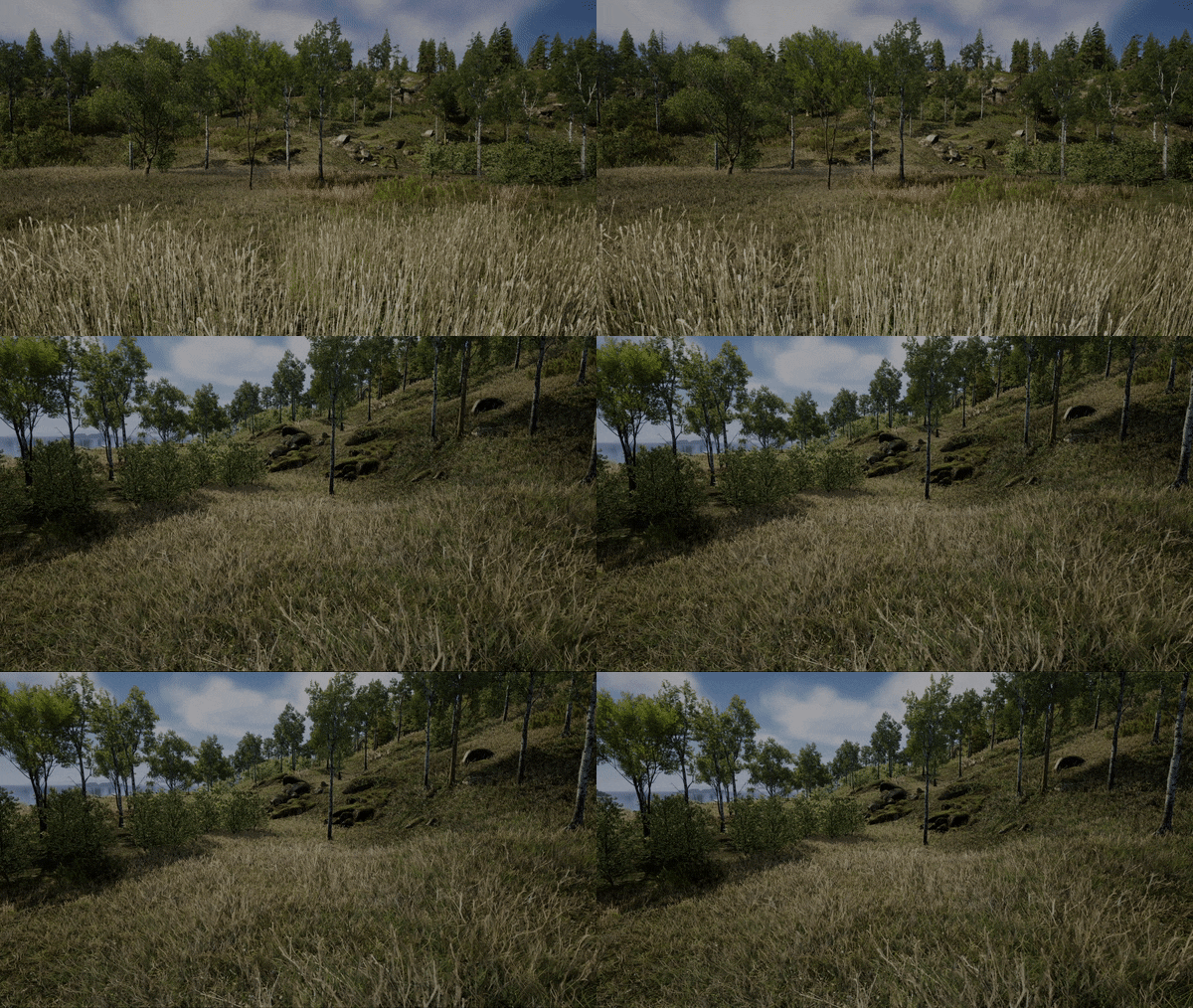 Autumn is a good period to gather resources and harvest food for survival when winter comes. Players can trade their goods for the needed supplies or just to increase the wealth of the settlement. In autumn we will have the materials due to the long availability of all buildings and settlers.
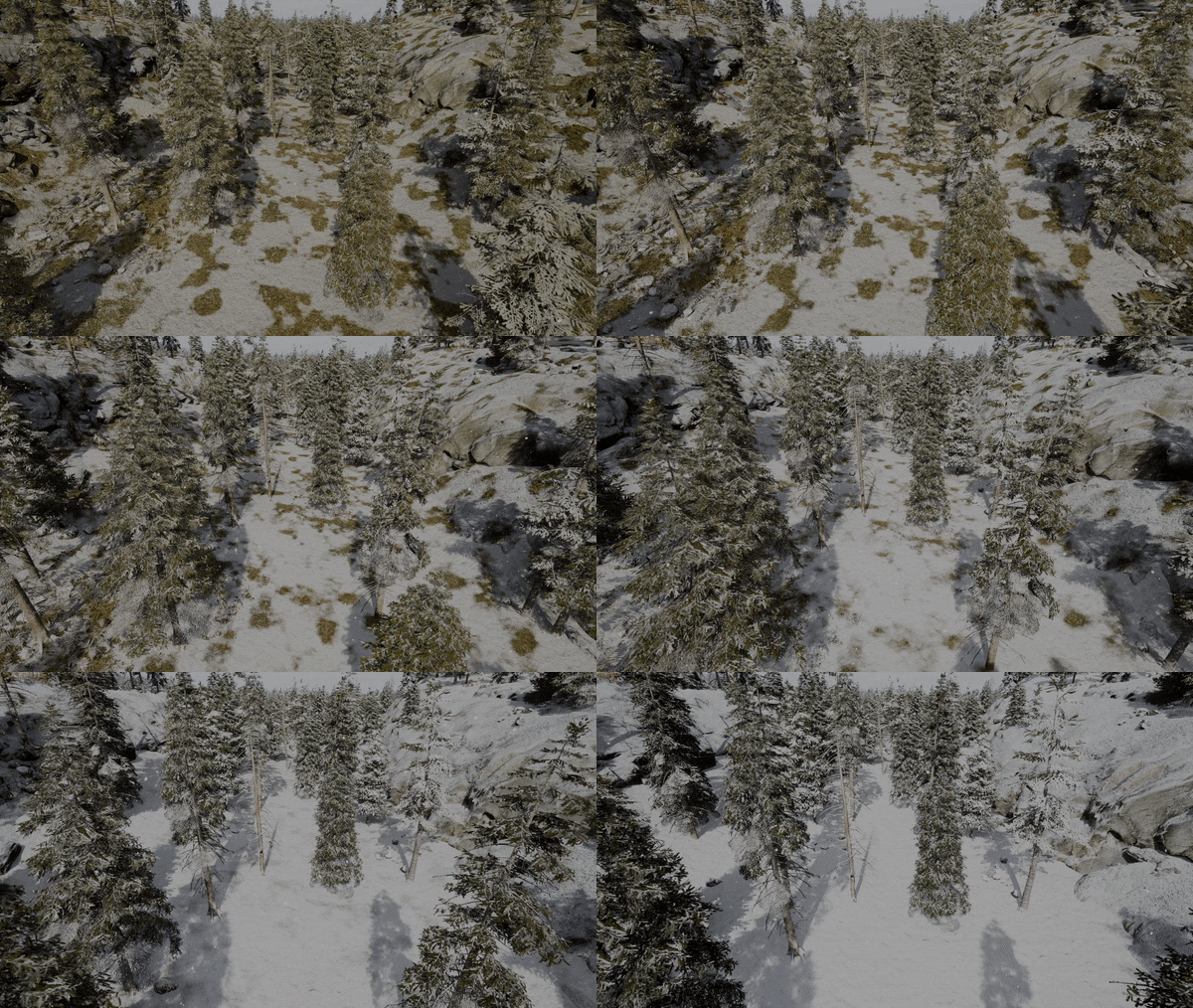
  Winter is the hardest time of the year. Players will be focusing mostly on the survival of their settlement as many of the buildings will not be available, weakening the economy and food production. Providing enough accommodation, heating the houses, having enough food and clothes, and correct management of the settlement, like dynamically assigning professions to the villagers, will be essential to minimize the negative influence of the winter. Unprepared players will be fighting for survival, while those who manage to get ready for this harsh condition will be able to use that time for troop training.
 We trust that you found our devlog to be informative and that you relished the visuals we've curated for you. Your feedback is highly valued, so please feel free to drop a comment in the section below.


 Loading

