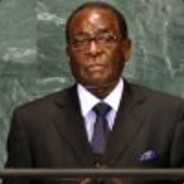


Robert Mugabe
Robert Mugabe
Harare, Zimbabwe
Robert Mugabe
From Wikipedia, the free encyclopedia
"Mugabe" redirects here. For other uses, see Mugabe (disambiguation).
Robert Mugabe
A photograph of Robert Mugabe
2nd President of Zimbabwe
In office
31 December 1987 – 21 November 2017[a]
Prime Minister Morgan Tsvangirai (2009–2013)
First Vice President
Simon Muzenda
Joice Mujuru
Emmerson Mnangagwa
Second Vice President
Joshua Nkomo
Joseph Msika
John Nkomo
Phelekezela Mphoko
Preceded by Canaan Banana
Succeeded by Emmerson Mnangagwa
1st Prime Minister of Zimbabwe
In office
18 April 1980 – 31 December 1987
President Canaan Banana
Deputy Simon Muzenda
Preceded by Abel Muzorewa (Zimbabwe Rhodesia)
Succeeded by Morgan Tsvangirai (2009)
President and First Secretary of ZANU–PF
ZANU (1975–1987)
In office
18 March 1975 – 19 November 2017
National Chair
Joseph Msika
John Nkomo
Simon Khaya-Moyo
Preceded by Herbert Chitepo
Succeeded by Emmerson Mnangagwa
13th Chairperson of the African Union
In office
30 January 2015 – 30 January 2016
Preceded by Mohamed Ould Abdel Aziz
Succeeded by Idriss Déby
Secretary General of the Non-Aligned Movement
In office
6 September 1986 – 7 September 1989
Preceded by Zail Singh
Succeeded by Janez Drnovšek
Personal details
Born Robert Gabriel Mugabe
21 February 1924 (age 93)
Kutama, Southern Rhodesia
(now Zimbabwe)
Political party National Democratic Party (1960–1961)
Zimbabwe African People's Union (1961–1963)
Zimbabwe African National Union (1963–1987)
Zimbabwe African National Union-Patriotic Front (1987–present)
Spouse(s) Sally Hayfron (m. 1961; her death 1992)
Grace Marufu (m. 1996)
Children 4, including Bona
Alma mater University of Fort Hare
University of South Africa
University of London
Signature
Robert Gabriel Mugabe (/mu:ˈɡɑ:bi/; Shona: [muɡaɓe]; born 21 February 1924) is a Zimbabwean revolutionary and politician. He was the leader of Zimbabwe from 1980 to 2017, serving as Prime Minister from 1980 to 1987 and as President from 1987 to 2017.[1] He chaired the Zimbabwe African National Union (ZANU) group from 1975 to 1980 and led its successor political party, the ZANU – Patriotic Front (ZANU–PF), from 1980 to 2017. Ideologically an African nationalist, during the 1970s and 1980s he identified as a Marxist–Leninist, although after the 1990s self-identified only as a socialist. His policies have been described as Mugabeism.

Mugabe was born to a poor Shona family in Kutama, Southern Rhodesia. Following an education at Kutama College and the University of Fort Hare, he worked as a school teacher in Southern Rhodesia, Northern Rhodesia and Ghana. Angered that Southern Rhodesia was a British colony governed by a white minority, Mugabe embraced Marxism and joined African nationalist protests calling for an independent black-led state. After making anti-government comments, he was convicted of sedition and imprisoned between 1964 and 1974. On release, he fled to Mozambique, established his leadership of ZANU and oversaw ZANU's role in the Rhodesian Bush War, fighting Ian Smith's predominantly white government. He reluctantly took part in the peace negotiations brokered by the United Kingdom that resulted in the Lancaster House Agreement. The agreement dismantled white minority rule and resulted in the 1980 general election, at which Mugabe led ZANU-PF to victory. When Southern Rhodesia was granted internationally recognised independence as Zimbabwe that April, Mugabe became the country's prime minister. Mugabe's administration expanded healthcare and education and—despite his Marxist rhetoric and professed desire for a socialist society—adhered largely to mainstream, conservative economic policies.
Robert Mugabe
From Wikipedia, the free encyclopedia
"Mugabe" redirects here. For other uses, see Mugabe (disambiguation).
Robert Mugabe
A photograph of Robert Mugabe
2nd President of Zimbabwe
In office
31 December 1987 – 21 November 2017[a]
Prime Minister Morgan Tsvangirai (2009–2013)
First Vice President
Simon Muzenda
Joice Mujuru
Emmerson Mnangagwa
Second Vice President
Joshua Nkomo
Joseph Msika
John Nkomo
Phelekezela Mphoko
Preceded by Canaan Banana
Succeeded by Emmerson Mnangagwa
1st Prime Minister of Zimbabwe
In office
18 April 1980 – 31 December 1987
President Canaan Banana
Deputy Simon Muzenda
Preceded by Abel Muzorewa (Zimbabwe Rhodesia)
Succeeded by Morgan Tsvangirai (2009)
President and First Secretary of ZANU–PF
ZANU (1975–1987)
In office
18 March 1975 – 19 November 2017
National Chair
Joseph Msika
John Nkomo
Simon Khaya-Moyo
Preceded by Herbert Chitepo
Succeeded by Emmerson Mnangagwa
13th Chairperson of the African Union
In office
30 January 2015 – 30 January 2016
Preceded by Mohamed Ould Abdel Aziz
Succeeded by Idriss Déby
Secretary General of the Non-Aligned Movement
In office
6 September 1986 – 7 September 1989
Preceded by Zail Singh
Succeeded by Janez Drnovšek
Personal details
Born Robert Gabriel Mugabe
21 February 1924 (age 93)
Kutama, Southern Rhodesia
(now Zimbabwe)
Political party National Democratic Party (1960–1961)
Zimbabwe African People's Union (1961–1963)
Zimbabwe African National Union (1963–1987)
Zimbabwe African National Union-Patriotic Front (1987–present)
Spouse(s) Sally Hayfron (m. 1961; her death 1992)
Grace Marufu (m. 1996)
Children 4, including Bona
Alma mater University of Fort Hare
University of South Africa
University of London
Signature
Robert Gabriel Mugabe (/mu:ˈɡɑ:bi/; Shona: [muɡaɓe]; born 21 February 1924) is a Zimbabwean revolutionary and politician. He was the leader of Zimbabwe from 1980 to 2017, serving as Prime Minister from 1980 to 1987 and as President from 1987 to 2017.[1] He chaired the Zimbabwe African National Union (ZANU) group from 1975 to 1980 and led its successor political party, the ZANU – Patriotic Front (ZANU–PF), from 1980 to 2017. Ideologically an African nationalist, during the 1970s and 1980s he identified as a Marxist–Leninist, although after the 1990s self-identified only as a socialist. His policies have been described as Mugabeism.

Mugabe was born to a poor Shona family in Kutama, Southern Rhodesia. Following an education at Kutama College and the University of Fort Hare, he worked as a school teacher in Southern Rhodesia, Northern Rhodesia and Ghana. Angered that Southern Rhodesia was a British colony governed by a white minority, Mugabe embraced Marxism and joined African nationalist protests calling for an independent black-led state. After making anti-government comments, he was convicted of sedition and imprisoned between 1964 and 1974. On release, he fled to Mozambique, established his leadership of ZANU and oversaw ZANU's role in the Rhodesian Bush War, fighting Ian Smith's predominantly white government. He reluctantly took part in the peace negotiations brokered by the United Kingdom that resulted in the Lancaster House Agreement. The agreement dismantled white minority rule and resulted in the 1980 general election, at which Mugabe led ZANU-PF to victory. When Southern Rhodesia was granted internationally recognised independence as Zimbabwe that April, Mugabe became the country's prime minister. Mugabe's administration expanded healthcare and education and—despite his Marxist rhetoric and professed desire for a socialist society—adhered largely to mainstream, conservative economic policies.
Currently Offline
Comments
al Jan 12, 2018 @ 11:02am 
+rep big boy
Kingalicious Nov 1, 2017 @ 1:25pm 
very noob haxer
Rozz Oct 5, 2017 @ 1:13pm 
ur mama