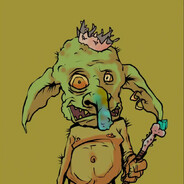


lvl.10 goblin
Goblin
A goblin is a diminutive, grotesque, and often malevolent humanoid creature prominent in European folklore, typically characterized by its mischievous or demonic nature, small stature (around 30 cm in some traditions), furry or leathery appearance, and ability to shapeshift. Goblins are believed to dwell in subterranean areas or households, where they engage in acts ranging from pranks to murder.[1][2] Their etymology derives from Old French gobelin (late 12th century), possibly linked to Medieval Latin gobelinus or Greek kobalos (meaning rogue or sprite), though some scholars trace it to earlier domestic protector spirits like the Germanic kobold, which were later demonized under Christian influence.[3][4]

Similar creatures include brownies, dwarves, duendes, gnomes, imps, leprechauns, and kobolds, but it is also commonly used as a blanket term for all small, fay creatures.[2] The term is sometimes expanded to include goblin-like creatures of other cultures, such as the pukwudgie, dokkaebi, or ifrit.[2]

Etymology
The term "goblin" entered English in the early 14th century, derived from the Anglo-Norman French gobelin or Old French gobelin,[5] which was first attested in 1195 in the chronicle L'Estoire de la guerre sainte by the Norman monk Ambroise, where it described a treacherous figure. This French form traces back to Medieval Latin gobelinus, appearing around 1140 in Orderic Vitalis's Historia ecclesiastica, referring to a demon expelled from a church in Évreux.[3][6][7][8] Scholars propose possible etymological connections to earlier languages, including Ancient Greek kóbalos, meaning "rogue" or "mischievous sprite", which may have influenced post-classical Latin forms like cobalus denoting a demon.[3][7] Additionally, links have been suggested to Germanic kobold, a household spirit, potentially from Old High German elements meaning "room protector", though the precise relationship remains uncertain.[3][9][10] Alternatively, it may be a diminutive or other derivative of the French proper name Gobel, more often Gobeau.[5][6]

Historical spellings of the term include gobelin (Old and Middle French), gobelinus (Medieval Latin), gobellin (Middle French, by 1506), and Middle English variants such as gobelyn around 1330.[3] The adoption of "goblin" in early English literature was shaped by Norman folklore, where the term evoked domestic sprites or imps, as seen in Picard French goguelin for spirits haunting remote rooms, influencing its integration into medieval English texts like Wycliffe's Bible (late 14th century).[3][6]

The Welsh coblyn, a type of knocker, derives from the Old French gobelin via the English goblin.[11]

In folklore
An illustration of a group of goblins surrounding a small child.
The Princess and the Goblin by George MacDonald, illustrated by Jessie Willcox Smith, 1920
European folklore
In English and Scottish folklore, goblins often appear as brownies, benevolent household spirits that perform domestic chores such as threshing grain, churning butter, or tending livestock during the night, provided they receive a small offering like porridge or milk left by the hearth. These creatures, typically depicted as small, shaggy-haired males dressed in ragged clothing, embody a symbiotic relationship with human households but are quick to abandon or turn mischievous if offered gifts of clothing or if their labor is criticized. In contrast, boggarts from Yorkshire traditions represent a more malevolent variant, functioning as vengeful familial spirits that attach to specific houses or farms, shapeshifting into animals or objects to perpetrate pranks, illness, or calamity upon those who slight them, often requiring rituals like relocation to appease their wrath.

Welsh folklore features the púca as a solitary trickster goblin, akin to a puckish sprite that misleads nighttime wanderers along paths or into bogs, sometimes assuming animal forms like a goat or horse to amplify the deception, though it may also assist those who show respect by leaving offerings. In Irish mythology, the clurichaun appears as a goblin-like fairy with an affinity for alcohol, haunting cellars and breweries where it pilfers liquor, rides barrels like horses, and unleashes drunken fury on distillers who disturb its revels.

French and Norman traditions portray lutins as impish goblins that frolic in stables, knotting horses' manes into fairy-locks for sport or covertly aiding with nighttime labors, their dual temperament shifting from playful to petty depending on human hospitality. The region of Évreux in northern France holds particular significance as a historical hub of goblin lore, where the 12th-century Orderic Vitalis describes the demon Gobelinus, a prototype for later goblin figures, haunting pagan sites and temples, expelled only through saintly intervention.

Prominent narratives in European goblin traditions include tales of fairy markets from folklore, where spectral merchants peddle illusory fruits and wares to ensnare the unwary, symbolizing temptation and otherworldly commerce in rural traditions, later popularized in literature such as Christina Rossetti's Goblin Market (1862). Redcap legends from Anglo-Scottish border lore depict these ferocious goblins as squat, iron-shod murderers dwelling in forsaken border towers, who slay wayfarers with their pikestaffs and soak their knitted caps in the spilled blood to maintain their vivid hue, fleeing only from consecrated objects or swift escapees.

Non-European equivalents
Korean folklore features the dokkaebi, horned tricksters animated from discarded household tools like brooms or rice bowls through spiritual possession, wielding magical clubs (bangmangi) to enforce games or punishments on humans. Unlike purely malevolent entities, dokkaebi often reward clever individuals with treasures after riddles or wrestling matches.[2]

Among African cultures, the Zulu tokoloshe embodies an evil sprite summoned by sangomas to inflict misfortune, illness, or nocturnal terror, particularly on children whom it scratches or devours. This hairy, diminutive water spirit, capable of invisibility and shape-shifting, is warded off by elevating beds on bricks to exploit its short stature.

In Egyptian and broader Middle Eastern lore, certain jinn exhibit goblin-like prankster qualities, such as misplacing items, mimicking voices to deceive travelers, or creating illusory disturbances in homes. These shape-shifting spirits are invisible to humans unless they choose otherwise.[12]

Indigenous American traditions include the Wampanoag pukwudgie, porcupine-quilled tricksters who wield poison arrows to mislead or injure humans in forested areas, originally benevolent guides turned vengeful after perceived slights by the Creator. These knee-high, gray-skinned beings use illusions to lure victims off paths.

In fiction
Fairy tales and folk stories
Christina Rossetti's narrative poem Goblin Market
The Princess and the Goblin by George MacDonald
"The Goblin Pony", from The Grey Fairy Book (French fairy tale)
"The Benevolent Goblin", from Gesta Romanorum (England)[13]
"The Goblins at the Bath House" (Estonia), from A Book of Ghosts and Goblins (1969)
"The Goblins Turned to Stone" (Dutch fairy tale)[14]
King Gobb (Moldovan Romani folktale)[citation needed]
Goblins are featured in the Danish fairy tales The Elf Mound, The Goblin and the Grocer, and The Goblin and the Woman.
Goblins are featured in the Norwegian folktale The Christmas Visitors at Kvame.
Goblins are featured in the Swedish fairy tales The Four Big Trolls and Little Peter Pastureman and Dag and Daga and the Flying Troll of Sky Mountain where they live among trolls alongside sprites and gnomes.
Goblins are featured in the French fairy tale called The Golden Branch.
Chinese Ghouls and Goblins (England, 1928)
"The Goblin of Adachigahara" (Japanese fairy tale)[15]
The Boy Who Drew Cats (Japanese fairy tale)
Twenty-Two Go
Aug 9 @ 6:22am 
rtrd leaver
Jul 16, 2025 @ 2:49pm 
hi bro! add me please :)
Jul 3, 2025 @ 7:32am 
бездарный хуисос, который всю игру сидел афк
Jun 3, 2025 @ 4:12am 
+rep
Mar 27, 2025 @ 3:31am 
add me pls
Feb 28, 2025 @ 4:53pm 
get a life