


Install Steam
sign in
|
language
简体中文 (Simplified Chinese)
繁體中文 (Traditional Chinese)
日本語 (Japanese)
한국어 (Korean)
ไทย (Thai)
Bahasa Indonesia (Indonesian)
Bahasa Melayu (Malay) BETA
Български (Bulgarian)
Čeština (Czech)
Dansk (Danish)
Deutsch (German)
Español - España (Spanish - Spain)
Español - Latinoamérica (Spanish - Latin America)
Ελληνικά (Greek)
Français (French)
Italiano (Italian)
Magyar (Hungarian)
Nederlands (Dutch)
Norsk (Norwegian)
Polski (Polish)
Português (Portuguese - Portugal)
Português - Brasil (Portuguese - Brazil)
Română (Romanian)
Русский (Russian)
Suomi (Finnish)
Svenska (Swedish)
Türkçe (Turkish)
Tiếng Việt (Vietnamese)
Українська (Ukrainian)
Report a translation problem


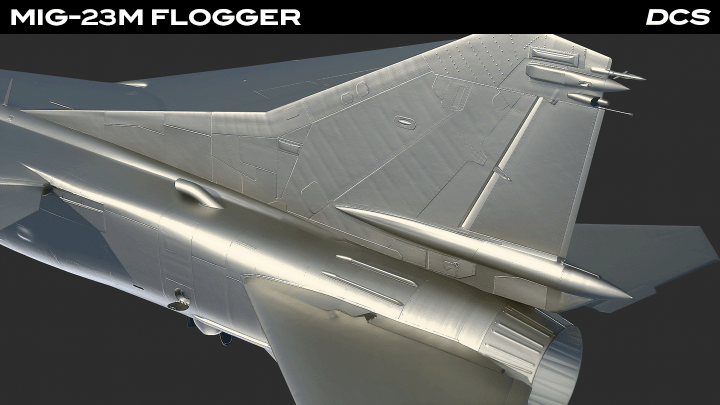
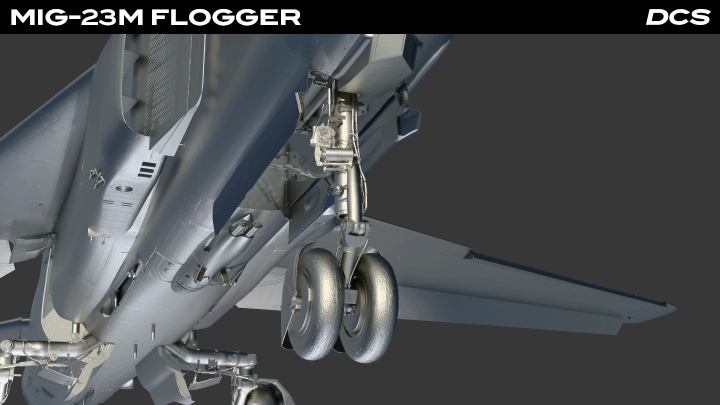 For the fight itself, the plan includes the Sapfir-23D radar, an identification system, and the aircraft's weapons computer, along with the full MiG-23M armament suite: the GSh-23L 23 mm cannon, R-23R semi-active radar and R-23T infrared missiles, R-60 short-range missiles (while these missiles are already in game, Eagle Dynamics will transition these to the new component-based model), unguided rockets, and bombs. Weapon preparation, launch limitations, and firing modes are planned to work together with the radar and sighting system, just as they did on the real aircraft.
 We'll share more as development of the DCS: MiG-23M continues.
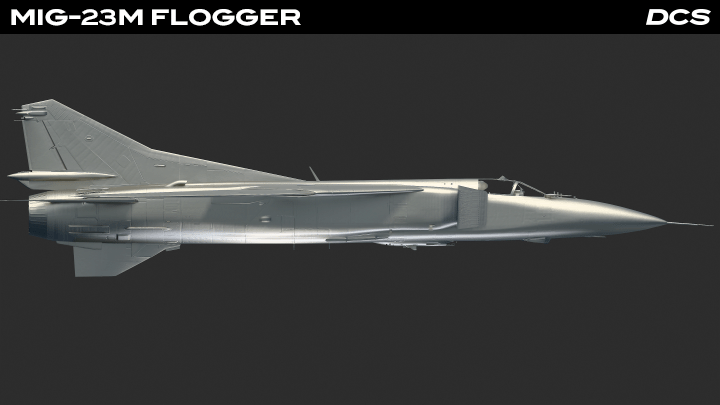 By the early 1960s, the MiG-21 was fast and agile, but its radar, range, and weapons load were holding it back. Its replacement needed a better radar, more fuel, and beyond-visual-range missiles, while also taking off and landing in a much shorter distance. Mikoyan's answer was a swing wing, and the first variable-sweep prototype took to the air in 1967.
 The pilot set the wing by hand. Fully spread at 16 degrees, it was used for takeoff, landing, and slower cruise. At 45 degrees, it was set for fighter manoeuvring and low-altitude intercepts, and fully swept at 72 degrees, it was reserved for high-altitude intercepts and high-speed dashes at low level.

 Can a simulator really prepare you to fly a jet? Command T, who flies the Boeing 737 for a living, set out to answer that question. After weeks of training in the DCS: L-39 Albatros, he climbed into a real L-39 over New Mexico, with his instructor in the back seat, and put DCS to the test, from startup and checklists to pure stick and rudder.
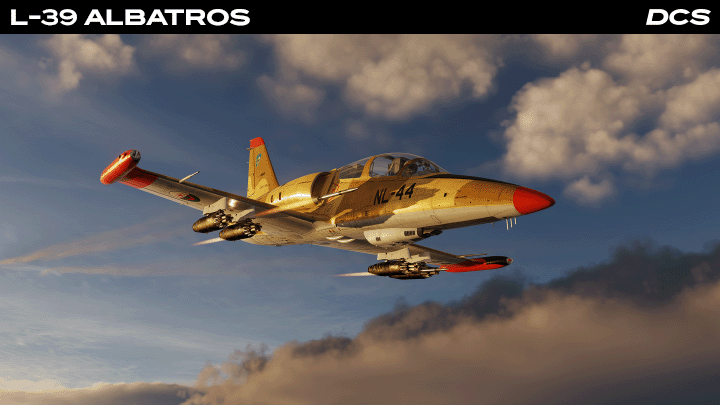 If the video has you wanting to strap into the Albatros yourself, now's the time. The DCS: L-39 Albatros, with both the L-39C trainer and the L-39ZA light attack variant, is 40% off on the E-Shop with the code CTL39, from 10.23.2026 until 12.15.2026.
 From Rhino & Lurcher:


 F-15C Eagle Beginners Guide
 53

 Su-25T : Weapon Specifications List / Other useful information

 Xbox One Controls for DCS: World

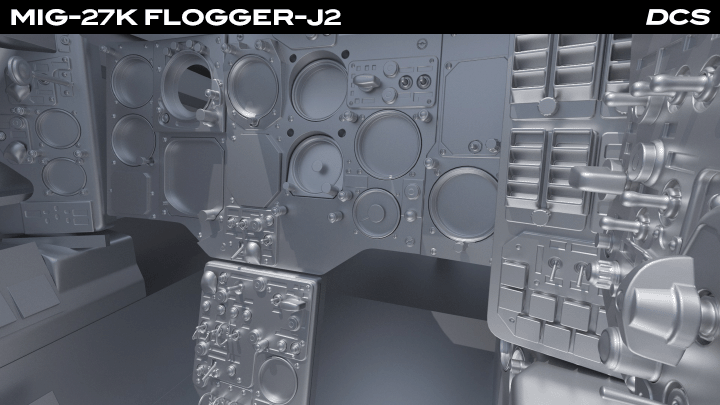

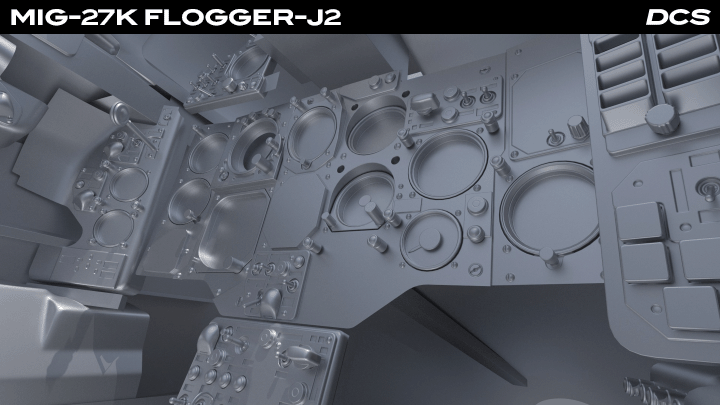
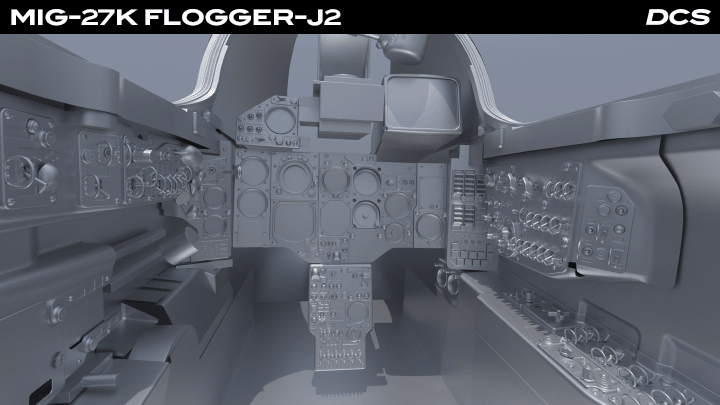 OctopusG will use photogrammetry for both the cockpit and the external model. These early work-in-progress images show the first steps on the cockpit, from the main instrument panel to the side consoles lined with switches and controls. Many of the models shown are not yet textured.

 Developed from the MiG-23 fighter as a dedicated ground-attack aircraft, it kept the swing wing, with sweep settings of 16, 45 and 72 degrees, but gained a revised nose that Soviet crews nicknamed "Utkonos," the Platypus. The first aircraft, originally designated MiG-23BM, flew in November 1972, and the MiG-27 entered frontline service with Soviet Tactical Aviation in 1975.
 The MiG-27K was the most advanced version to serve with the Soviet Air Force, and roughly 200 were built. It carried no radar. Instead, its PrNK-23K navigation and attack system combined an Orbita-20-23K digital computer with the Kaira laser and TV sighting system, letting the pilot find and designate targets for guided weapons such as the laser-guided Kh-25ML and Kh-29L missiles, the TV-guided Kh-29T, and the KAB-500L and KAB-500Kr guided bombs. Against enemy radars, it could carry the Kh-27PS anti-radiation missile. Its main gun was a six-barrel 30 mm rotary cannon.
 The MiG-27 saw combat in the final months of the Soviet war in Afghanistan. In October 1988, the 134th APIB, a fighter-bomber regiment flying MiG-27D and MiG-27M aircraft, deployed to Shindand Air Base and remained until the Soviet withdrawal, taking part in the siege of Kandahar.

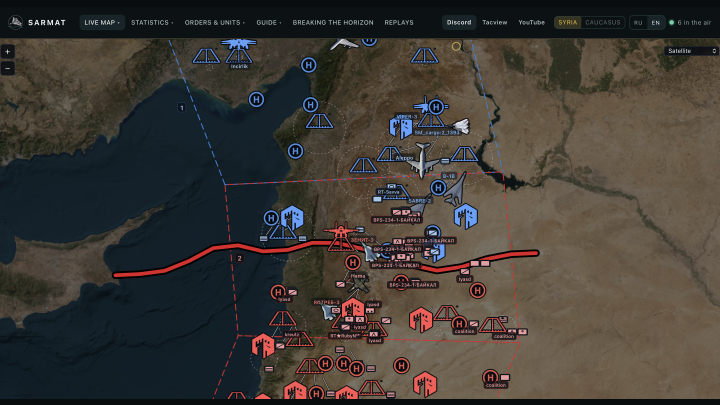
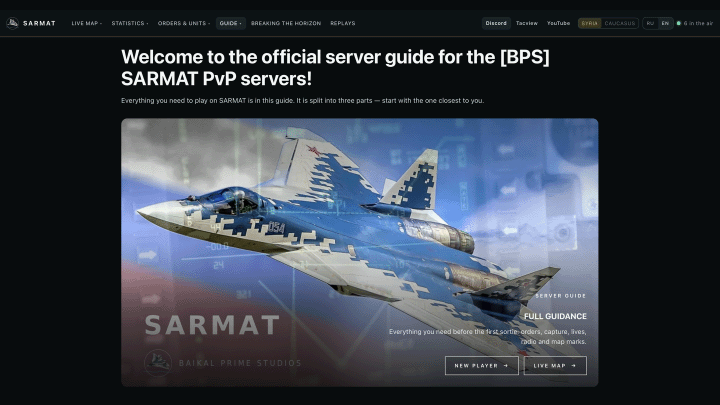 SARMAT is a persistent dynamic PvP campaign for DCS by Baikal Prime Studio. Two coalitions fight for territory around the clock on two servers with shared rules: SARMAT on the Syria map and VARG in the Caucasus.
 How the campaign works

 How To: DCS World Beginner Basics


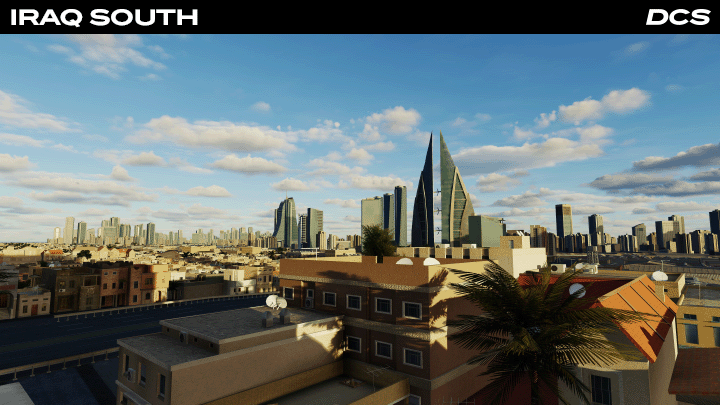 In May, we shared our progress on the southern region of the DCS: Iraq map, which covers all or parts of southern Iraq, Kuwait, Bahrain, Qatar, and Saudi Arabia. Along with airfields like Kuwait International, Ali Al-Salem, and Al-Udeid, we showed you landmarks such as the Kuwait Towers, NBK Tower, and Stadium 974. All this, and the already added strategically important Kharg Island, will make this an excellent area of operation.
 Since then, the team has turned its attention to the ground between those airfields. Towns and cities across the region are being filled out, giving you more to navigate by, more to defend, and more to find through a targeting pod. At the same time, the terrain details and textures are being improved, so the landscape holds up whether you're flying low and fast over the desert or orbiting high above it.
 DCS: South Iraq will be available as a separate region or as part of the full DCS: Iraq map, and full-map owners will receive the southern region when it becomes available.
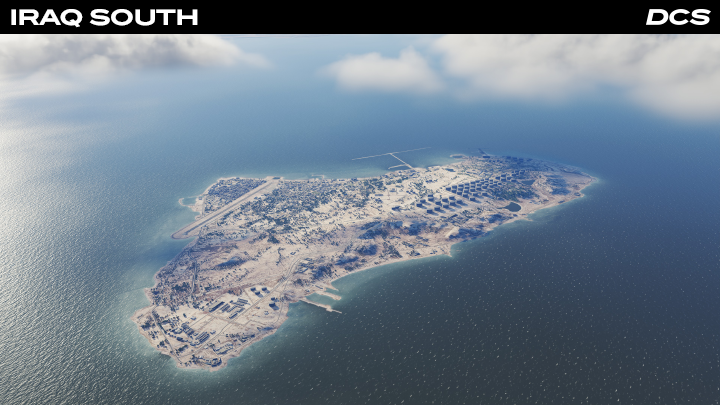 More work remains, and we'll keep sharing progress as the southern region comes together.
 The last leaves are coming down, and so is the clock on the DCS Autumn Sale 2026. On the E-Shop, the sale wraps up on October 12th at 17:00 GMT, so if a module is still on your wish list, now's the time.
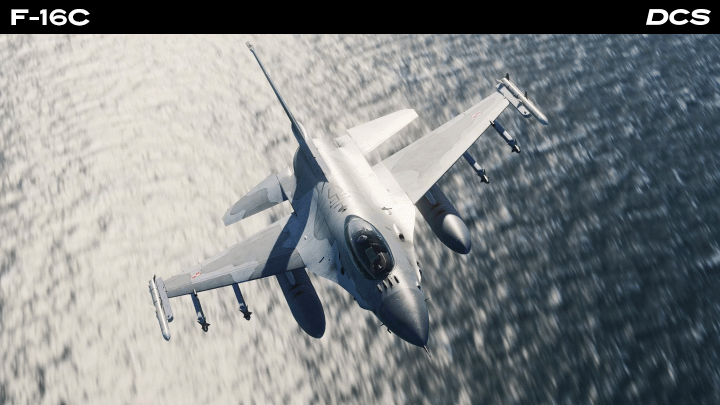 The savings don't stop there. The DCS: A-10C II Tank Killer, DCS: F-5E Remastered, DCS: Black Shark 3, DCS: UH-1H Huey, DCS: Mi-8MTV2 Magnificent Eight, and DCS: CH-47F are also 50% off, as are warbirds like the DCS: P-51D Mustang, DCS: Spitfire LF Mk. IX, and DCS: P-47D Thunderbolt. DCS: Supercarrier and DCS: Combined Arms are also 50% off.
 From the DCS Italia team:

 Award


 Что делать если свободная подруга застряла между двух зон облучения??






 Loading

